






Gold Ceramic Lamps
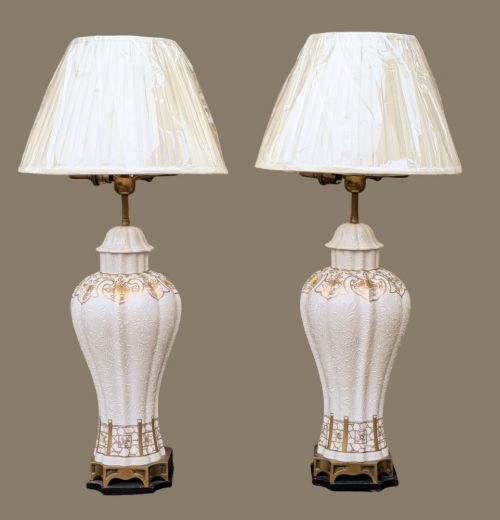
Gold ceramic lamps bring rich metallic warmth and painted detail to a room, spanning nineteenth-century porcelain and international export styles.
Gold Ceramic Lamps
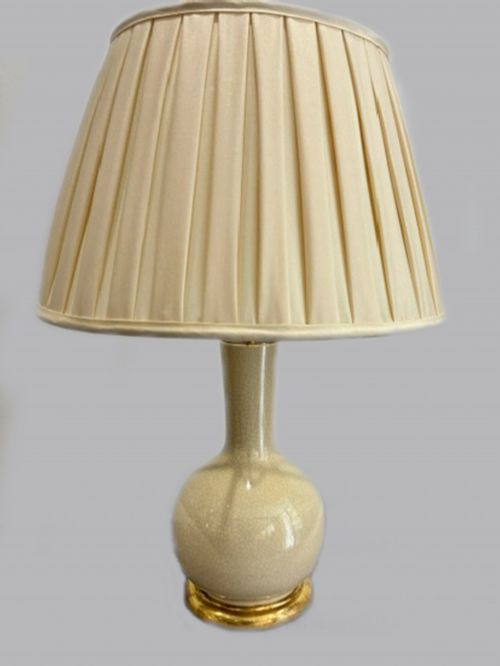
When you search for gold ceramic lamps, you encounter a selection spanning the nineteenth century and the early twentieth century. The forms range from converted vases and tobacco jars to dedicated table lamps and multi-branch chandeliers.
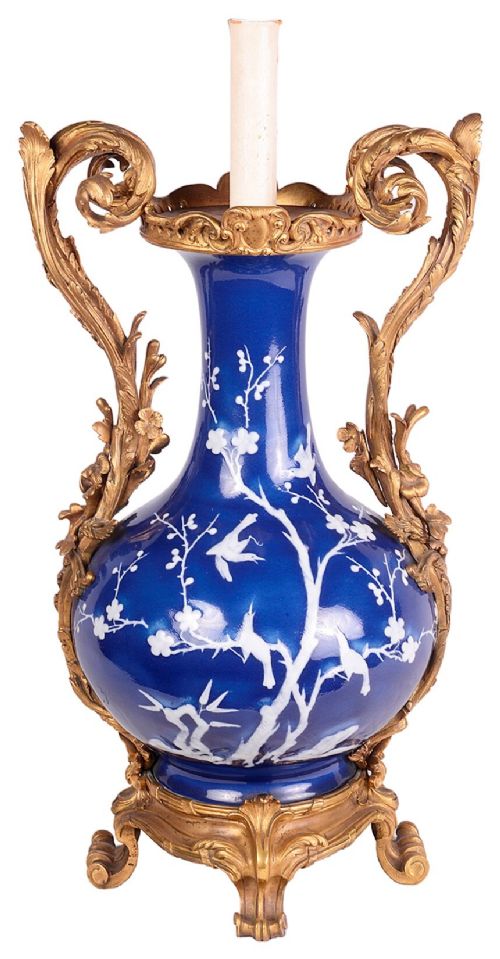
The pieces on this page draw heavily on Chinese, Japanese, and European traditions. You will frequently find nineteenth-century porcelain and ceramic bodies paired with French ormolu mounts and gilt bronze.
Many of these lamps began life as decorative vases, later converted for electrical lighting. Styles such as Chinoiserie, Rococo Revival, and Meiji Period Satsuma define the visual character of the selection.
How they were made
Makers shaped these objects from ceramic, porcelain, and crackle ware, frequently employing hand-painted floral or figural motifs. Gold leaf, gilt metal, and ormolu were applied to highlight borders, handles, and mounts.
Metal components such as brass, gilt bronze, and gilt toleware provide structural support and decorative framing for the ceramic bodies. Fabric elements appear in related lighting components to soften the illumination.
Gold Ceramic Lamps Retail Price Guide 2026
Typical asking prices for gold ceramic lamps among the pieces listed under this phrase on Sellingantiques today, from the lower quarter to the upper quarter. They describe what is for sale here now, not the wider market.
Some tobacco jars lived quiet lives in gentleman's studies before becoming brightly gilded table lamps.
What varies in quality
The distinction in these pieces rests upon the crispness of the hand-painted decoration and the weight of the metal mounts. Fine porcelain bodies show precise brushwork and balanced glaze application.
Cast bronze and ormolu mounts demonstrate varying degrees of chasing detail and integration with the ceramic vessel. Superior examples maintain a harmonious proportion between the ceramic base and the gilded metalwork.
The Gold Ceramic Lamps Glossary
- Ormolu
- Gilt bronze mounted on decorative objects or furniture. The technique involves applying a finely ground high-carat gold mercury amalgam to a bronze object.
- Chinoiserie
- European interpretations of Chinese and East Asian artistic traditions. This decorative style flourished across furniture, ceramics, and lighting throughout the nineteenth century.
- Famille Noare
- A ceramic palette defined by a black enamel ground. Pieces utilising this style often incorporate contrasting floral or botanical polychrome enamels.
Gold Ceramic Lamps: Frequently Asked Questions
Are these lamps converted vases?
Many examples began as traditional decorative vases, ginger jars, or tobacco jars before receiving electrical fittings at a later date. This conversion practice preserves historical ceramic bodies while adapting them for modern domestic use.
Makers often added ormolu or gilt bronze mounts during the conversion process to secure the wiring and enhance the decorative presentation of the piece.
How do I identify a Meiji Period piece?
Meiji Period items originate from the era of Japanese history running from eighteen sixty-eight to nineteen twelve. They frequently display detailed Satsuma earthenware construction with intricate hand-painted enamel and gilt work.
Examining the base and the crackle glaze often reveals the characteristic hallmarks of this distinct nineteenth and early twentieth-century Japanese production.
How do I care for gilt bronze mounts?
Gilt bronze and ormolu require gentle dusting with a soft, dry cloth to prevent accumulation in the detailed chasing. Avoid chemical polishes, which can strip the thin layer of gold leaf or gilding from the bronze base.
Keeping these lamps away from direct moisture and strong sunlight preserves the stability of both the ceramic body and the metal fittings.