

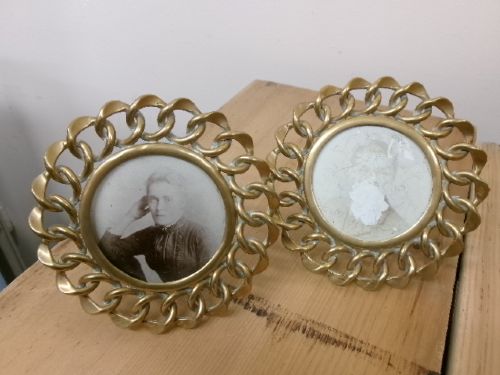
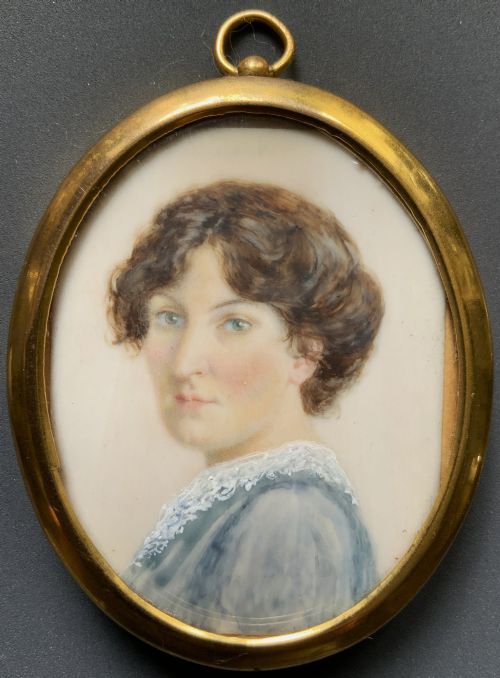
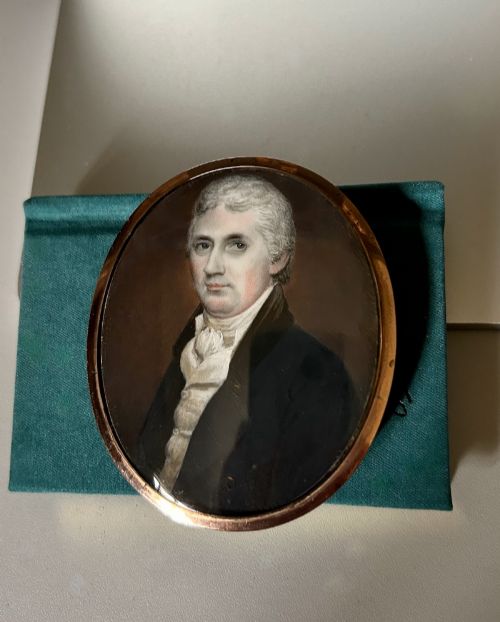
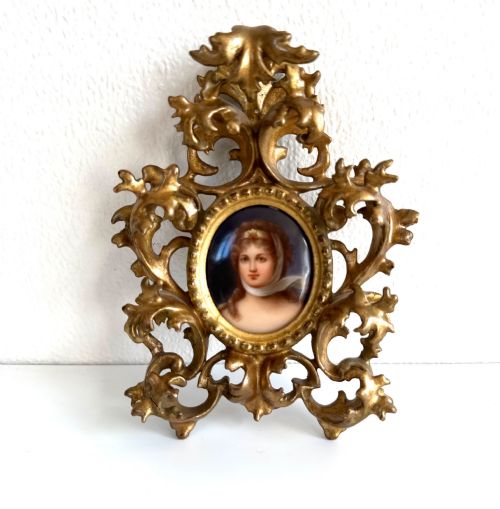
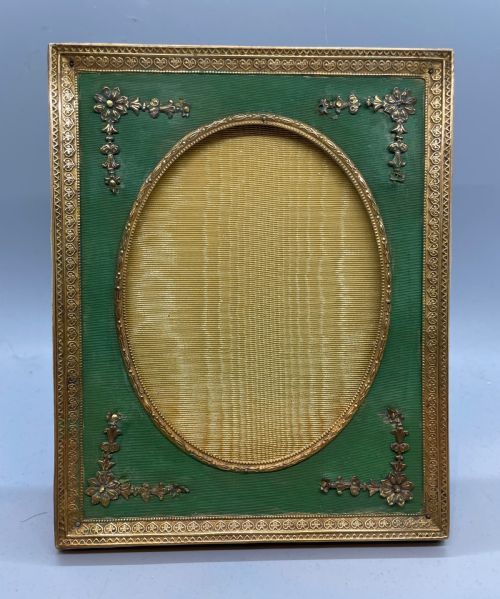


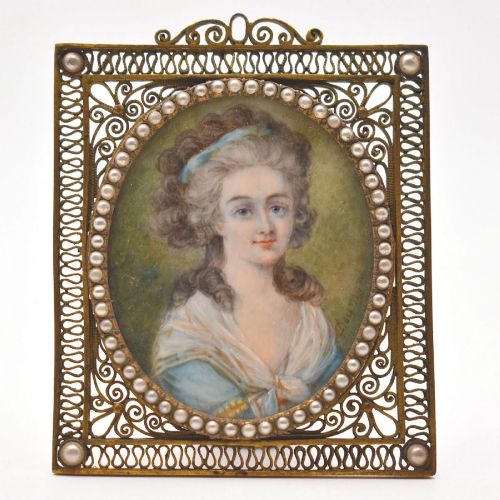


Gold Brass Portrait Frame
A gold brass portrait frame brings a quiet, personal history to a mantelpiece, housing delicate watercolours and likenesses from past centuries.
Gold Brass Portrait Frame
When you search for a gold brass portrait frame, you are looking at small display pieces designed to hold miniature watercolours, silhouettes, porcelain plaques or personal photographs. These objects bridge the gap between fine art and decorative metalwork, often taking compact oval, circular or rectangular forms meant for tabletop display or hanging.
The versions you are most likely to meet on this page span from the Georgian and Regency eras through the Victorian period and into Edwardian times. Many examples originate from English workshops or French makers, encompassing styles from Rococo Revival and French Chateau to simple, elegant Regency and Art Nouveau designs.
Beyond standard picture frames, the selection includes fitted easel stands, double frames, and decorative table mirrors framing delicate paintings on paper, ivory or card. Each piece reflects the intimate scale of portraiture popular before the widespread use of photography.
How they were made
The construction of these pieces relies heavily on cast and chased brass, ormolu, and gilt metal, providing a durable yet malleable base for intricate ornamentation. Artisans worked molten or sheet metal to create delicate scrollwork, foliate motifs, and architectural borders designed to catch the light.
Many frames incorporate secondary materials such as glass to protect the artwork, alongside fabric or damask backings and easel supports. Specialised techniques like fire gilding or gold plating gave the base brass a rich, lasting lustre that distinguishes the finer examples.
Portraits housed within these frames were executed in watercolour, gouache, or porcelain, often protected by convex glass and secured with simple pins or bezels at the reverse. The integration of decorative elements like paste stones, agate mounts, or seed pearls further demonstrates the high level of craftsmanship involved.
Gold Brass Portrait Frame Retail Price Guide 2026
Typical asking prices for gold brass portrait frame among the pieces listed under this phrase on Sellingantiques today, from the lower quarter to the upper quarter. They describe what is for sale here now, not the wider market.
Materials recorded across the inventory include glass, gilt metal, brass, porcelain, ormolu, and fabric.
What varies in quality
The distinction between ordinary and exceptional pieces lies in the crispness of the metal chasing and the depth of the gilding. Superior frames display sharp, hand-finished details in the foliate and figurative motifs, whereas lesser examples show softer, more uniform cast lines.
Material selection significantly impacts the overall character of the piece, with genuine ormolu, fire-gilded bronze, and heavy cast brass holding greater presence than thin gold-plated metal. The integration of fine decorative accents, such as mounted semi-precious stones or enamel work, elevates the object from a simple mount to a work of art in its own right.
The harmony between the frame and its contents also dictates quality, as pieces retaining their original hand-painted miniatures, silhouettes, or period glass demonstrate a higher degree of historical integrity.
John Miers·Emma Kendrick·F. Bienvue
The Gold Brass Portrait Frame Glossary
- Ormolu
- A technique of applying finely ground, high-carat gold-mercury amalgam to a bronze or brass object. This process creates a brilliant, durable golden surface seen on many French decorative pieces.
- Gilt metal
- A general term for base metals treated with a thin layer of gold or gold-coloured wash. It provides the visual warmth of gold without the weight or cost of solid precious metal.
- Portrait miniature
- A small, highly detailed painting, usually executed on ivory, vellum, or paper. These intimate likenesses were frequently housed in protective metal frames for personal keepsake.
- Easel frame
- A tabletop picture frame featuring a hinged metal or wooden prop attached to the back. This design allows the object to stand upright on a desk or mantelpiece.
- Paste stone
- Faceted lead glass cut and polished to imitate gemstones such as diamonds or rubies. These stones add sparkle and colour to the borders of fine antique frames.
Gold Brass Portrait Frame: Frequently Asked Questions
How were portrait frames displayed originally?
These frames were typically placed on dressing tables, mantelpieces, or small writing desks where their intimate scale could be appreciated up close. Many incorporated built-in metal easels or hanging loops for versatile placement in domestic interiors.
In some instances, they were hinged as double frames to display related family members side by side, creating a portable gallery of loved ones.
Are the miniatures inside original to the frames?
Many pieces retain their original watercolours, silhouettes, or porcelain plaques, having remained together since their initial creation. The sizing and mounting styles often match the period of the surrounding metalwork.
Over the centuries, however, some frames have been reunited with different artwork of a similar scale and era, making the fit and backing construction key indicators of their history.
How do I identify a French antique frame?
French pieces, particularly those from the 19th century, frequently utilise heavy gilded bronze or ormolu with distinctive Rococo Revival or Napoleonic motifs. The casting quality tends to be exceptionally crisp, with intricate chasing visible in the floral and scroll elements.
Additionally, many continental European frames feature French-style fixings, easel backs, and maker signatures or registration marks on the reverse.
What is the difference between brass and ormolu?
Brass is an alloy of copper and zinc, valued for its bright golden tone and durability in cast decorative objects. Ormolu specifically refers to gilded bronze or brass where a mercury-gold mixture was fired onto the metal surface.
While plain brass develops a warm patina through polishing and age, ormolu retains a deeper, richer metallic lustre characteristic of high-status decorative arts.