






Gold Brass Hearth Curb
These gold brass hearth curb pieces frame the fireplace with period warmth, offering both floor protection and formal presence.
Gold Brass Hearth Curb
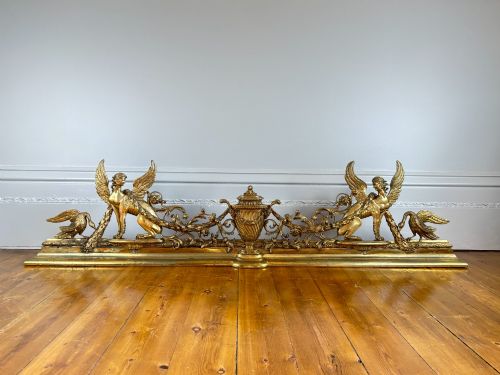
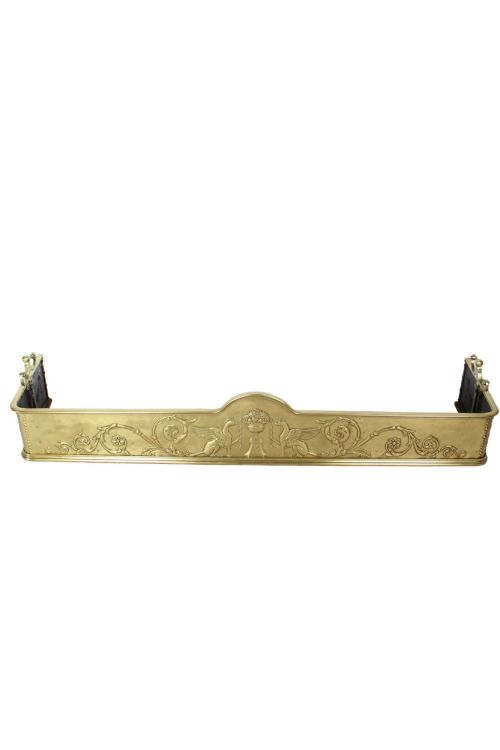
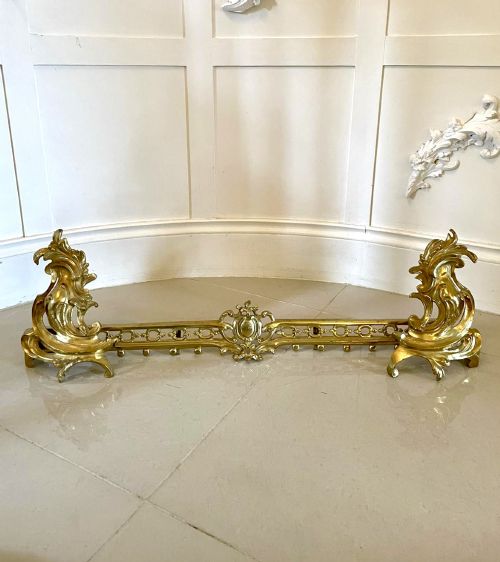
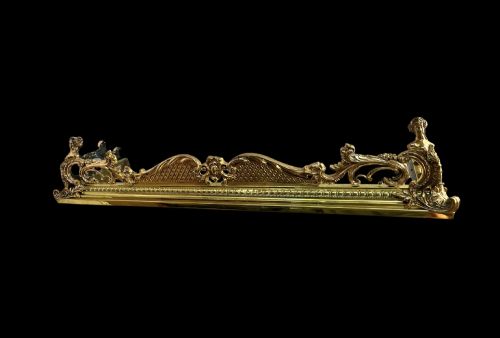
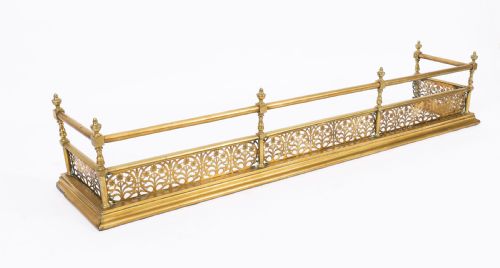
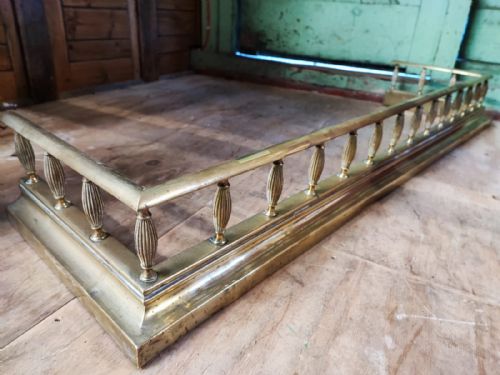
A gold brass hearth curb, also known as a fender or kerb, sits on the floor directly before the fireplace to contain sparks and ash. The examples on this page span Victorian, Edwardian, and Regency periods, using brass, cast brass, and gilt bronze.
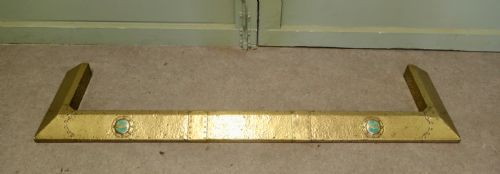
Forms vary from extending designs to fixed widths, incorporating pierced metalwork, spindles, and decorative cabochons. Many pieces reflect French Rococo, Arts and Crafts, or Neoclassical Revival styles.
These hearth accessories range from simple nineteenth-century domestic guards to heavy, ornate pieces bearing makers or specific stylistic revivals.
How they were made
Maker techniques rely heavily on cast brass, gilt bronze, and ormolu, combined with iron frames for structural weight. Pierced decoration is achieved through careful cutting and drilling of sheet brass.
Surface finishes include fire gilding and polished brass, occasionally accented with enamel cabochons. Extending mechanisms use sliding metal channels concealed within the main body of the curb.
Gold Brass Hearth Curb Retail Price Guide 2026
Typical asking prices for gold brass hearth curb among the pieces listed under this phrase on Sellingantiques today, from the lower quarter to the upper quarter. They describe what is for sale here now, not the wider market.
Some nineteenth-century makers snuck green enamel cabochons into brass work just to catch the firelight.
What varies in quality
Quality rests in the weight of the metal and the crispness of the casting. Heavy gauge brass and deep relief work separate substantial domestic pieces from lighter alternatives.
The sophistication of the assembly determines value, particularly in extending models where tight joints and smooth sliding action indicate competent workshop practice.
E F Caldwell New York·George Bullock
The Gold Brass Hearth Curb Glossary
- Curb
- A low metal barrier placed around the hearth to contain coals and ash. It also serves to define the fireplace zone within the room.
- Ormolu
- Gilded bronze used for decorative mounts and fittings on finer nineteenth-century hearth furniture. The technique involves applying a gold amalgam to a bronze base.
- Pierced brass
- Sheet metal cut with decorative pierced patterns such as flowers or geometric grills. This technique lightens the visual weight of the heavy metal.
- Cabochon
- A polished, unfaceted gem or enamel stone set flush into the metal frame. Arts and Crafts examples often utilise green enamel cabochons.
- Extending fender
- A design featuring telescopic sections that adjust to fit varying fireplace widths. This mechanical adaptability suited multiple room configurations.
Gold Brass Hearth Curb: Frequently Asked Questions
What is a brass hearth curb?
A brass hearth curb is a low metal barrier placed on the floor in front of an open fireplace. Its primary purpose is to keep rolling embers and ash contained safely within the hearth area.
Beyond utility, these pieces frame the fireplace and reflect firelight into the room. They form a central decorative element of nineteenth-century domestic interior design.
How do extending fenders work?
Extending fenders consist of overlapping metal sections that slide smoothly within one another. This allows the overall width to expand or contract to fit different hearth dimensions.
Many nineteenth-century examples utilise this adjustable mechanism so the guard sits snugly against the fireplace surround. Buyers should check that the sliding channels move freely without binding.
How do I clean a brass curb?
Cleaning requires a soft cloth and a proprietary metal polish suitable for brass or gilt surfaces. Avoid abrasive pads that scratch the metal or wear away thin gilding.
Regular dusting keeps the surface bright without stripping the aged patina. Gilt bronze and ormolu pieces require particularly gentle care to preserve their original finish.
How do I date a Victorian fender?
Dating relies on stylistic clues such as cast motifs, construction methods, and materials. Victorian pieces often display heavy brass construction with pierced floral or spindle details.
Later nineteenth-century examples may incorporate specific movements like Arts and Crafts enamel work or French Rococo revival scrolls. Comparing the weight and joining techniques helps narrow the decade of manufacture.