
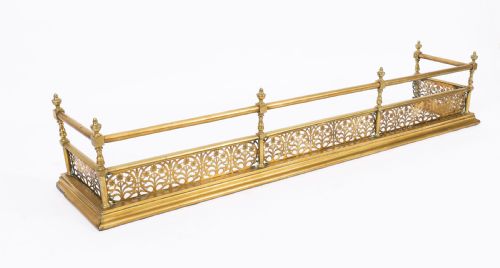

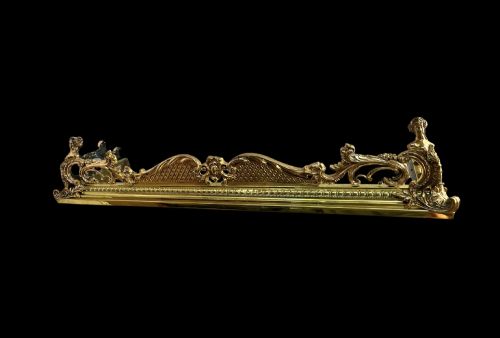


Gold Brass Fire Kerb
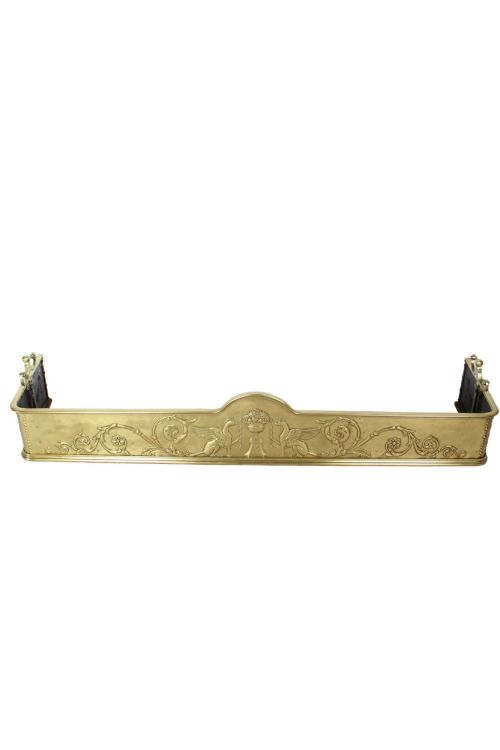
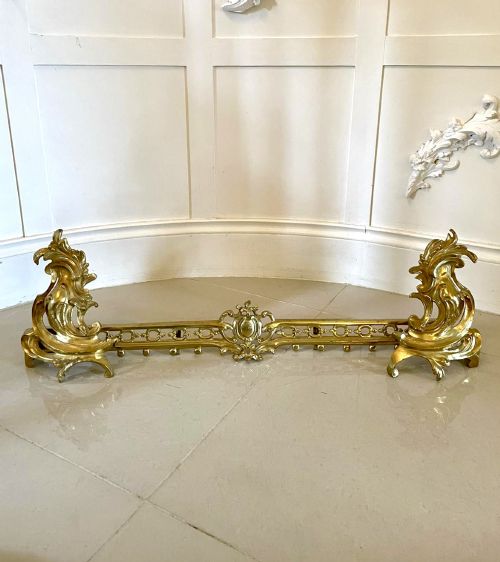
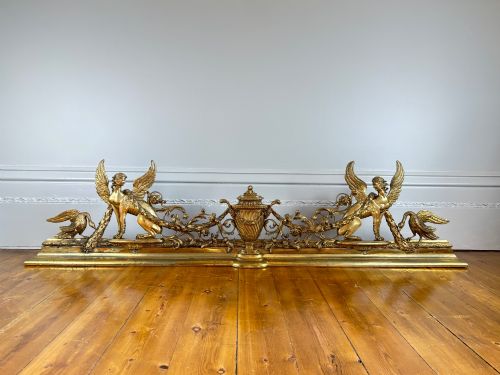
These gold brass fire kerb pieces frame the hearth with warm metalwork, bringing period character and functional containment to the fireplace.
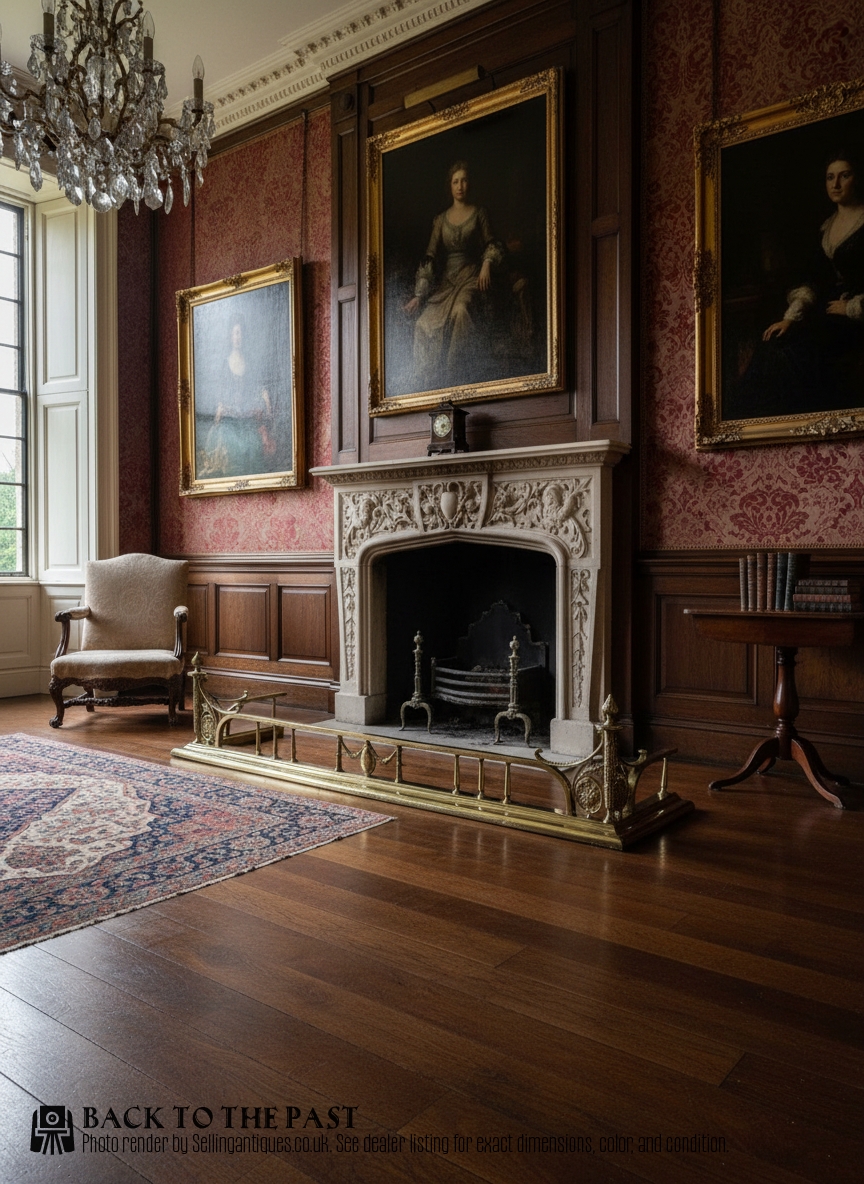
Gold Brass Fire Kerb
A gold brass fire kerb acts as a hearth barrier, preventing stray embers from reaching the room while defining the fireplace boundary. Buyers seeking this item will encounter fireplace accessories spanning the Victorian, Edwardian, and Regency periods.
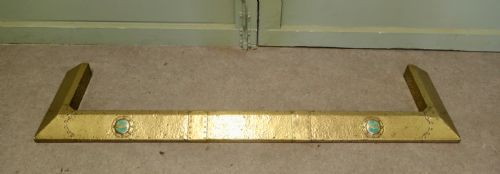
The pieces on this page appear in various forms, including extending designs, heavy cast frames, and adjustable models. Styles range from French Rococo and Art Nouveau to Victorian Neoclassical and Arts and Crafts.
Most examples originate from the nineteenth and early twentieth centuries, constructed to fit domestic hearths of the era. Common configurations feature pierced brass, spindle galleries, and decorative enamel cabochons.
Distinguishing quality in metalwork
The weight and thickness of the metal frame separate standard items from superior examples. Heavy casting and substantial gauge brass indicate a sturdier build that retains its structural integrity over decades of service.
Detailing in the piercing, chasing, and surface gilding reveals the maker's skill. Crisp casting lines, carefully finished joints, and refined decorative motifs such as floral piercing or enamel cabochons elevate a piece above simpler production runs.
Listings feature Victorian, Edwardian, and Regency periods, utilising brass, cast brass, iron, gilt bronze, and enamel materials in various hearth configurations.
E F Caldwell New York
The Gold Brass Fire Kerb Glossary
- Kerb
- A low barrier placed around a hearth to contain ash and burning fuel. It serves both a protective and a decorative function in the room.
- Extending fender
- A hearth guard designed with adjustable sections to fit varying fireplace widths. This mechanism allowed one design to suit different room dimensions.
- Ormolu
- Gilded bronze ornamentation applied to furniture and metalwork, popular in French-influenced interior design. The technique produces a bright golden surface finish.
- Pierced brass
- Sheet metal cut through with decorative patterns to let light pass and reduce overall weight. This method creates ornate openwork designs along the fender front.
- Cabochon
- A polished, unfaceted gemstone or enamel insert set flush into metalwork. It provides a focal point of colour on Arts and Crafts pieces.
Gold Brass Fire Kerb: Frequently Asked Questions
How do I measure for a kerb?
Measure the width of your hearth opening and the clearance space required in front of the fireplace surround. Account for any protruding hearth stones or uneven flooring before selecting a size.
Consider whether an adjustable model is necessary to achieve a precise fit between the fireplace jambs. Leave a small margin for clearance so the metal does not rub against the surround.
Were these kerbs used with coal or wood?
These metal barriers were placed before open fires burning either coal or wood in domestic hearths. Their primary role was keeping rolling logs or spitting coals safely inside the fireplace perimeter.
Heavier cast versions were particularly suited to active coal fires where sparks and hot embers posed a greater risk to surrounding carpets and floorboards.
How do I date a brass kerb?
Examine the fastening methods, casting quality, and decorative style to determine the period. Victorian examples often feature heavy pierced brass and neoclassical motifs, while Edwardian pieces can show simpler lines or adjustable frames.
Art Nouveau and Arts and Crafts variants introduce characteristic organic shapes or enamel cabochons. Comparing the weight and construction style with known period pieces helps confirm the date.