


Gold Bracelet Padlock Clasp
These gold bracelet padlock clasp pieces are secure fasteners turned romantic keepsakes, combining functional security with sentimental Victorian design.
Gold Bracelet Padlock Clasp
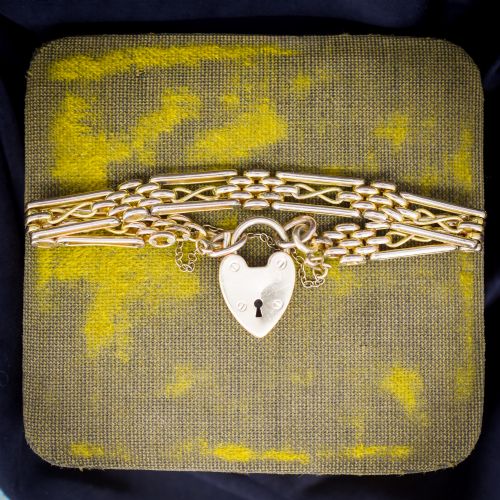
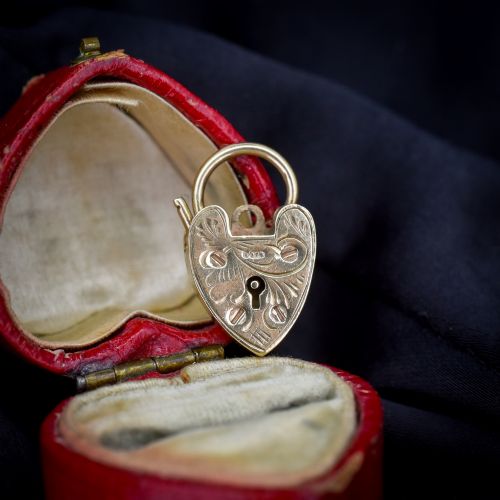
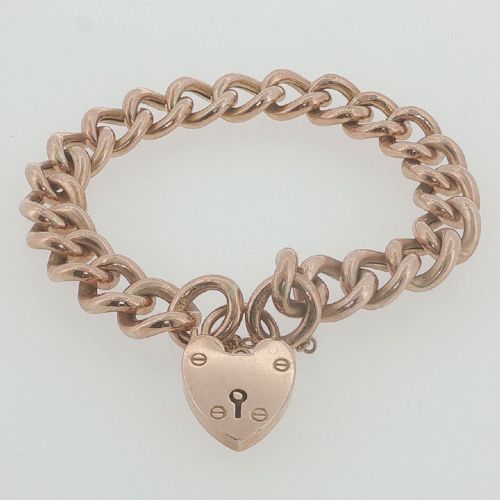
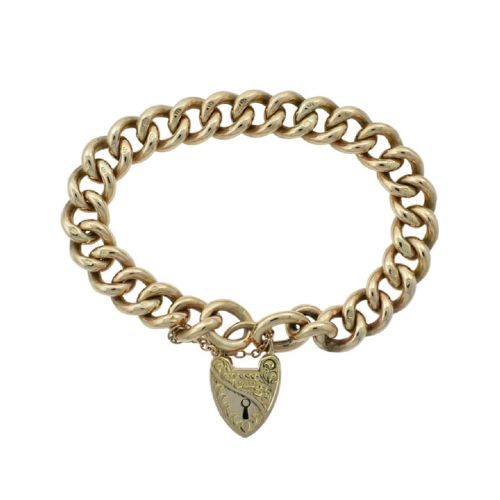
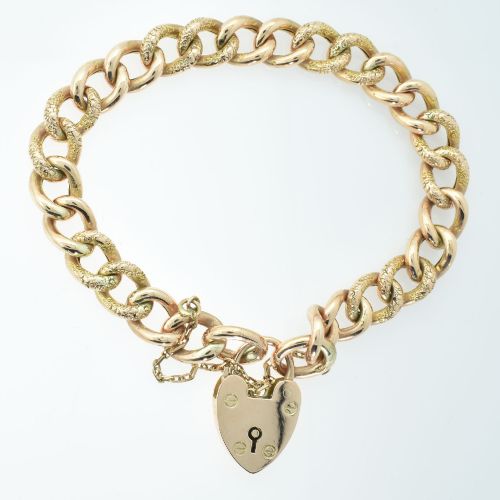
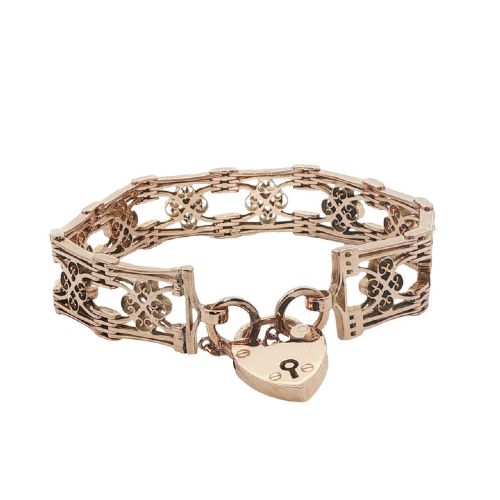
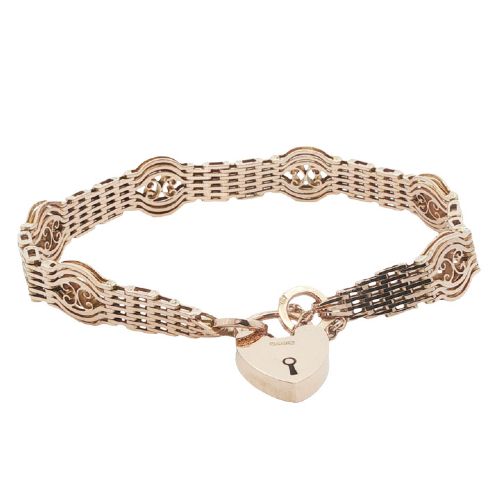
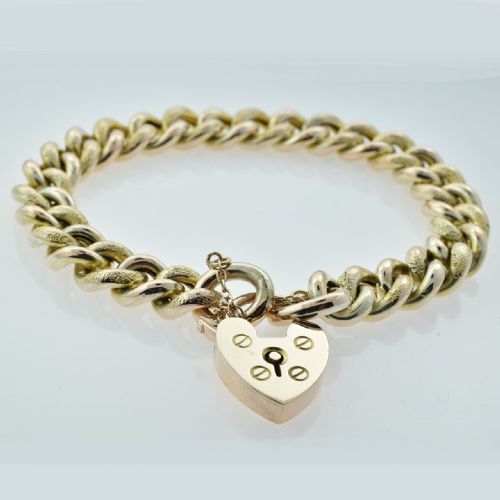
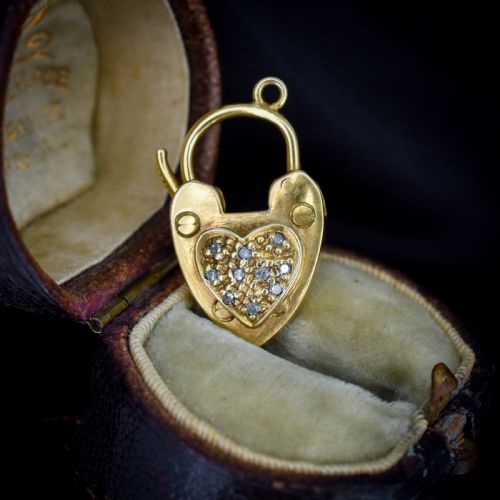
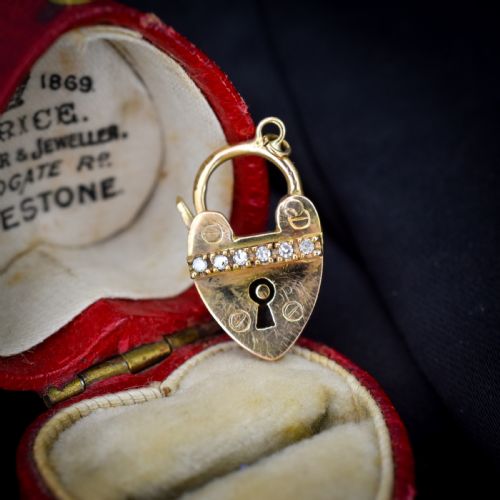
A gold bracelet padlock clasp is a secure fastening device typically found on Victorian and Edwardian curb link and gate bracelets. These padlocks often take the form of small hinged hearts, functioning both as a practical clasp to secure the chain and as a decorative pendant.
Most examples encountered on this page date from the Victorian and Edwardian eras, around 1900, with occasional later vintage pieces from the mid twentieth century. They appear attached to heavy curb link chains, twisted knot links, or expandable gate bracelets, and sometimes as standalone charms.
The materials span solid 9ct gold in yellow and rose hues, alongside rolled gold variants. Many incorporate precious stones such as rubies, pearls, diamonds, and amethysts set directly into the face of the padlock or the adjoining bracelet links.
Materials and construction methods
The construction relies heavily on 9ct rose gold and yellow gold, shaped into sturdy curb links, hollow gate bars, and cast padlock bodies. Metalworkers utilised rolling and casting techniques to produce durable chains that could support the weight of a functional clasp.
Decoration on these pieces involves hand engraving, where artisans chased floral and scroll motifs across the surface of the gold padlocks and link plates. Gemstones including pearls, rubies, amethysts, and diamonds are flush set or star set into the metalwork.
Victorian sweethearts wore miniature padlocks as symbols of locked hearts, trusting a tiny spring mechanism to guard their romantic intentions.
Assessing quality and craftsmanship
Quality in a gold bracelet padlock clasp depends on the depth and crispness of the hand engraving and the robustness of the internal spring mechanism. Fine examples retain sharp decorative details on the heart face and a secure snap when the shackle closes.
The presence of full hallmarks, indicating specific assay offices like London or Birmingham and precise years such as 1907, elevates the standing of a piece. The integration of high quality gems like matched pearls and clean amethysts also separates standard chains from superior examples.
The Gold Bracelet Padlock Clasp Glossary
- Curb link
- A type of chain formed by interlocking, slightly flattened uniform links that lie flat against the wrist. This style provides the sturdy foundation for many heavy padlocks.
- Gate bracelet
- A flexible bracelet constructed from parallel flat metal bars joined by small connecting links, originating in the Victorian period. They frequently feature a matching padlock clasp.
- Rolled gold
- A material made by mechanically bonding a thin layer of gold to a base metal core. This technique offered the appearance of solid gold at a lower production cost.
- Hallmark
- An official stamp applied to precious metals indicating purity, origin city, and date of manufacture. These small marks provide historical verification for antique jewellery.
- Padlock charm
- A heart shaped fastening device worn decoratively on a bracelet or pendant chain. They often include a functional miniature key or push button release.
Gold Bracelet Padlock Clasp: Frequently Asked Questions
How do you open a heart padlock clasp?
Most antique heart padlocks operate via an internal spring mechanism controlled by pressing a small projection or manipulating the hinged shackle. Owners should handle the spring mechanism gently to preserve the original tension.
Some padlocks on these bracelets are purely decorative elements while a hidden secondary clasp secures the chain.
Are these padlocks solid gold?
Many listings feature solid 9ct rose gold or 9ct yellow gold construction, verified by official hallmarks stamped on the metal. Other examples utilise rolled gold over a base metal core, providing a similar golden appearance.
Examining the piece for maker marks and assay stamps helps determine the exact metal composition and manufacturing origin.
How can I date a padlock bracelet?
Dating relies on stylistic clues such as the heavy curb link design, hand engraved floral motifs, and incorporated gemstones like amethysts and pearls. Pieces featuring official hallmarks from assay offices like London or Birmingham provide precise manufacturing years.
Most items originate from the Victorian and Edwardian periods around 1900, with occasional mid twentieth century vintage examples.