
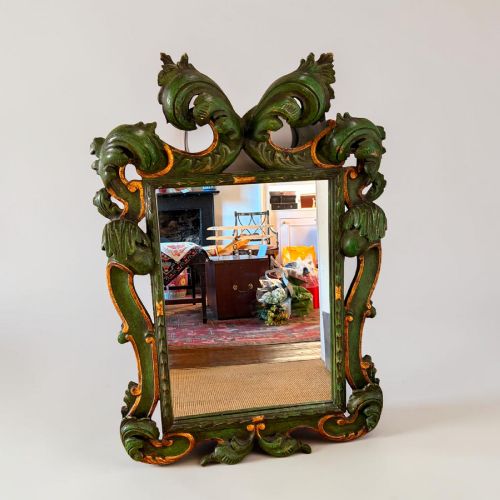
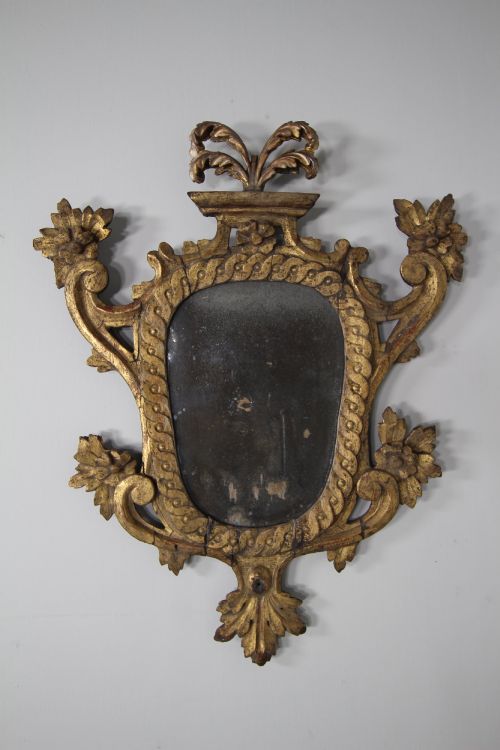
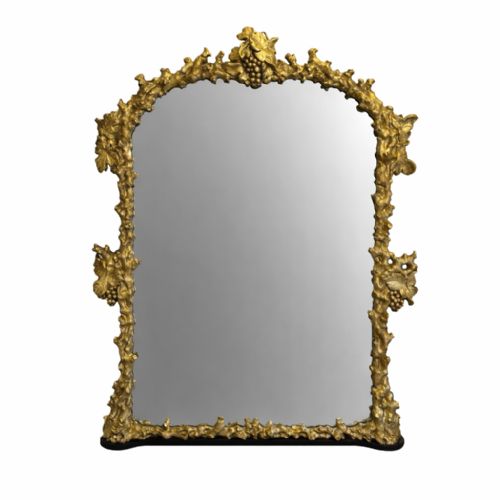

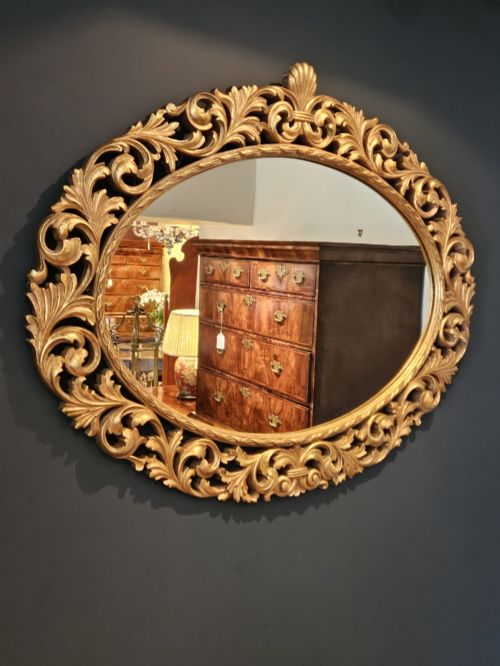


Gold Baroque Mirror
A gold baroque mirror brings dramatic carved presence into a room, offering deep relief frames and reflective light that elevate an interior.
Gold Baroque Mirror
A gold baroque mirror draws on heavy ornamentation, dynamic curves, and grand proportions originating in seventeenth and eighteenth-century design. Buyers hunting for a gold baroque mirror encounter pieces stretching from the seventeenth century through nineteenth-century revivals, particularly Italian and French interpretations.
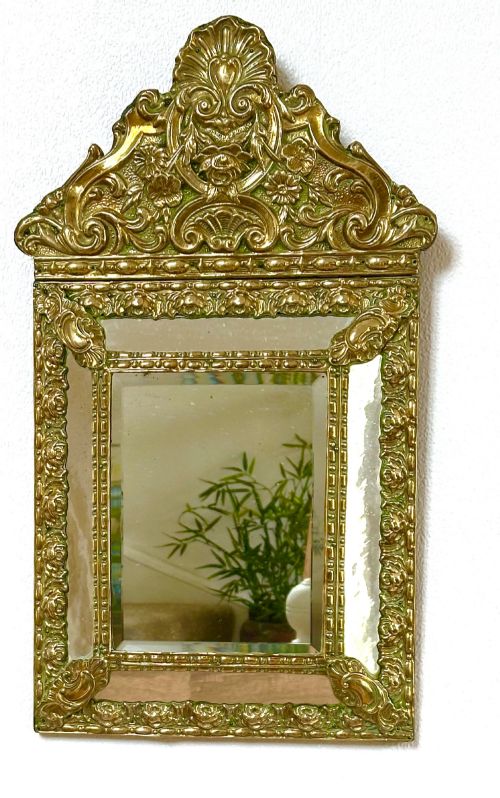
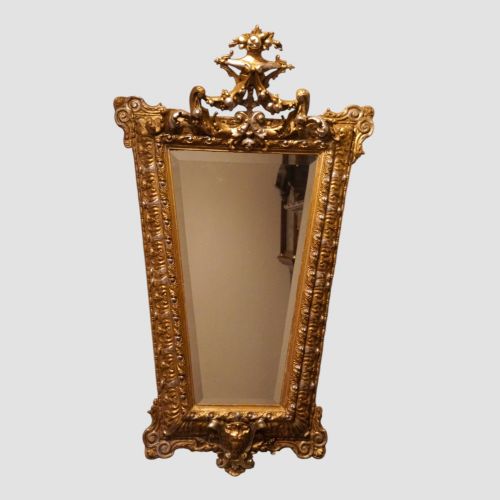
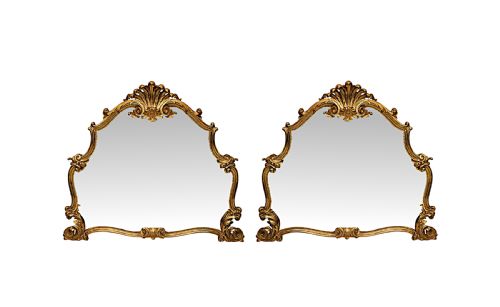
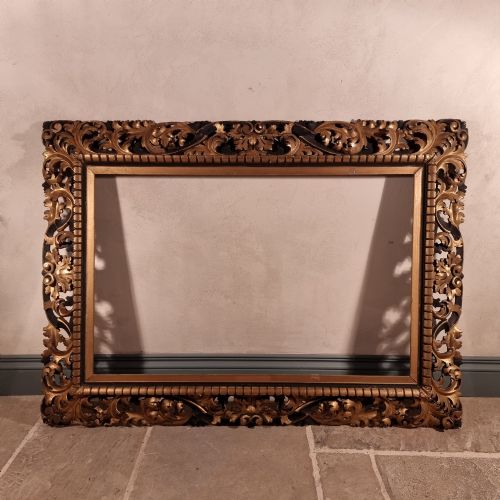
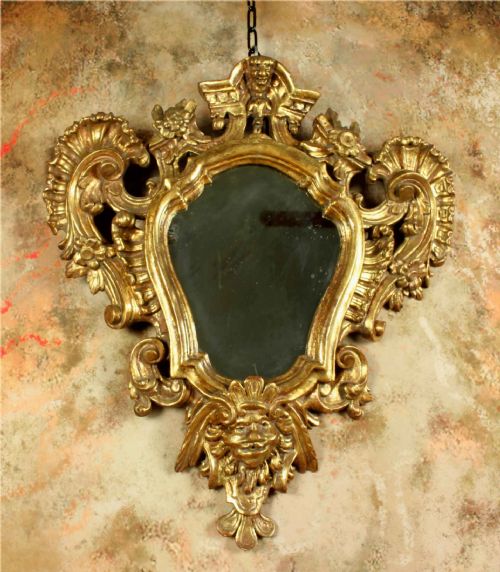
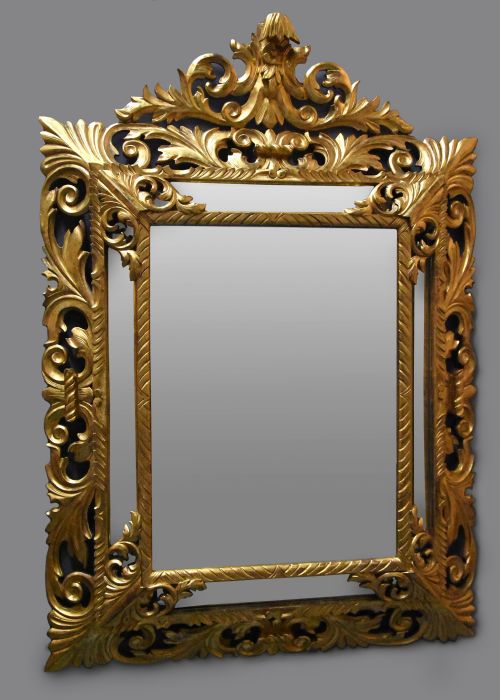
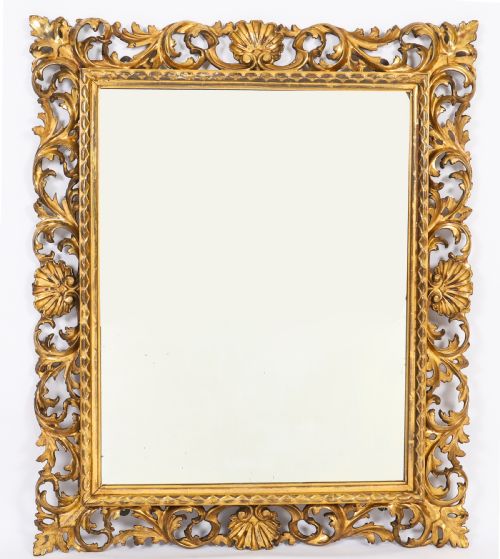
Most examples appearing here take the form of wall mirrors, overmantels, and cushion frames, often carved in wood and finished with gilded surfaces. Florentine and Rococo influences frequently blend into the inventory, bringing pierced scrollwork, floral motifs, and dramatic crestings.
Materials and construction
Carpenters carved timber substrates directly, applying gesso layers to smooth the surface before laying down gold leaf or silver-gilt. Elaborate high-relief elements rely on moulded gesso built up over carved wood foundations.
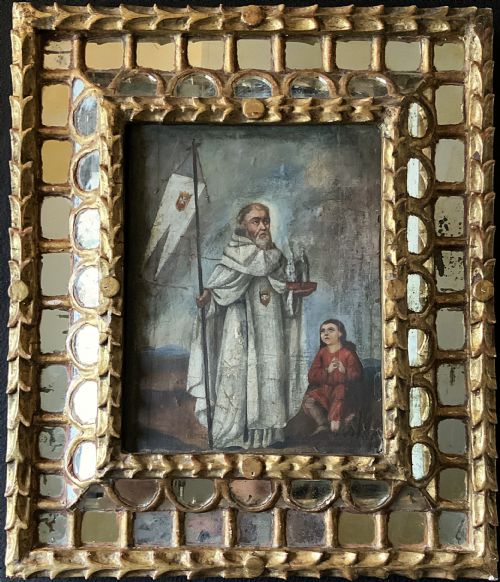
Early plates consist of original mercury glass, while later replacements and nineteenth-century items utilise standard silvered mirror plates. Brass elements occasionally appear on Flemish and Dutch variations alongside traditional timber frames.
Judging the execution
Depth and sharpness of the wood carving distinguish superior examples from simpler moulded pieces, as skilled hands create distinct undercutting and crisp relief. The quality of the gilding and the preservation of the original gesso layer dictate the visual richness of the surface.
Intact original mirror plates with genuine ageing carry historical weight, whereas replaced glass shifts the visual character. The complexity of the frame design, particularly on Florentine and cushion styles, separates standard decorative items from masterworks.
The Gold Baroque Mirror Glossary
- Giltwood
- Wood that has been coated with gold leaf. This finish provides a warm, reflective metallic sheen across the carved ornamentation.
- Gesso
- A plaster mix applied to wood frames. Artisans use this material to build up smooth surfaces and intricate relief details before gilding.
- Cushion mirror
- A frame with a broad, sloping profile resembling a pillow. This style projects forward from the wall to catch light from multiple angles.
- Pier glass
- A large tall mirror designed to hang on the wall between windows. These pieces often match console tables positioned directly beneath them.
- Mercury plate
- An early mirror glass created using a tin and mercury amalgam. This technique produces a characteristic mottled reflection and dark depth.
Gold Baroque Mirror: Frequently Asked Questions
How do I date an old mirror?
Examine the construction methods of the timber frame, the composition of the gesso, and the backboards where visible. Hand-carved tool marks and early joining techniques point toward seventeenth or eighteenth-century origin.
Inspect the mirror plate itself for bevels, thickness irregularities, and oxidisation patterns. Mercury glass and old float glass display distinct visual characteristics that separate period pieces from later nineteenth-century revivals.
Where should I hang a heavy frame?
Mount heavy carved timber and gesso frames directly into structural wall studs or masonry using rated fixings. The substantial weight of gilded wooden frames requires secure anchor points to support the load safely.
Position the piece where it can reflect natural light from a window or amplify illumination from a fireplace mantel. Overmantels function well above hearths, while taller pier mirrors suit grand hallway spaces.
How do I clean a gilded surface?
Dust the carved wooden frame gently using a soft, dry artist brush or ostrich feather duster. Avoid applying commercial liquid cleaners or water directly to the gold leaf and gesso.
Clean mirror glass sparingly with a mild glass cleaner applied to a cloth rather than sprayed directly onto the surface. This prevents moisture from seeping behind the plate and damaging the silvering or original backing.
What is the difference between baroque and rococo?
Baroque design relies on symmetry, heavy massing, and monumental proportions designed to project power and theatrical grandeur. The carved elements remain robust, formal, and tightly ordered.
Rococo style introduces asymmetry, lighter pastel palettes, and swirling C-scrolls inspired by natural shell and plant forms. The ornamentation feels more playful, fluid, and organic compared to formal baroque structures.