

Gold Band Sapphire
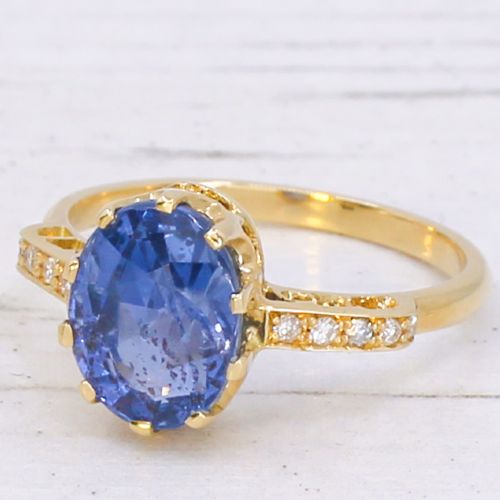
A gold band sapphire combines deep blue stones with precious metal settings across periods from Victorian boat shapes to mid-century clusters.
Gold Band Sapphire
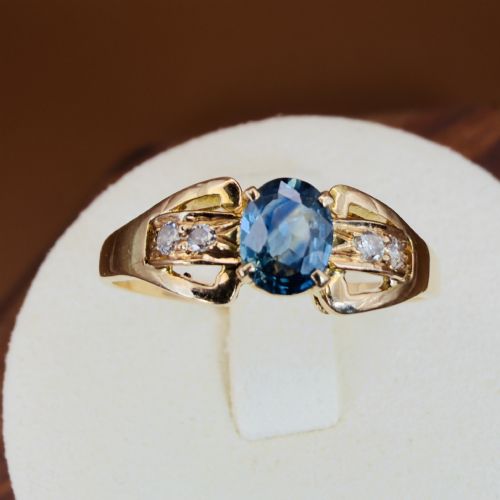
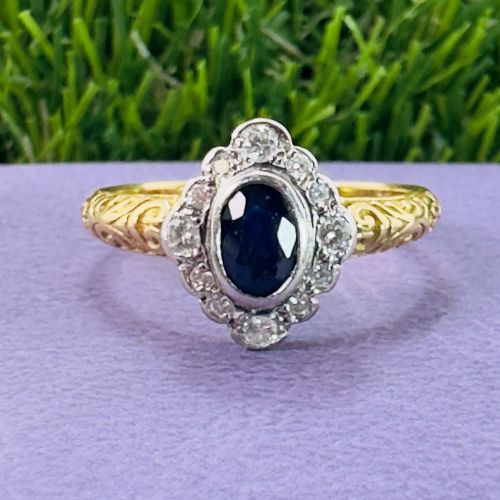
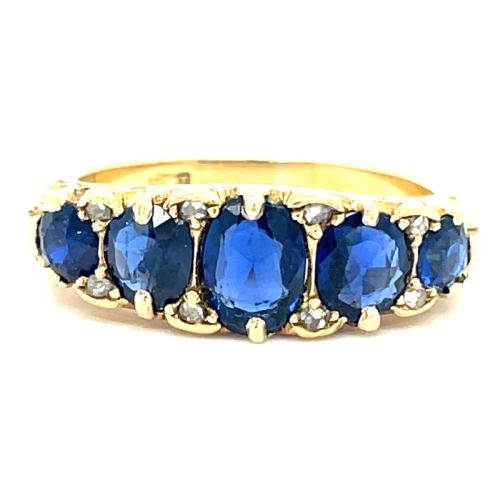
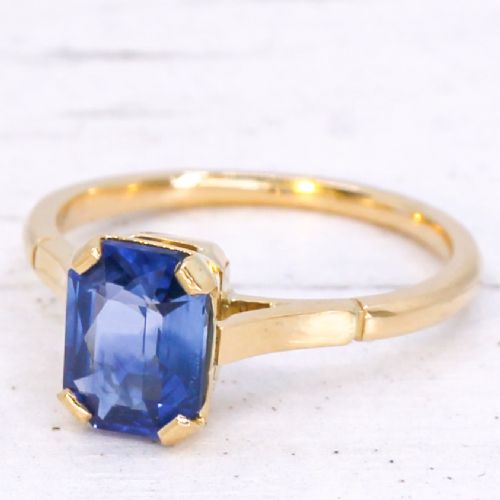
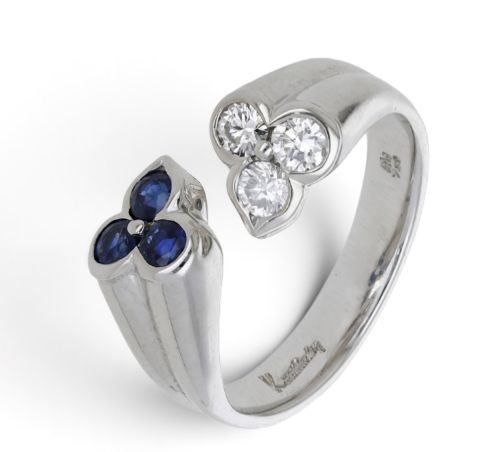
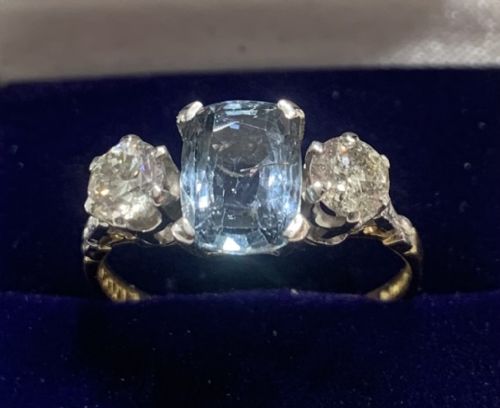
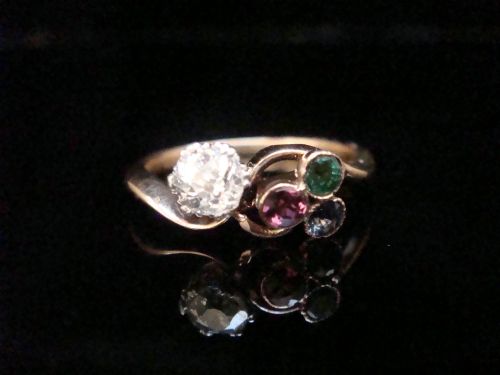
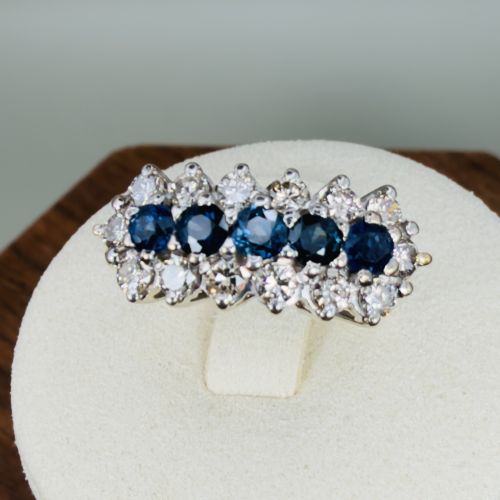
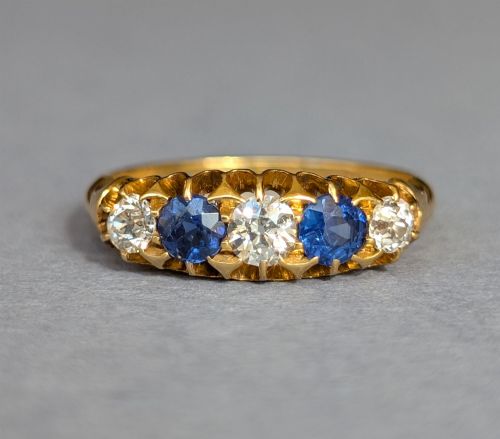
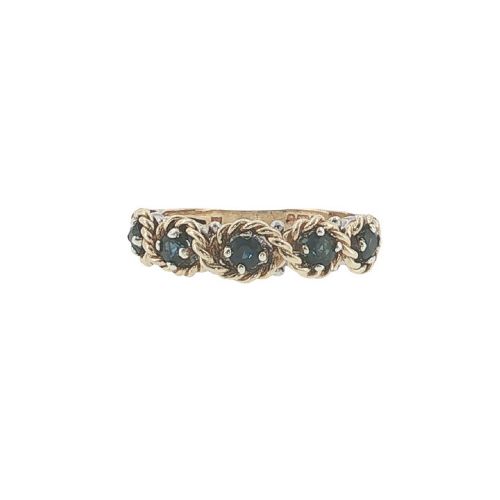
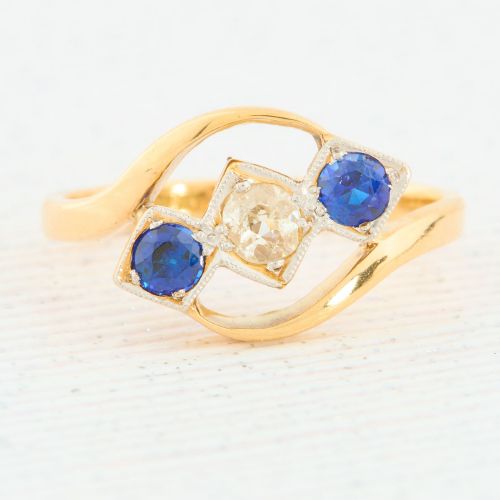
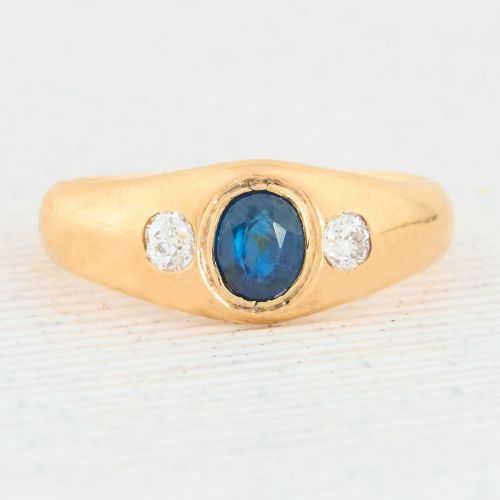
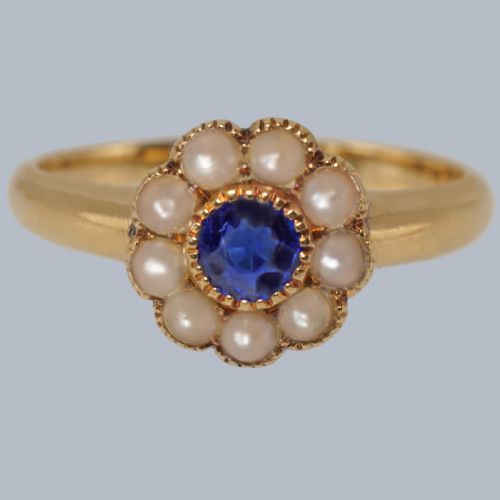
A gold band sapphire comprises rings fashioned primarily as clusters, boat settings, and gypsy styles set in yellow gold, white gold, or platinum. These pieces emerge across periods spanning the Victorian era, Edwardian years, Art Deco movement, and mid-century decades.
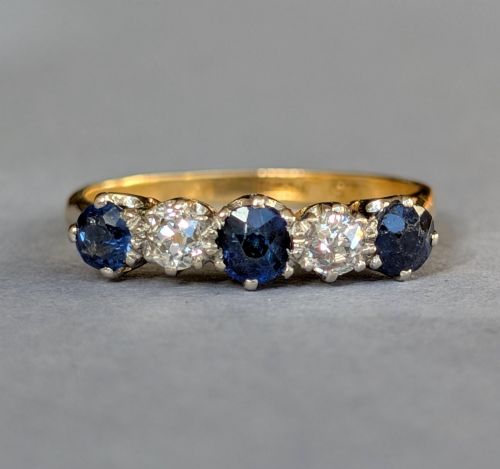
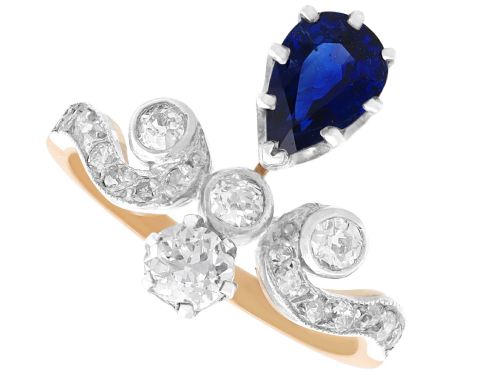
Buyers browsing this selection will most frequently encounter 18ct gold and platinum mountings holding oval cut, unheated, or old cut sapphire stones alongside diamond accents. Forms range from traditional five-stone rings to intricate serpent and tiara designs.
Materials and construction
Craftsmen built these pieces predominantly using 18ct yellow gold, 14ct gold, 9ct gold, and platinum to secure sapphires and diamonds. Metal selection dictates the tone of the band, shifting from rich yellow hues to bright white platinum settings.
Stones are integrated using cluster formations, boat shapes, gypsy flush settings, and intricate prong work. Gemstones such as Ceylon and basaltic sapphires are paired with old cut or princess cut diamonds to complete each ring.
Gold Band Sapphire Retail Price Guide 2026
Typical asking prices for gold band sapphire among the pieces listed under this phrase on Sellingantiques today, from the lower quarter to the upper quarter. They describe what is for sale here now, not the wider market.
Quality distinctions
Distinctions in these pieces rest upon the natural origin and treatment of the sapphire, such as unheated stones versus standard variations, alongside the clarity and cut of accompanying diamonds. Hand-finished detailing in period settings also elevates the construction.
The integrity of the gold band and the precision of the stone claw settings separate standard production from superior examples. Original hallmarks and maker attribution further distinguish specific pieces within the range.
Kutchinsky
The Gold Band Sapphire Glossary
- Cluster ring
- A ring design featuring a central gemstone surrounded by a group of smaller stones. This arrangement maximises visual impact and light reflection.
- Boat ring
- A boat-shaped mounting tapering towards the ends, typical of Victorian jewellery design. The curved profile sits low along the finger.
- Gypsy ring
- A style where stones are flush-set directly into the thick metal band. This technique creates a smooth, rounded surface profile.
- Trilogy ring
- A three-stone ring symbolising the past, present, and future. Centre stones are typically flanked by two matching gems.
Gold Band Sapphire: Frequently Asked Questions
What periods do these sapphire rings cover?
The pieces span multiple eras, including Victorian, Edwardian, Art Deco, and mid-century designs. Each period brings distinct mounting styles and gemstone cuts.
Craftsmanship evolves from nineteenth-century boat and gypsy settings through to geometric Art Deco platinum work and later twentieth-century cluster formations.
How do I care for my gold sapphire ring?
Maintain the ring by cleaning the gold band and sapphire stones with warm soapy water and a soft brush. Avoid harsh chemical dips that might affect the metal or secure stones.
Store the piece separately in a lined box to prevent scratching between the sapphire, diamonds, and softer precious metals.
What metal types are used in these rings?
Constructions utilise 18ct yellow gold, 14ct gold, 9ct gold, white gold, and platinum. Combinations of yellow gold bands with platinum top settings are common in earlier periods.
Choice of metal influences both the structural weight and the visual contrast against the deep blue sapphire stones.
Are the sapphires treated or natural?
Stones vary across the selection, with specific listings noting unheated origins such as Ceylon sapphires. Other pieces incorporate basaltic sapphires with natural characteristics.
Grading details and origin notes are specified individually where documentation or certification accompanies the antique or vintage piece.