
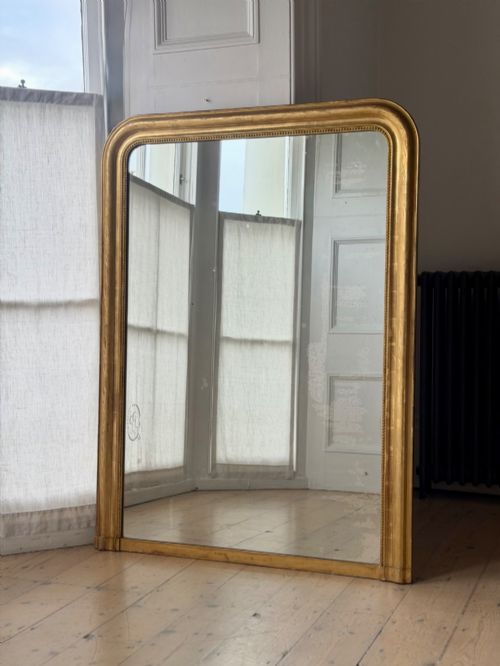
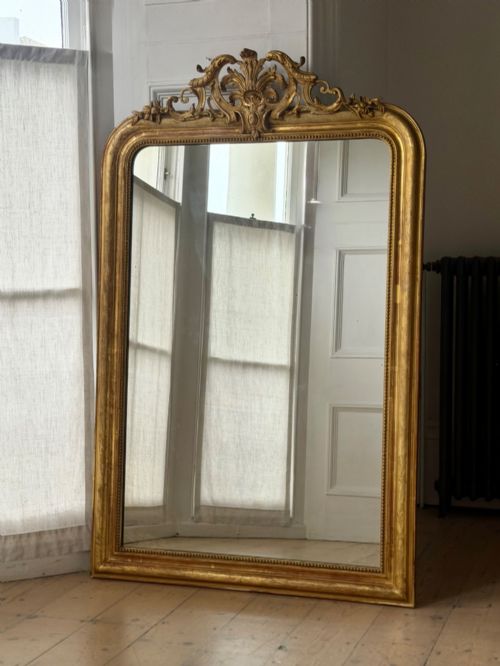
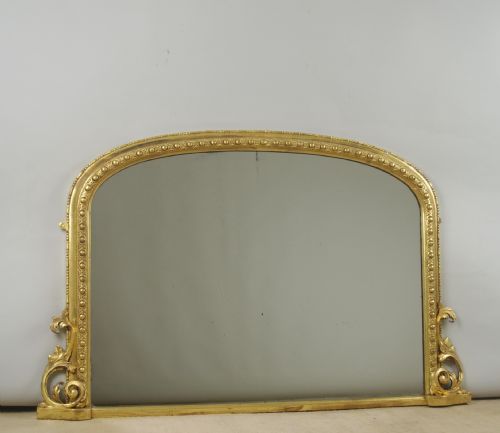
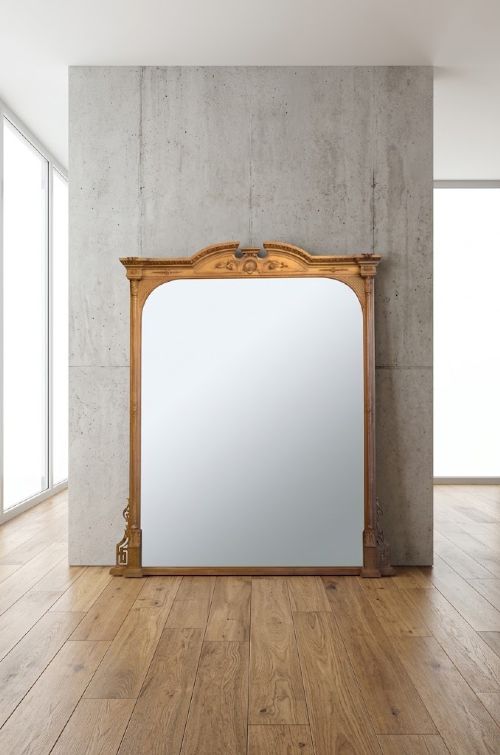




Gold Arched Overmantel
A gold arched overmantel brings scale and light into a room, reflecting hearths and windows with tall nineteenth-century presence.
Gold Arched Overmantel
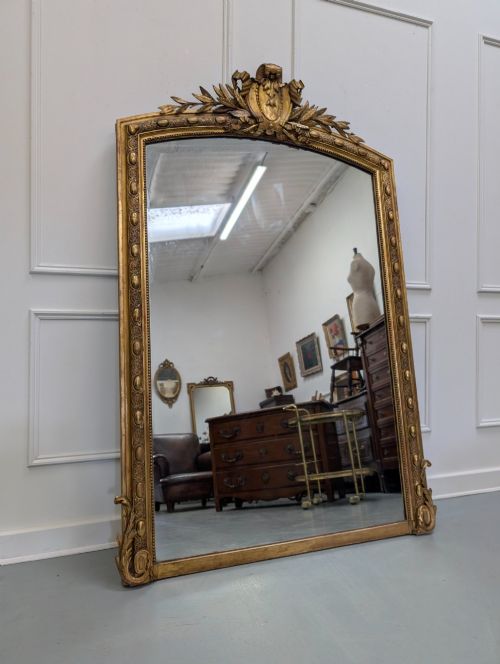
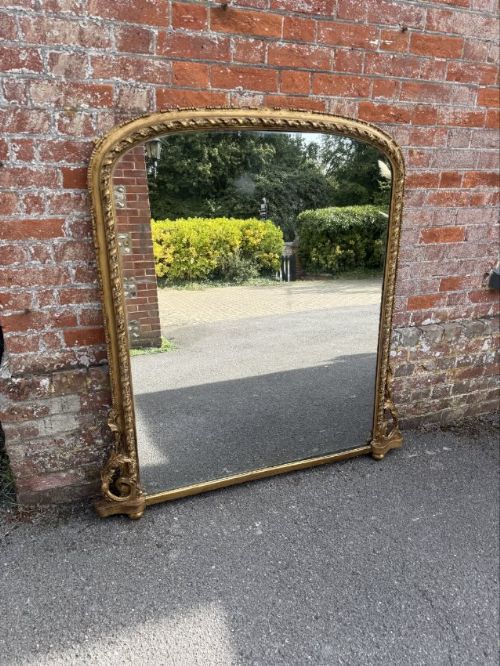
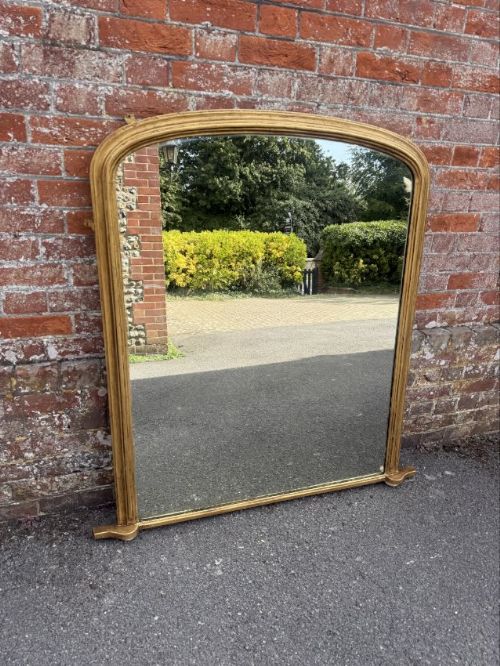
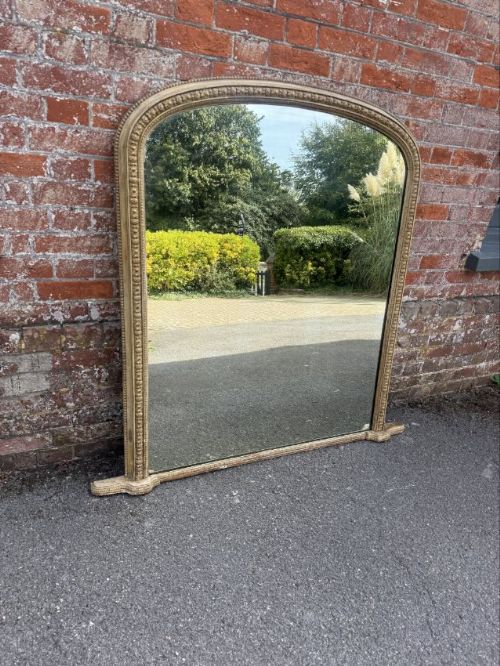
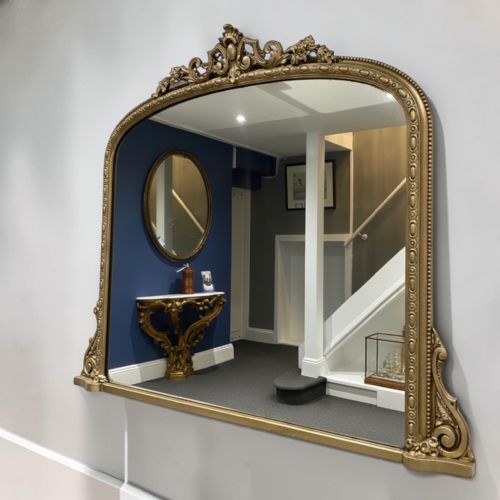
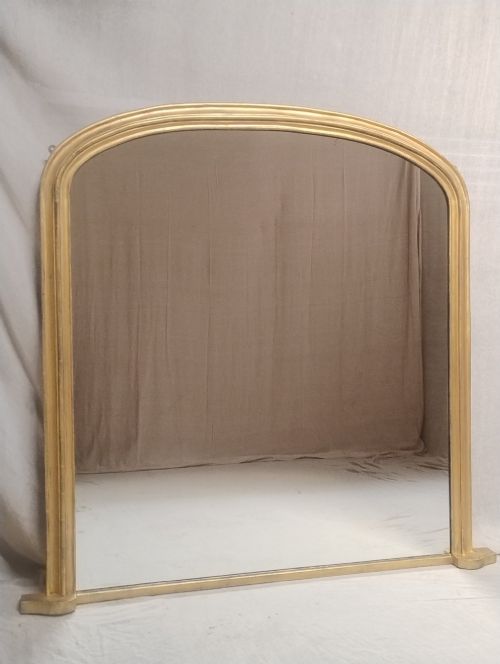
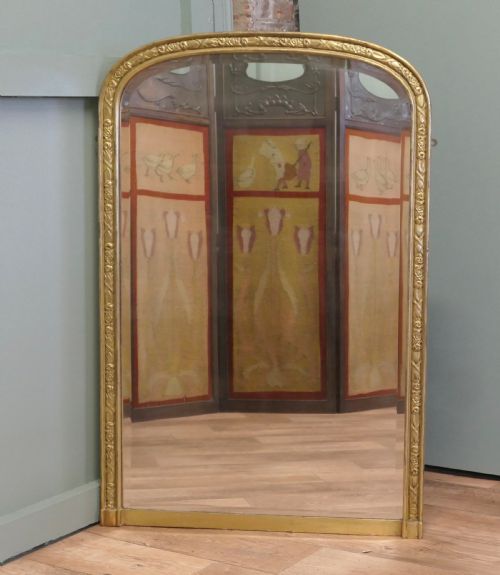
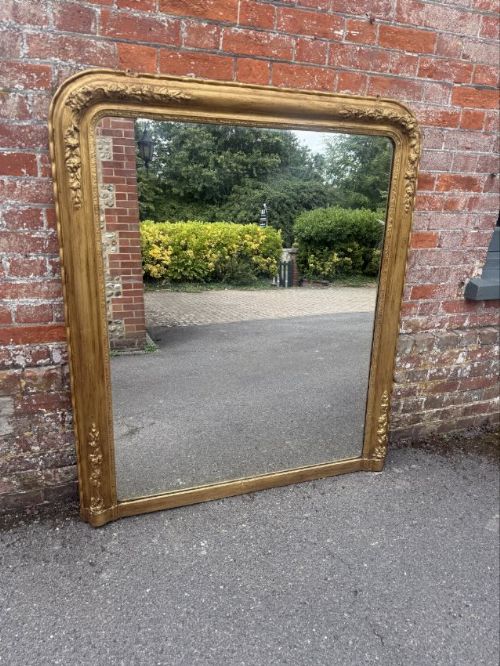
A gold arched overmantel sits above a fireplace, anchoring the chimney breast with a curved upper frame designed to draw the eye upward. These large wall mirrors date predominantly from the nineteenth century, encompassing Victorian English pieces and French Louis Philippe designs.
The form appears in several distinct guises on this page, from plain ribbed and rope-twist mouldings to grander carved gesso crestings. English examples tend to carry heavy wooden frames, while French equivalents often show softer shoulders and simpler gilt profiles.
Buyers select these substantial objects to dominate a room, using the curved glass to bounce natural light across high ceilings. The surviving pieces span from the Georgian period through the height of Victorian production, preserving nineteenth-century interior proportions.
Materials and construction methods
Makers built these frames using timber carcase work overlaid with gesso, a plaster-like mixture built up to receive fine detail. Artisans then applied gold leaf or gilding directly onto the prepared gesso surface to create the bright metallic finish.
Glass plates were set into the rebated frames behind, sometimes utilising mercury backing in earlier periods before silver nitrate techniques took over. The weight of the mirror glass required sturdy wooden backing boards and secure internal bracing to support the arched top.
Listings span the eighteenth, nineteenth, and early twentieth centuries, featuring wood, gesso, and gold leaf materials across Victorian and French styles.
Distinguishing quality in frames and glass
Quality rests in the crispness of the gesso mouldings and the depth of the hand-carved wooden details beneath. Superior pieces retain their original gilding without heavy modern repainting, showing natural wear that reveals the reddish bole layer underneath.
The condition and character of the mirror plate itself determine much of the value. Older plates display desirable foxing and subtle distortion in the glass, whereas compromised frames suffer from cracked gesso and missing decorative sections along the arched crown.
The Gold Arched Overmantel Glossary
- Overmantel
- A large mirror specifically proportioned to hang on the wall directly above a fireplace mantelpiece. These pieces often feature horizontal or vertical formats designed to echo the width of the hearth below.
- Gesso
- A mixture of chalk, gypsum, and size applied to a wooden frame as a smooth ground for gilding. It allows craftsmen to carve intricate relief ornaments before applying gold leaf.
- Giltwood
- Timber that has been covered with thin sheets of gold leaf. It differs from painted gold finish by offering a warmer, more reflective metallic lustre.
- Foxing
- The age-related spots and discoloration appearing within the silvering of antique mirror glass. This chemical oxidation creates dark patches that collectors prize for authenticity.
- Pier mirror
- A tall wall mirror traditionally placed on the pier of wall between two windows. They share many decorative characteristics with overmantels of the same period.
Gold Arched Overmantel: Frequently Asked Questions
What is the difference between Victorian and French styles?
Victorian English overmantels often feature heavier carved gesso decoration, rope twists, and pronounced architectural mouldings. French designs from the same era, such as Louis Philippe styles, lean towards cleaner curved shoulders and simpler beaded frames.
French mirrors frequently utilise slightly thinner wooden carcases while maintaining impressive overall heights.
Can I clean the original gold leaf frame?
Original gilt surfaces are delicate and easily damaged by modern cleaning products or abrasive cloths. Dust the frame gently with a soft, dry brush to remove surface particles without disturbing the underlying gold leaf.
Avoid using water or chemical solvents entirely, as moisture penetrates old gesso and causes the gilding to flake away from the wood.
How do I date an arched gold mirror?
Dating relies on examining the construction of the wooden backboards, the type of mirror glass, and the profile of the gesso moulding. Earlier nineteenth-century examples often display hand-beveled edges and thicker timber frames compared to later Victorian pieces.
The presence of foxed mercury glass generally points towards production in the first half of the nineteenth century.