



Gold Albert Chain Fob
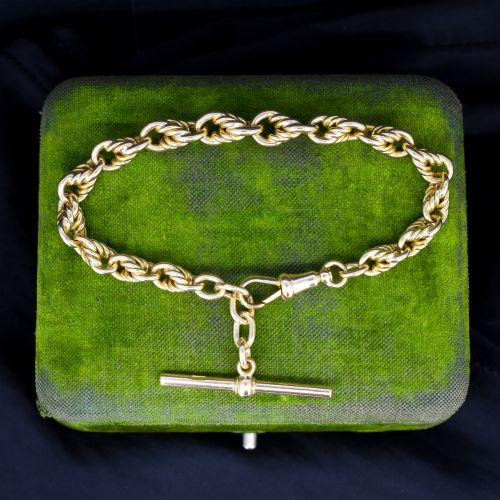
A gold albert chain fob is a functional piece of Victorian and Edwardian tailoring, prized today as a substantial necklace or bracelet.
Gold Albert Chain Fob
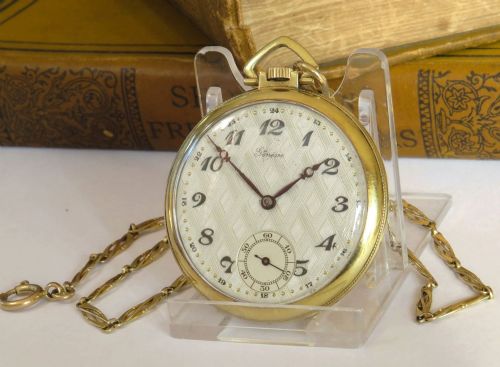
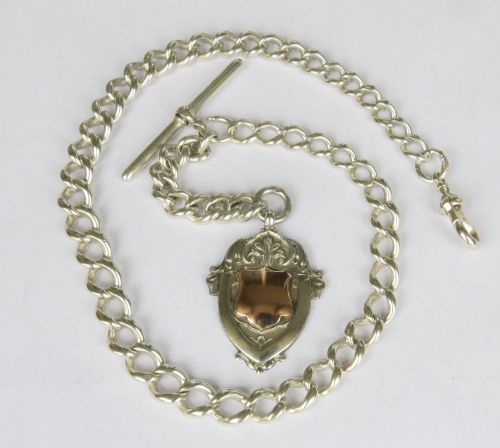
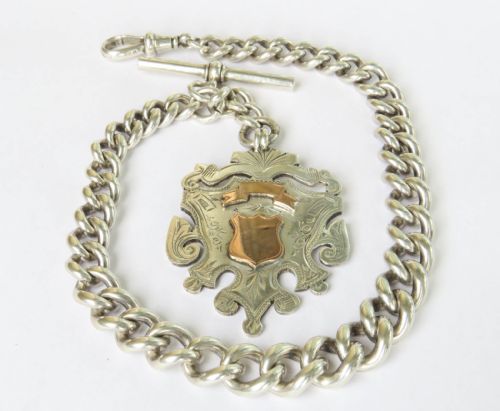
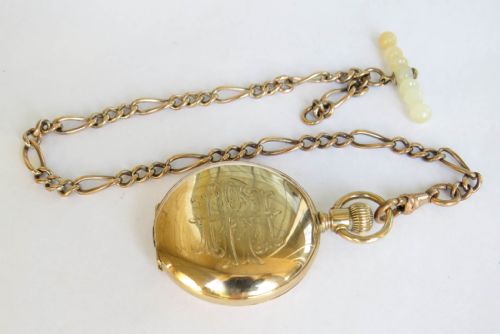
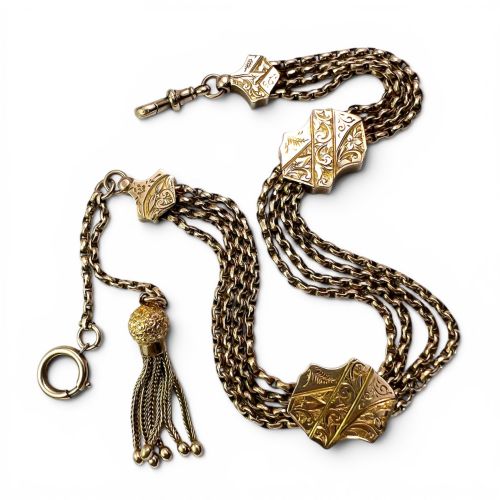
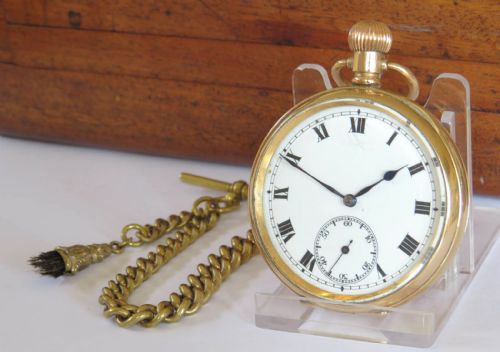
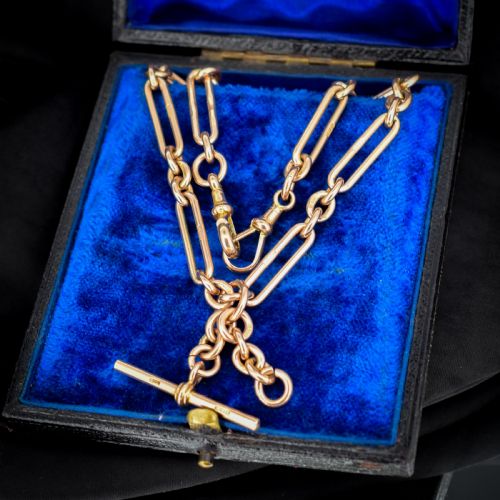
A gold albert chain fob combines a sturdy pocket watch chain with a decorative pendant, originally designed to secure a timepiece in a waistcoat pocket. The items span the nineteenth century, the Edwardian era, and the Art Deco period, taking forms such as single and double albert chains, albertinas, and necklaces.
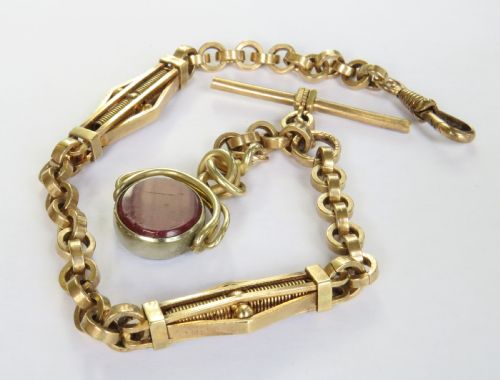
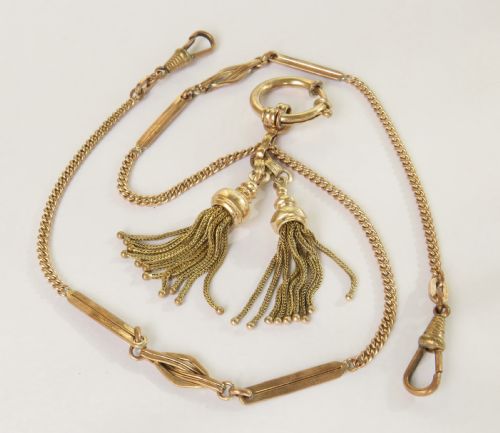
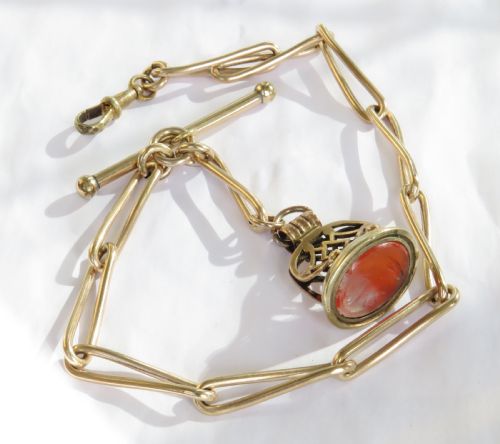
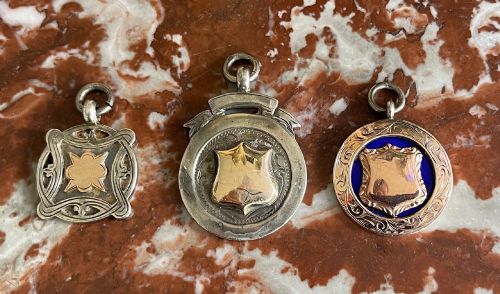
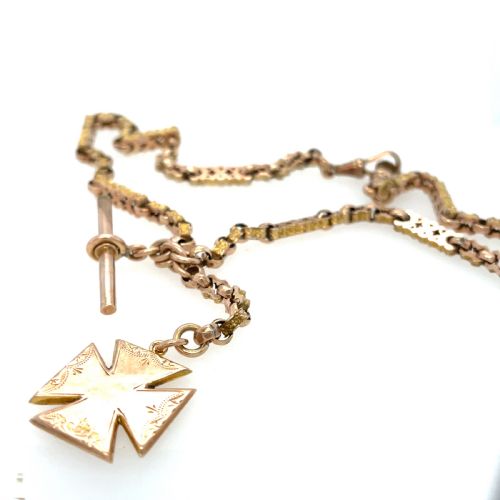
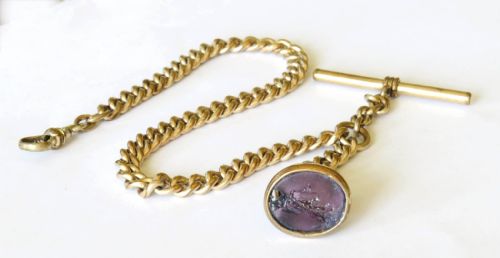
Most examples found here date from the Victorian and Edwardian periods up to the nineteen-twenties and thirties. They frequently arrive paired with swivel clasps, dog clips, T-bars, and various hanging fobs including intaglios, compasses, and tassels.
How They Were Made
Makers utilised solid nine carat, eighteen carat, and yellow or rose gold alongside rolled gold, gold plate, metal, glass, steel, and enamel. Construction relies on dense link formations such as curb, trombone, and belcher links designed to bear the daily weight of a pocket watch.
Detailing often involves hand-engraved motifs, cast or soldered dog clips, and mounted hardstone intaglios. T-bars were securely fixed to anchor the chain through a buttonhole while the fob hung loose.
Gold Albert Chain Fob Retail Price Guide 2026
Typical asking prices for gold albert chain fob among the pieces listed under this phrase on Sellingantiques today, from the lower quarter to the upper quarter. They describe what is for sale here now, not the wider market.
Among the hanging pendants are unexpected companions for timekeeping, including a miniature working compass and a hay making intaglio.
What Varies in Quality
Quality rests primarily on the gauge and integrity of the metal, distinguishing solid gold specimens from rolled gold or plated alternatives. Substantial weight, robust link construction, and original components such as matching dog clips and T-bars elevate a piece.
The sophistication of the attached fob and the crispness of any chased or engraved decoration also separate standard production pieces from finer workshop outputs.
The Gold Albert Chain Fob Glossary
- Albert chain
- A short length of chain designed to secure a pocket watch to a waistcoat, featuring a T-bar at one end and a swivel clasp at the other. It is named after Prince Albert, who popularised the fashion.
- T-bar
- A short transverse bar attached to the centre of an albert chain, slipped through a buttonhole to anchor the chain securely. It prevents the watch from falling if dislodged.
- Dog clip
- A spring-loaded swivel clasp used to attach a pocket watch or fob to the chain. The small spring mechanism allows secure fastening and easy removal.
- Intaglio
- A gem or stone carved with a design incised below the surface, commonly set into spinning fobs on these chains. They were historically used as personal wax seals.
- Rolled gold
- A material made by fusing a layer of gold to a base metal core under heat and pressure, providing the appearance of solid gold with greater durability than mere plating.
Gold Albert Chain Fob: Frequently Asked Questions
How do I wear an albert chain today?
These chains convert easily into necklaces or chokers by fastening the dog clips to the opposing end or adjusting the T-bar. Many collectors wear them directly around the neck to display the attached fob.
Heavier specimens also function well as wrapped bracelets, depending on the overall length and link scale.
What is the difference between an albert and an albertina?
An albert chain is typically heavier and bolder, designed for traditional gentleman's tailoring with robust curb or trombone links. An albertina is a finer, more delicate variation, often multi-stranded and historically worn by women.
Both types frequently incorporate sliding components, tassels, and decorative fobs.
How do I tell solid gold from rolled gold?
Solid gold pieces generally bear clear hallmarks indicating the purity, such as nine carat or eighteen carat gold standards, alongside town marks. Rolled gold items typically feature stamps denoting the plating method or layer thickness rather than official assay office marks.
Examining the wear points on links can also reveal if the base metal shows through beneath a gold surface.