

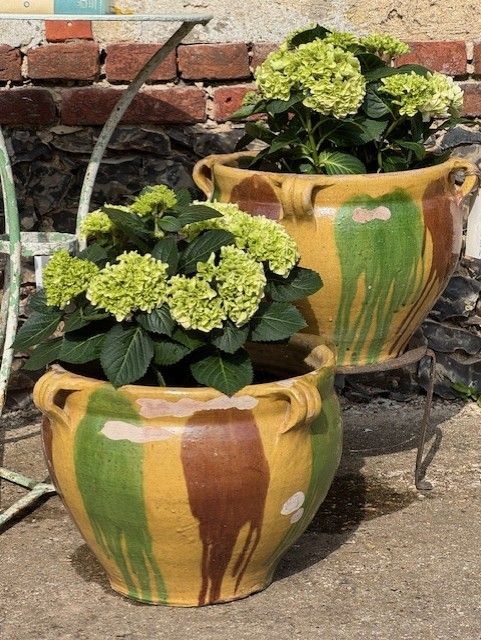


Glazed Terracotta Pots
Glazed terracotta pots bring warmth and texture to a room or garden, offering centuries of practical utility transformed into decorative statements.
Glazed Terracotta Pots
Glazed terracotta pots encompass a diverse range of vessels designed for planting, storage, and utility across domestic and garden settings. When searching for glazed terracotta pots, buyers encounter everything from French confit jars and olive pots to Victorian garden urns and strawberry planters.
The selections span multiple periods, notably the 18th century, 19th century, and Victorian era, alongside regional styles such as French Provincial, French Country, and Rustic Vernacular. Forms vary from simple kitchenalia and dairy salting crocks to grand tour Italian planter urns and jardinieres.
Most pieces on this page originate from France, England, Scotland, Italy, and Turkey, reflecting a rich European and Mediterranean utilitarian history. Buyers most frequently meet 19th-century French confit pots, salt-glazed stoneware vessels, and faux bois planters.
Materials and production methods
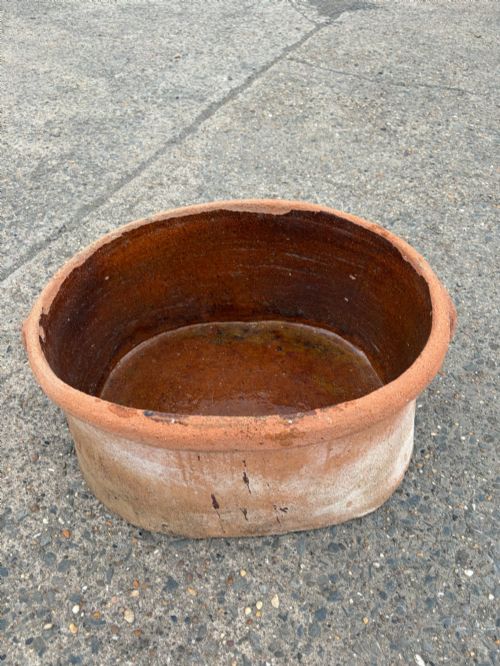
These pieces are primarily formed from terracotta, earthenware, and stoneware, often finished with a functional or decorative glaze. Artisans shaped the clay by hand or on the wheel before applying lead, salt, or coloured glazes to seal the porous body.
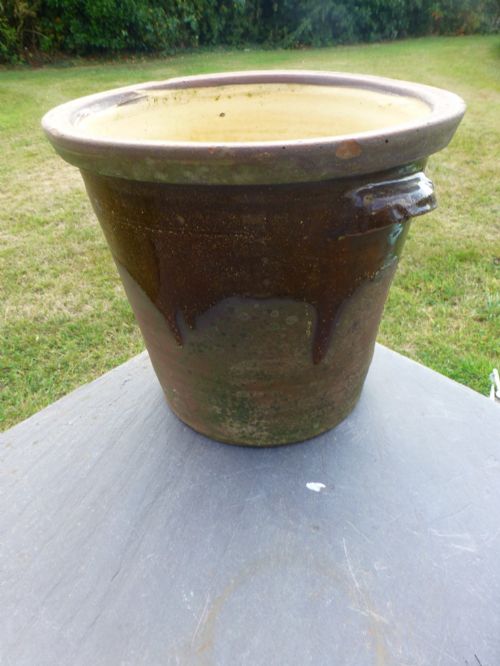
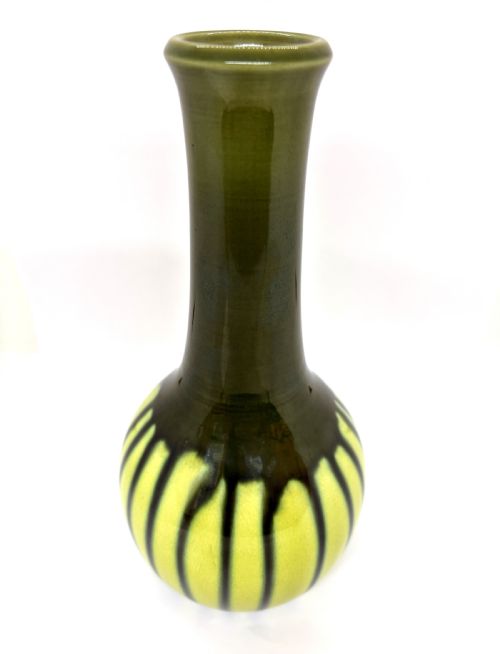
Salt-glazing involved throwing common salt into the kiln at high temperatures to produce a characteristic pitted, orange-peel texture on stoneware surfaces. Earthenware and terracotta bodies received rich green, brown, or dribble glazes that pooled naturally in the warmth of the kiln.
Glazed Terracotta Pots Retail Price Guide 2026
Typical asking prices for glazed terracotta pots among the pieces listed under this phrase on Sellingantiques today, from the lower quarter to the upper quarter. They describe what is for sale here now, not the wider market.
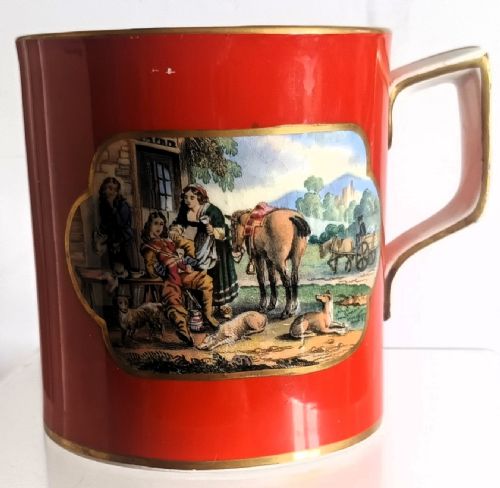
Listings feature materials spanning simple terracotta, earthenware, and salt-glazed stoneware, alongside decorative glazes and gilt accents.
Assessing quality in glazed ceramics
Quality in these vessels rests on the harmony between the form, the integrity of the clay body, and the character of the glaze. Superior examples display confident, balanced throwing or moulding with glazes that have pooled and run organically without obscuring the underlying vessel.
Age-related wear, such as surface crazing, chips, and historical patina, contributes significantly to the visual weight and appeal of older pieces. The distinction between a standard utility crock and a masterwork lies in the depth of the glaze, the crispness of any applied decoration, and the survival of original handles or surfaces.
Guichard Carriès·Burmantoft's Pottery
The Glazed Terracotta Pots Glossary
- Terracotta
- A porous, unglazed or glazed red earthenware fired at relatively low temperatures. It serves as the traditional body for Mediterranean storage jars and garden planters.
- Confit pot
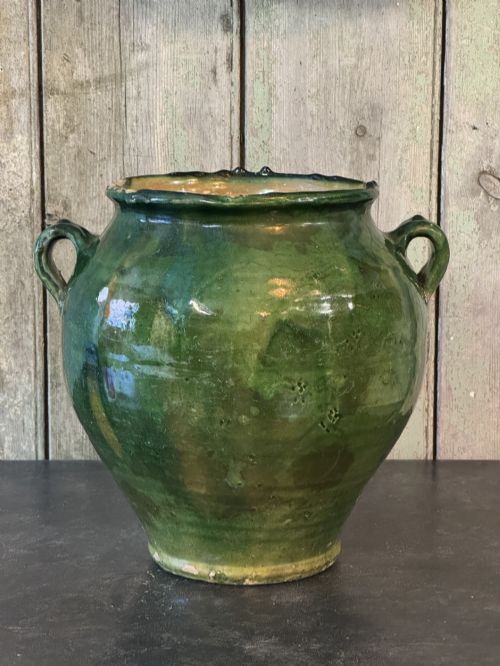
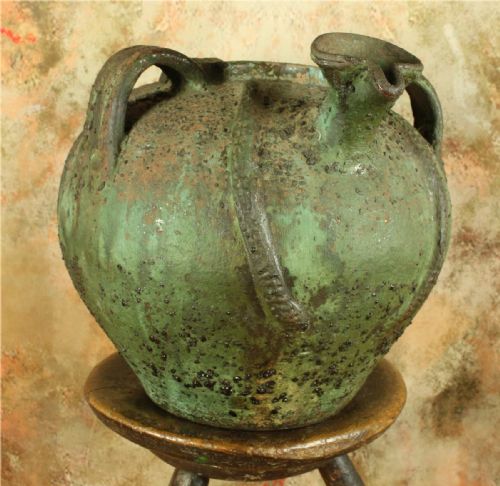
- A traditional French earthenware jar featuring one, two, or three handles, historically used for preserving meat and provisions. These vessels typically display a partially glazed upper body.
- Salt-glazed stoneware
- A dense, impermeable ceramic created by introducing salt into the kiln during high-temperature firing. This process produces a glossy, slightly textured surface reminiscent of orange peel.
- Faux bois
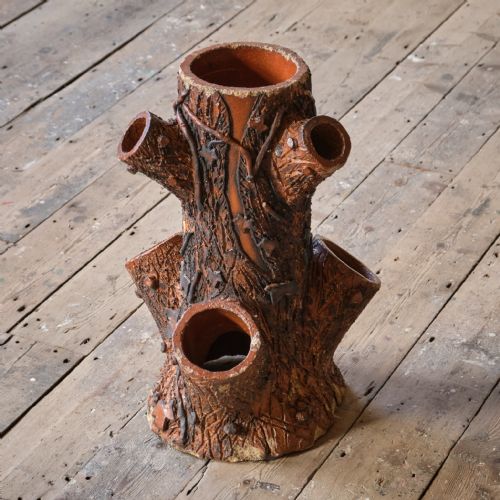
- A decorative style mimicking wood grain, applied to ceramics and concrete during the 19th century. Artisans sculpted or moulded the clay to resemble natural timber surfaces, frequently seen on strawberry planters.
- Jardiniere
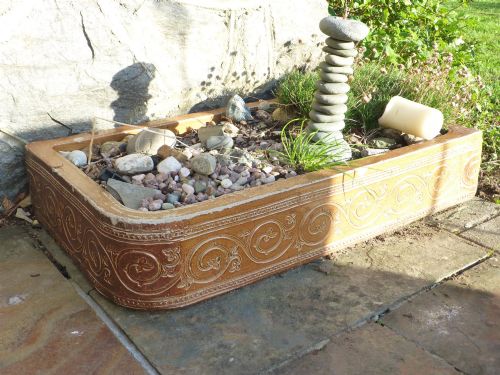
- A large ornamental pot or stand designed to hold growing plants or flowers. These pieces often appear in majolica or terracotta across Victorian and continental interiors.
- Slipware
- Pottery decorated with slip, which is a liquid mixture of clay and water applied to the vessel before firing. It creates smooth, contrasting linear or brushed patterns beneath the glaze.
Glazed Terracotta Pots: Frequently Asked Questions
What were confit pots used for?
French confit pots served as utilitarian storage vessels in rural farmhouses, primarily used for preserving meats like duck or pork in fat. The interior glaze prevented the fats from seeping through the porous earthenware during long periods in cool pantries.
Over time, these pots transitioned from functional kitchenalia to decorative interior objects. Their distinctive handles and aged green or yellow glazes now make them popular cachepots and floral vases.
Are these pots frost resistant?
Many older earthenware and terracotta pots possess porous bodies that can absorb moisture and crack during freezing winter temperatures. Glazed surfaces offer some protection, but historical pieces often require indoor storage or shelter during severe frost.
Stoneware and salt-glazed vessels generally withstand lower temperatures better than low-fired earthenware. Buyers intending to use garden urns outdoors through winter should check the specific ceramic density and glaze coverage.
How do I date a terracotta pot?
Dating relies on examining the potting technique, tool marks, glaze chemistry, and wear patterns across the clay body. 18th and 19th-century pieces often show irregular throwing lines, heavy mineral deposits, and subtle variations in hand-mixed glazes.
Historical context also helps narrow the period, such as the distinctive rustication of Victorian faux bois or the specific green tones of 19th-century French workshops. Comparing the footring and interior finish to documented examples provides further chronological clues.
What is a strawberry planter?
A strawberry planter is a specialised garden vessel featuring multiple pocket-like openings protruding from the sides of the main pot. These pockets allowed multiple strawberry plants to grow horizontally while keeping the fruit clean off the ground.
19th-century versions frequently incorporated salt-glazed stoneware or faux bois terracotta designs to resemble natural tree trunks. Today, they function equally well as herb planters or architectural focal points in courtyard gardens.