
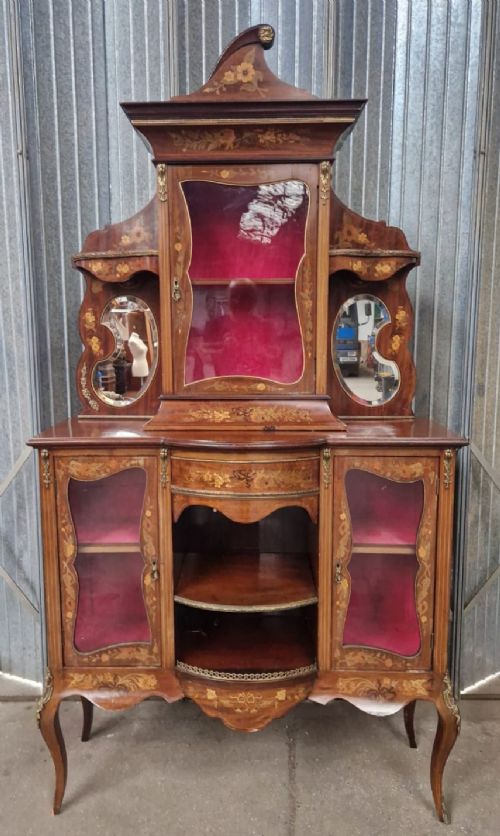
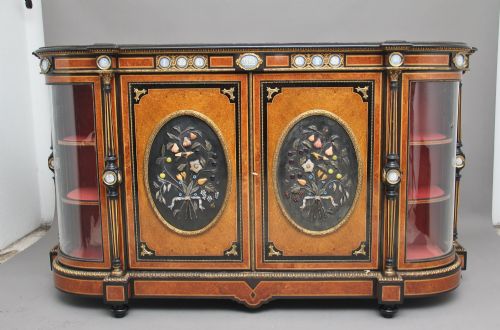
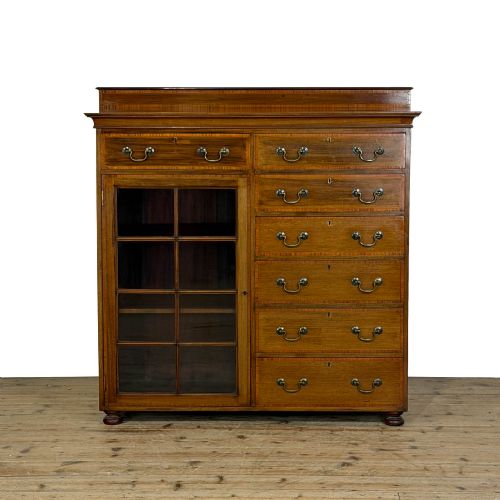
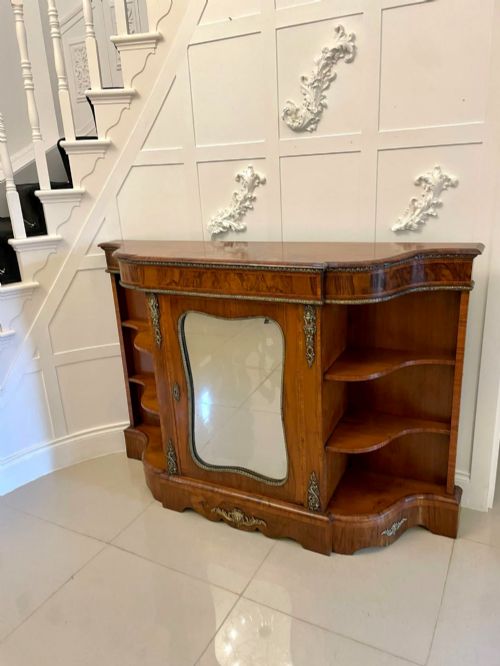
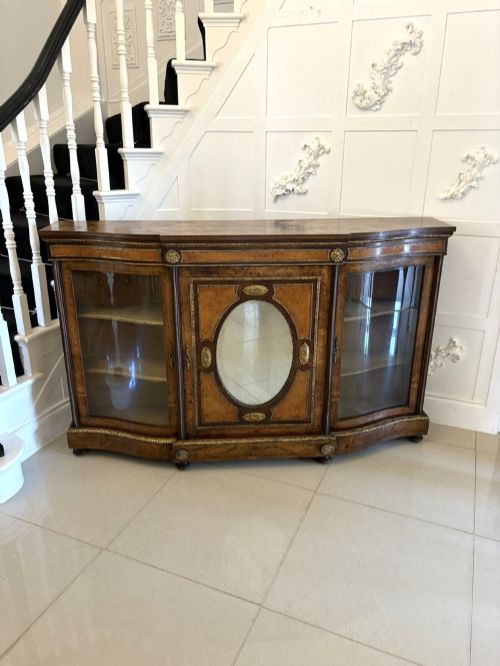
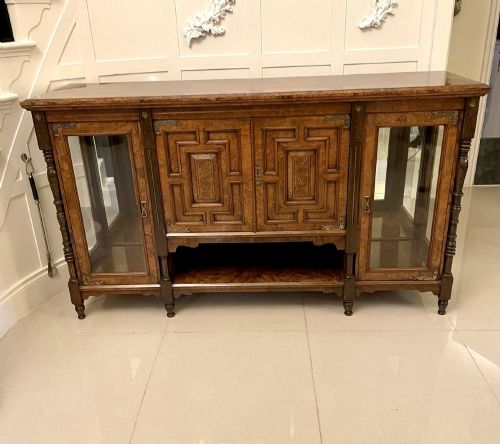
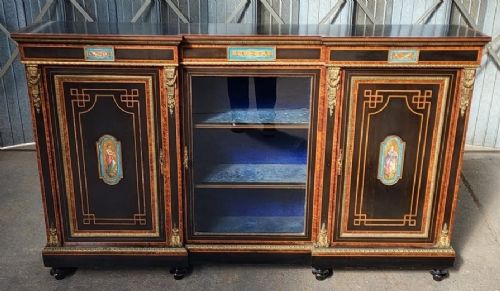


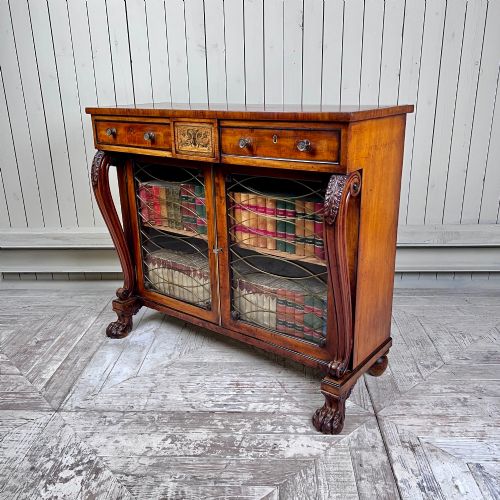
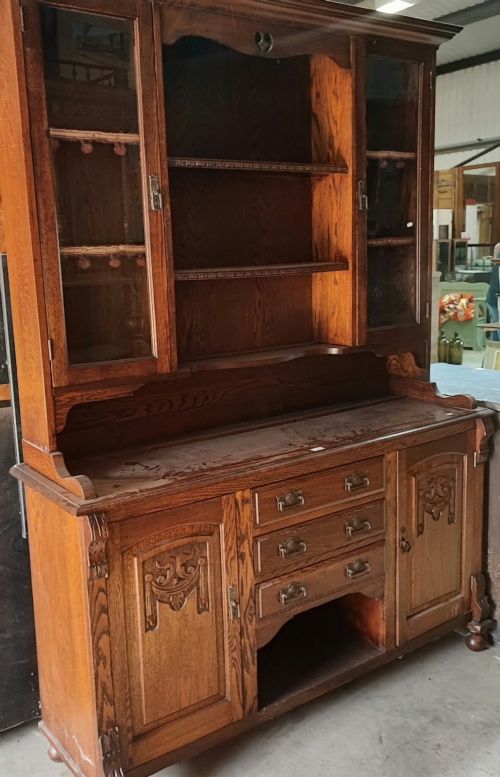
Glazed Sideboard Cabinet
A glazed sideboard cabinet brings together the storage of a heavy base and the display of a glass front, holding silver or books while framing the room.
Glazed Sideboard Cabinet
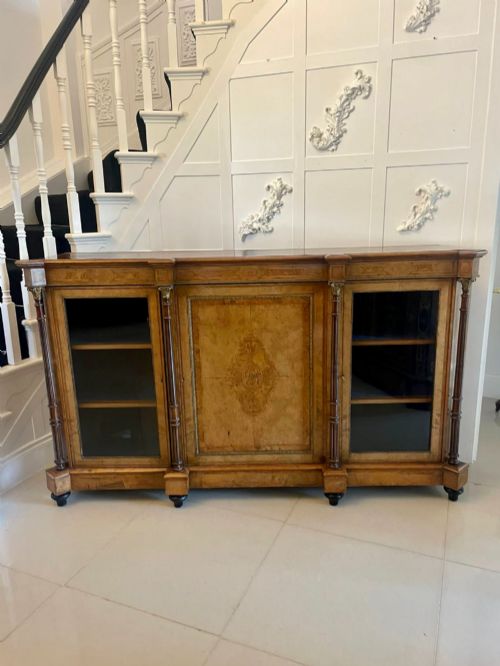
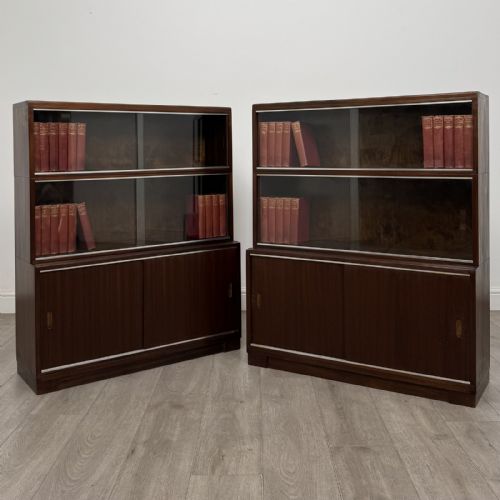
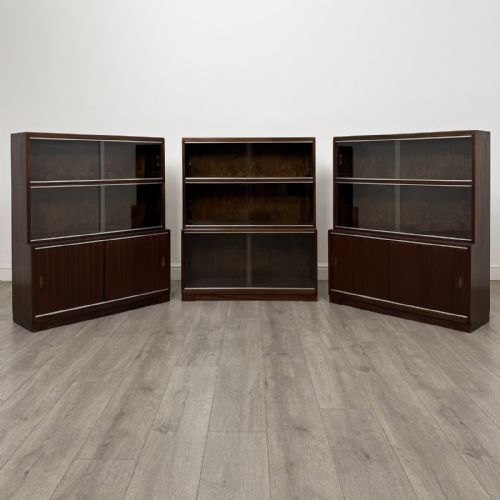
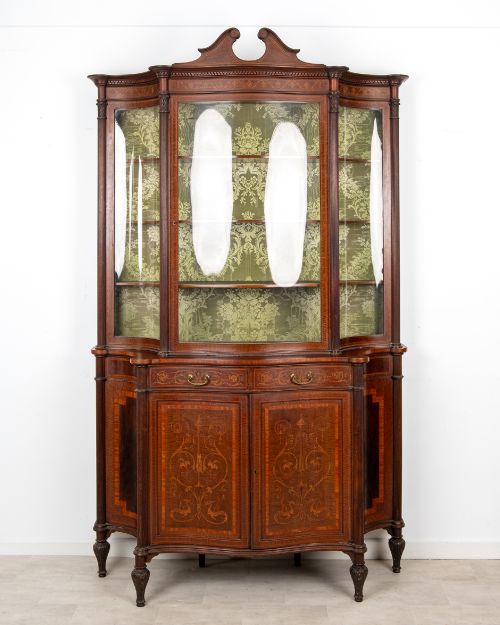
When you search for a glazed sideboard cabinet, you encounter pieces that bridge the gap between heavy base storage and upper display. They appear in forms such as credenzas, display cabinets, bookcases, and kitchen dressers across this page.
The most common versions on this page hail from the Victorian and Edwardian eras, alongside pieces built in the Regency and Arts and Crafts styles. These items range from compact pier cabinets to substantial breakfront bookcases and Welsh dressers.
Makers utilised these dual-purpose carcases in formal reception rooms, dining rooms, and morning rooms. Their primary function remains the housing of prized possessions behind glass while concealing other items below.
How they were made
Cabinetmakers built these carcases from foundational timbers such as oak, mahogany, and pine, applying decorative veneers like burr walnut, rosewood, amboyna, and satinwood to primary surfaces. These woods provided stable structures that accepted intricate marquetry and inlay work.
Brass, ormolu mounts, and mirrored glass often accent the woodwork, particularly on nineteenth-century credenzas and display pieces. Glazing bars divide the glass panels into geometric or arched patterns, supporting the panes securely.
Joinery techniques combined traditional frame-and-panel construction with dovetailed drawers. French polishing or wax finishes sealed the exterior timbers to highlight grain patterns.
Listings for a glazed sideboard cabinet span the nineteenth and twentieth centuries, incorporating oak, mahogany, rosewood, and burr walnut.
What varies in quality
Quality rests in the selection of veneer figures and the precision of marquetry inlay. Pieces featuring highly figured burr walnut, kingwood, or satinwood display deliberate grain matching across the doors and drawer fronts.
Mounts cast in ormolu and detailed brass work separate standard production items from workshop highlights. Crisp carving on solid oak or mahogany panels also indicates superior craftsmanship.
The integration of secondary timbers and the integrity of the original glass panes determine the enduring standard of a piece. Hand-drawn glass and tight, flush door closures demonstrate higher initial construction costs.
Collinson & Lock·Edwards & Roberts·August Ungethüm
The Glazed Sideboard Cabinet Glossary
- Credenza
- A low cabinet or sideboard, frequently fitted with glass doors and ormolu mounts, designed for display and storage. It sits low against a wall, unlike taller breakfront bookcases.
- Pier cabinet
- A narrow display cabinet built to stand in the wall space between windows. These items often feature glass doors and elaborate marquetry inlay.
- Ormolu
- Gilded bronze applied as decorative mounts on furniture. It frames doors and panels on high-status Victorian pieces.
- Marquetry
- Decorative patterns formed by inserting pieces of contrasting veneer into a wood foundation. Floral and geometric motifs typify this work on nineteenth-century cabinets.
- Chiffonier
- A compact sideboard equipped with a shelf or a small enclosed cupboard above. They served smaller drawing rooms for the storage of books or tea wares.
Glazed Sideboard Cabinet: Frequently Asked Questions
What is the difference between a credenza and a sideboard?
A credenza typically incorporates glass doors for display alongside enclosed cupboards, sitting lower to the ground than a traditional dining room sideboard. They evolved from side tables into sophisticated display furniture during the nineteenth century.
Traditional sideboards focused primarily on drawer and cupboard storage for dining paraphernalia without the glass-fronted upper sections seen on many cabinets here.
Where should I place a glazed cabinet?
These cabinets suit reception rooms, dining spaces, and wide hallways where natural light can strike the glass and highlight the wood grain. Their glazed doors protect contents from dust while keeping them visible.
Keep them away from direct heat sources and strong sunlight to prevent the timber veneers and internal adhesives from drying out over time.
How do I date a nineteenth-century glazed cabinet?
Dating relies on identifying the prevailing stylistic markers, secondary woods, and construction methods used in the carcase. Victorian pieces often use mahogany or burr walnut with heavy ormolu mounts, while Edwardian examples lean towards lighter inlaid satinwood and mahogany.
Examining the backboards and drawer linings helps confirm the period, as machine-sawn timbers indicate later nineteenth or early twentieth-century manufacturing.
Can these cabinets hold heavy books?
Bookcase cabinets and sturdy oak dressers feature reinforced shelving designed to bear the weight of heavy volumes. Shelves in standard display cabinets and pier units suit lighter decorative objects and porcelain.
Check the shelf support system inside the cabinet before loading heavy items, as older adjustable wooden pegs have distinct weight limits.