




Glazed Side Display Table
A glazed side display table brings glass-topped elegance into domestic spaces, holding precious small objects where light catches them.
Glazed Side Display Table
A glazed side display table functions primarily to showcase small treasures, medals, and jewellery under a protective glass lid or within a glass case. These pieces emerge across periods spanning the nineteenth and early twentieth centuries, drawing heavily upon Edwardian and Victorian aesthetic preferences.
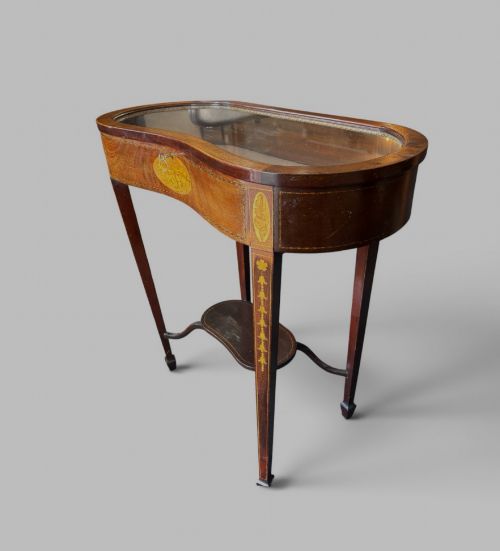
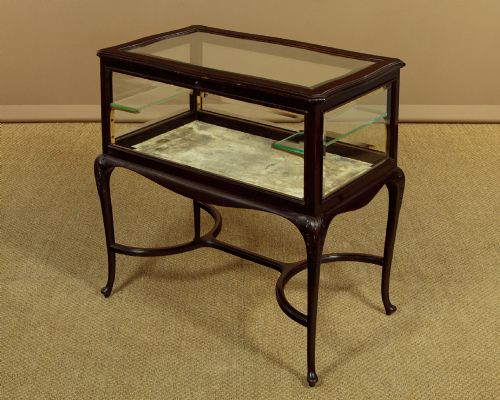
The commonest forms met in these selections include kidney shapes, octagonal tables, and rectangular bijouterie cabinets standing on slender legs. Many examples incorporate satinwood or brass inlay alongside mahogany, walnut, and rosewood veneers.
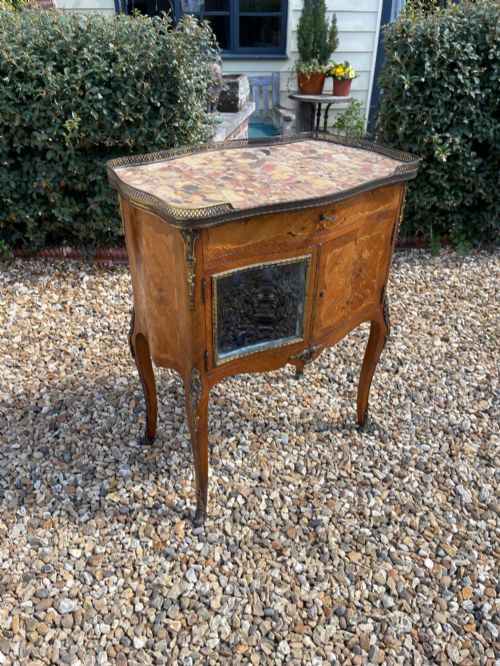
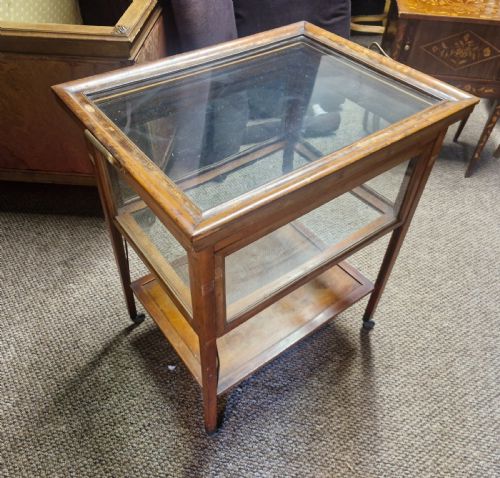
Continental versions frequently display French Louis XV style influences, featuring ormolu mounts and curved woodwork. Certain pieces blur the line between a traditional side table and a tea trolley with drop sides, while retaining the essential glazed display surface.
How they were made
Cabinet makers constructed the foundational carcases of these tables using dense timbers such as mahogany, walnut, and occasionally yew wood or kingwood. Veneers were carefully applied over softer woods, often complemented by intricate marquetry and contrasting satinwood stringing.
Glazing required precise joinery to secure glass panes within hinged lids or sliding frames, allowing light to illuminate the interior compartment. Metal components like brass trim and cast ormolu mounts were cast and polished to accent the corners and legs of French and English models.
Materials appearing across these listings include glass, mahogany, brass, velvet, fabric, satinwood, ormolu, and walnut.
What varies in quality
The refinement of the timber and the crispness of any inlay set the finer examples apart from simpler utilitarian pieces. Finely figured mahogany veneers and detailed marquetry indicate higher craftsmanship during production.
Hardware quality dictates much of the distinction between standard and superior pieces, particularly the weight and chasing of ormolu mounts or the snug fit of hinged glass lids. The integrity of the internal lining, often velvet or fabric, also reflects the original tier of manufacture.
The Glazed Side Display Table Glossary
- Bijouterie table
- A specialist display table featuring a glass-topped compartment designed for holding small ornaments, jewellery, or curiosities.
- Ormolu
- Gilded bronze ornamentation applied to furniture, frequently seen on French revival pieces from the nineteenth century.
- Marquetry
- Decorative patterns formed by inserting thin pieces of wood, shell, or ivory into a veneered surface.
- Satinwood
- A pale, hard tropical timber utilised for contrasting inlay and stringing on dark cabinet work.
- Vitrine
- A glass-fronted or glass-topped cabinet or table created to display decorative objects.
Glazed Side Display Table: Frequently Asked Questions
What is a bijouterie table?
A bijouterie table is a specialised piece of furniture featuring a glazed compartment designed to display small collections, jewellery, and curiosities.
These tables lift objects to eye level while protecting them from dust within a secure glass enclosure.
How were display tables used?
Owners placed them in drawing rooms and parlours to exhibit personal treasures, medals, and decorative ornaments to visiting guests.
The glass top allowed conversation to centre upon the small items arranged safely inside the velvet-lined interior.
Are these tables French or English?
They originate from both traditions, with English makers favouring inlaid mahogany while French workshops produced curved designs with ormolu mounts.
Continental variations often reflect Louis XV revival styles with rich veneers like kingwood and walnut.
What periods do these pieces date from?
The selections span the nineteenth and early twentieth centuries, encompassing Victorian, Edwardian, and George III revivals.
Edwardian mahogany examples and late nineteenth-century French pieces appear frequently among these listings.