



Glazed Mahogany Wall Cabinet
These glazed mahogany wall cabinets combine timber and glass to display small possessions securely on a room's perimeter.
Glazed Mahogany Wall Cabinet
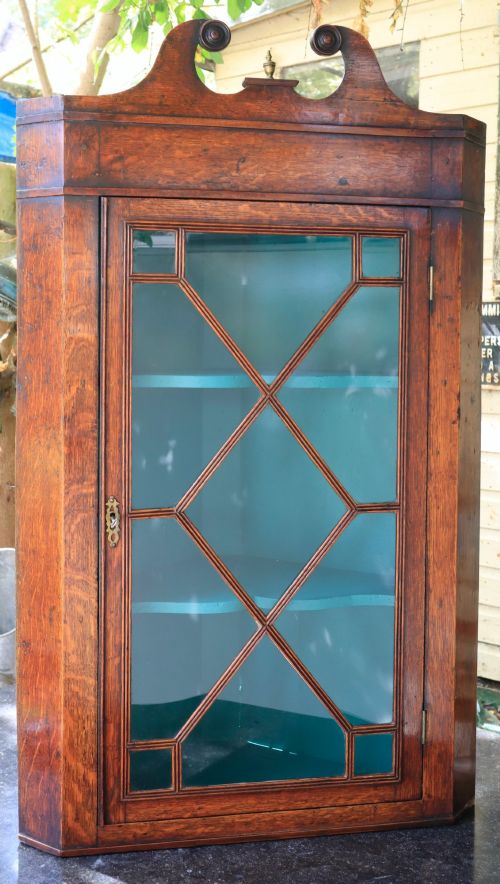
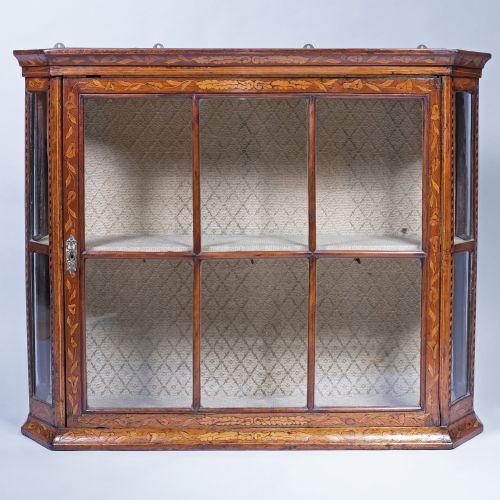
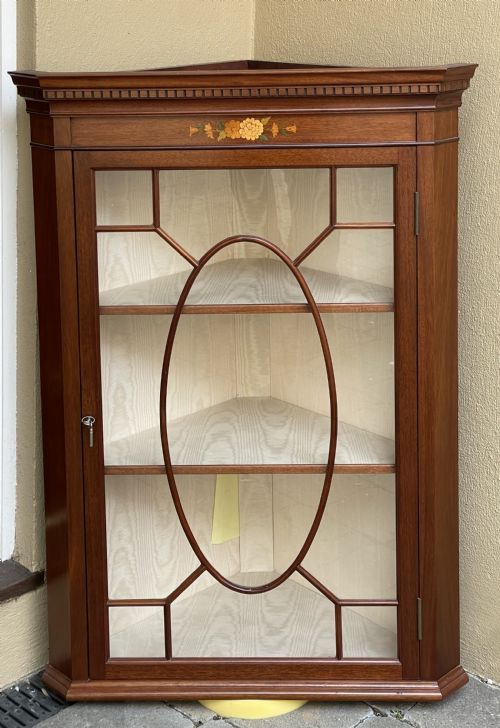
A glazed mahogany wall cabinet brings timber frames and glass panels together to hold small objects of value or interest off the floor. When you search for glazed mahogany wall cabinet, you encounter forms that hug corners or hang flat against plaster, alongside miniature cases and bow-fronted designs.
The pieces on this page span the eighteenth, nineteenth, and early twentieth centuries, drawing heavily on Georgian, Regency, Victorian, and Edwardian periods. Corner cupboards and wall-hanging display cabinets dominate the selection, often fitted with single glazed doors that reveal shelves within.
Materials and construction
Carpenters built these wall fixtures primarily in mahogany, sometimes selecting satinwood for contrast or applying marquetry inlay to enrich flat surfaces. Brass hardware such as hinges, escutcheons, and working keys secure the doors.
Glazing takes the form of individual glass panes held by timber bars, including thirteen-panel arrangements and astragal configurations. Certain examples incorporate mirrored interiors or fabric linings behind the shelving to reflect light through displayed items.
Listings include both flat wall-hanging cabinets and specialised corner cupboards spanning the Georgian, Victorian, and Edwardian eras.
Assessing quality and proportion
Superior examples demonstrate crisp timber mouldings and precise joinery in the frame and door assembly, whereas simpler pieces rely on plain rectilinear construction. The delicacy of the glazing bars and the grain selection in the mahogany distinguish finer workshop output from utilitarian storage.
Added elements such as fitted interior drawers, working locks with original keys, and subtle inlay work elevate a piece. The crispness of carved details on Georgian cornices and the balanced proportions of bow fronts separate well-considered designs from standard domestic cupboards.
The Glazed Mahogany Wall Cabinet Glossary
- Astragal
- Timber bars holding individual panes of glass within a door frame. They form geometric grid patterns across the glazed front.
- Bow front
- A convex, outwardly curved cabinet face. This curved shape softens room corners and adds visual depth.
- Marquetry inlay
- Decorative patterns formed by fitting contrasting wood veneers into cut-outs on the mahogany surface. Satinwood is frequently used for this contrasting detail.
- Serpentine front
- A cabinet front featuring a convex centre flanked by concave curves, or the reverse. This undulating profile requires skilled carpentry.
Glazed Mahogany Wall Cabinet: Frequently Asked Questions
How do I hang a wall cabinet safely?
These hanging cupboards require secure fixings into structural wall studs or masonry rather than plaster alone. Their weight, increased by glass and stored contents, demands robust brackets.
Professional installation ensures the cabinet stays level and supports the load without pulling away from the wall over time.
Were these cabinets meant for corners?
Many surviving examples are specifically built as corner units to utilise awkward junction spaces in smaller rooms. Their triangular profiles fit snugly into ninety-degree angles.
Flat-backed wall cabinets also appear frequently, designed to hang on straight stretches of walling just like a picture frame.
What items belong inside a display cabinet?
Historically, owners used these glazed enclosures for porcelain, glassware, miniature portraits, and small collected curiosities. The glass protected delicate objects from dust while keeping them visible.
Today, they serve the same purpose for small personal collections, books, or silver pieces that benefit from enclosed wall storage.
How do I distinguish Georgian from Edwardian pieces?
Georgian cabinets dating from the eighteenth and early nineteenth centuries often exhibit heavy cornices, hand-cut mahogany timber, and astragal-barred doors. Their proportions reflect classical design rules of the period.
Edwardian examples from around nineteen hundred typically show lighter framing, sometimes combined with satinwood inlay and factory-produced glass components.