
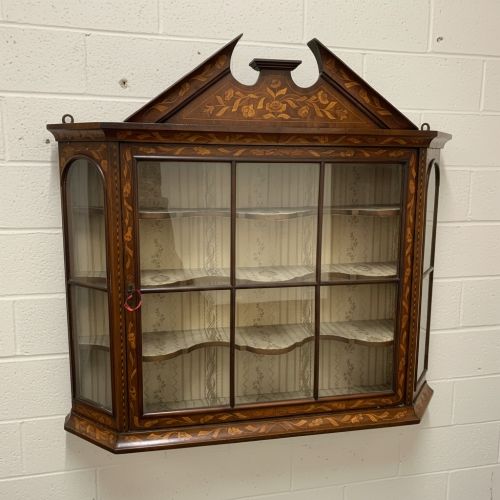


Antique Wall Showcase
An antique wall showcase keeps your small treasures secure and visible, drawing the eye with rich timber frames and clear glass.
Antique Wall Showcase
An antique wall showcase is a hanging cabinet designed to display small items while keeping them protected behind glass. The pieces seen on this page span several eras, including the Edwardian and Victorian periods, alongside 18th-century and 19th-century examples.
Most items take the form of wall cabinets or miniature display cabinets, with occasional corner cabinets and shop display pieces appearing too. Mahogany and walnut form the backbone of these selections, complemented by fruitwood, pine, and satinwood.
Makers utilised various regional aesthetics, ranging from Dutch Baroque and Sheraton Revival styles to rustic country finishes and French shop fittings. Buyers frequently encounter glazed doors, mirrored interiors, and fabric linings that enhance the items stored inside.
How they were made
Joiners constructed these cabinets using solid timbers like mahogany, walnut, and fruitwood, often applying marquetry or paintwork for decoration. Glass panels were fitted into wooden doors or secured within brass frames to allow a clear view of the interior.
Interiors frequently incorporated mirrored backs to reflect light, whilst fabric linings provided a soft background for displayed collectibles. Brass hinges, latches, and sometimes hand-painted advertising signs completed the construction of these hanging display pieces.
What varies in quality
The sophistication of the timber work and decorative technique dictates the standing of a cabinet, particularly when comparing plain pine or mahogany structures to intricate marquetry examples. Finer pieces display careful selection of wood grain, balanced proportions, and superior glazing bars.
Hardware and interior detailing also separate standard items from exceptional ones, with original brass fittings and fitted mirrored or fabric-lined interiors adding considerable refinement. The presence of documented maker details or specialist shop provenance elevates specific pieces above domestic alternatives.
SIEGEL
The Antique Wall Showcase Glossary
- Marquetry
- A decorative technique where small pieces of wood veneer are fitted onto a structure to form pictorial or geometric patterns. This method often distinguishes high-status 18th-century furniture.
- Glazed
- Fitted with panes of glass to enclose the cabinet while maintaining visibility. It allows collectors to inspect contents without opening the doors.
- Corner cabinet
- A specialised storage unit built with an angled back to fit neatly into the corner of a room. These maximise floor or wall space efficiently.
- Satinwood
- A durable hardwood with a natural golden sheen, frequently utilised during the Sheraton Revival period. It provides a pale, reflective surface for painted decoration.
Antique Wall Showcase: Frequently Asked Questions
How were wall showcases used originally?
These cabinets served to display precious porcelain, miniatures, and trinkets within domestic drawing rooms. Merchants also utilised similar glazed wall units to advertise and sell small wares in shops.
Over time, the function shifted towards preserving delicate collections from dust while maintaining high visibility for guests or customers.
Can these cabinets support heavy items?
Most antique wall showcases are constructed to hold lightweight collectibles such as pocket watches, coins, and ceramic figurines. Their hanging mechanisms are built for moderate loads rather than heavy books or dense metal objects.
Checking the original wall fixings and the solidity of the timber frame ensures safe hanging in a modern home.
How do I clean the mirrored interior?
Use a soft, dry microfibre cloth to remove dust from the glass and mirror surfaces without disturbing the surrounding timber. Avoid spraying liquids directly onto the wood or antique mirror backing to prevent moisture damage.
Gentle maintenance preserves both the silvering on the glass and the finish of the historic wood frame.
Are the glass panes original?
Many older cabinets retain their original hand-blown glass, which often exhibits minor surface ripples, small bubbles, and slight thickness variations. These subtle imperfections confirm the age and authenticity of the glazing.
Replacement panes are sometimes fitted later if original glass suffered damage during centuries of use.
How do I identify a Victorian showcase?
Victorian examples frequently feature dark American walnut or polished mahogany, often paired with heavy Victorian Dutch styling or mirrored back panels. The construction methods and hardware match the industrial and domestic tastes of the 19th century.
Comparing the timber selection and decorative motifs against dated examples helps pinpoint the manufacturing era.