






Glazed Ceramic Plant Pot
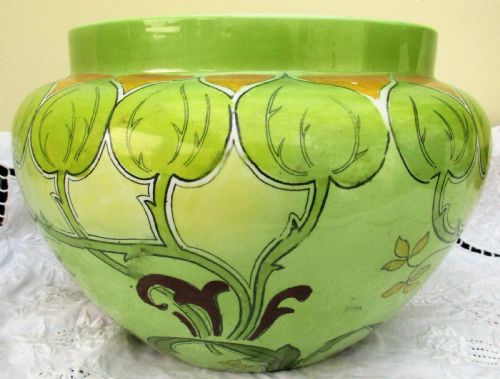
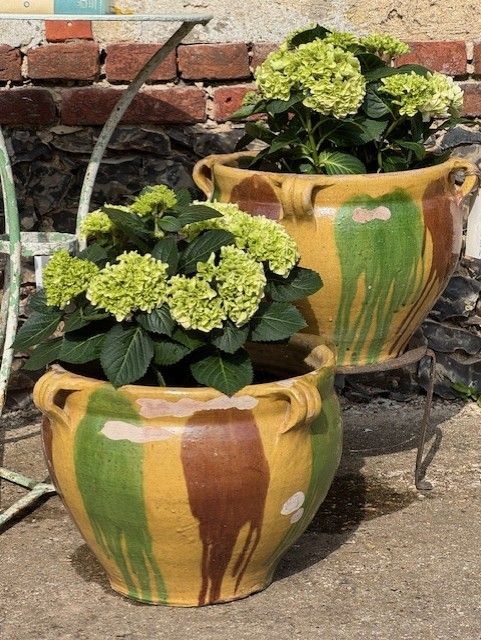
These glazed ceramic plant pot examples bring plant displays to life with rich coloured surfaces from the Victorian and later periods.
Glazed Ceramic Plant Pot
A glazed ceramic plant pot search reveals large freestanding jardinières, smaller table planters, and matching pedestal stands spanning the nineteenth and twentieth centuries. Buyers most frequently encounter substantial Victorian earthenware and stoneware vessels designed to house indoor palms and ferns.
Makers shaped these utilitarian containers into decorative focal points for conservatories and drawing rooms, often employing elaborate relief motifs and colourful lead glazes. The surviving inventory leans heavily towards British art pottery traditions, alongside occasional French provincial pieces.
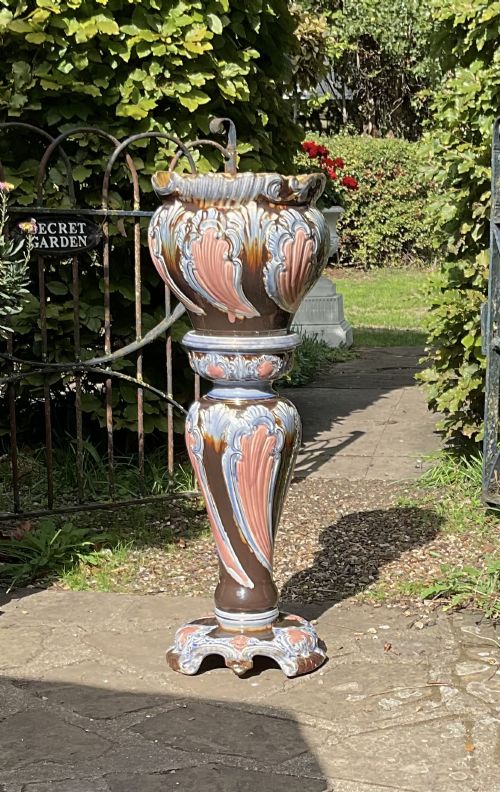
Forms range from simple cylindrical planters with double handles to grand footed vessels resting on matching ceramic columns. Many pieces reflect specific design movements such as Arts and Crafts, Aesthetic Movement, and Art Nouveau.
Materials and construction methods
Potters relied primarily on earthenware and dense stoneware bodies, shaped either by throwing on a wheel or moulding in sections. These clay bases provided the necessary strength to support wet soil and heavy plant root systems.
Surfaces received rich coloured lead glazes, tin glazes, or specialised salt glazes that vitrified during high-temperature firing. Artisans frequently added hand-painted details, applied slip ornamentation, and impressed patterns into the wet clay before glazing.
Glazed Ceramic Plant Pot Retail Price Guide 2026
Typical asking prices for glazed ceramic plant pot among the pieces listed under this phrase on Sellingantiques today, from the lower quarter to the upper quarter. They describe what is for sale here now, not the wider market.
Listings feature Victorian earthenware and stoneware spanning from the 1870s through the 1960s, with a strong concentration of Royal Doulton production.
Distinctions in craftsmanship
Quality rests in the depth and complexity of the glaze chemistry, alongside the crispness of moulded or incised decorative relief. Superior pieces exhibit controlled colour blending, rich glossy surfaces, and harmonious proportions between vessel and stand.
The reputation of the producing pottery and identifiable artist signatures elevate certain examples above standard commercial output. The best items retain their original matching pedestals and show meticulous attention to interior glazing that prevented moisture seepage.
Royal Doulton·Minton·W.A. Adderley·Royal Worcester·George Jones·Linthorpe Pottery·Burmantofts Majolica·Doulton Burslem·Doulton Lambeth
The Glazed Ceramic Plant Pot Glossary
- Jardiniere
- A large ornamental pot or container for housing a live plant or floral arrangement. These vessels usually sit directly on the floor or upon a matching ceramic pedestal stand.
- Majolica
- A type of earthenware coated with an opaque tin glaze and painted with metallic oxide colours. This technique produces vibrant hues and glossy finishes popular during the Victorian era.
- Slaterware
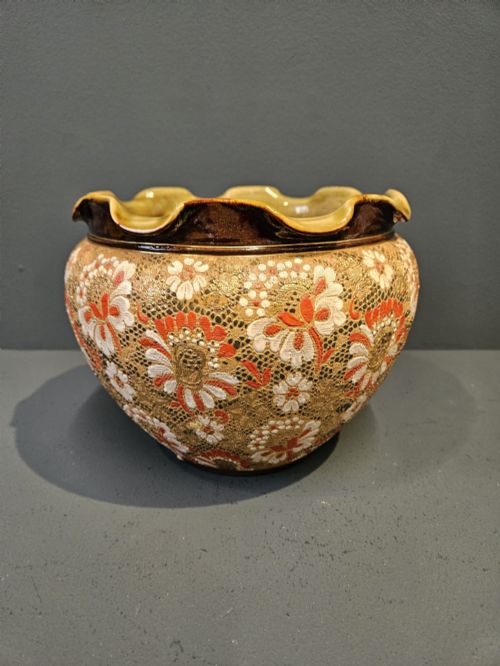
- A ceramic decorative technique involving textured backgrounds resembling woven lace pressed into damp clay. Potters then highlighted these areas with metallic bronzing or coloured glazes.
- Terracotta
- Unglazed or partially glazed fired reddish-brown clay used for various garden and indoor plant vessels. It allows air and moisture to pass through the porous walls.
Glazed Ceramic Plant Pot: Frequently Asked Questions
How do I care for a vintage glazed ceramic plant pot?
Place a plastic liner inside the vessel to protect the historic ceramic body and interior glaze from standing water and mineral salts.
Clean the exterior gently with a soft damp cloth, avoiding harsh chemical cleaners that might dull the historic glazed surface.
Were these pots meant for indoor or outdoor use?
Most nineteenth-century jardinières were produced as indoor furnishings for conservatories, entrance halls, and formal reception rooms.
Stoneware versions handle cooler temperatures better, but glazed earthenware pieces remain vulnerable to frost damage and should stay indoors.
How can I tell a Victorian jardiniere from a later copy?
Examine the base for impressed factory marks, registration numbers, and date ciphers typical of nineteenth-century British ceramic production.
Look closely at the glaze consistency, crazing patterns, and weight of the clay body, which reflect period manufacturing techniques.
Why do some planters come with matching pedestals?
Makers designed tall pedestals to elevate heavy floor-standing jardinières, improving visibility for trailing plants in Victorian interiors.
Finding a complete matched set remains desirable because bases and bowls often became separated or damaged over decades of use.