




Glazed Ceramic Cherubs
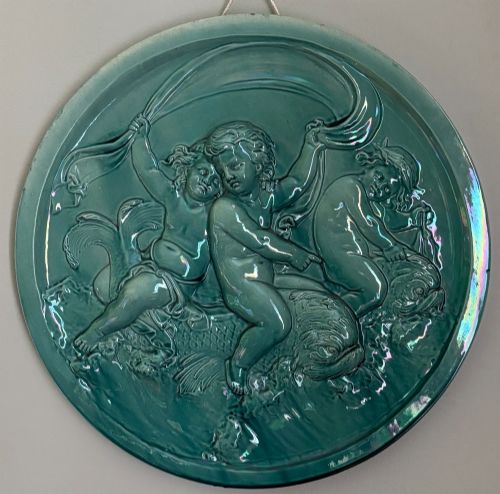
These glazed ceramic cherubs bring the sculptural weight of past centuries straight into modern rooms, offering playful figural forms from multiple periods.
Glazed Ceramic Cherubs
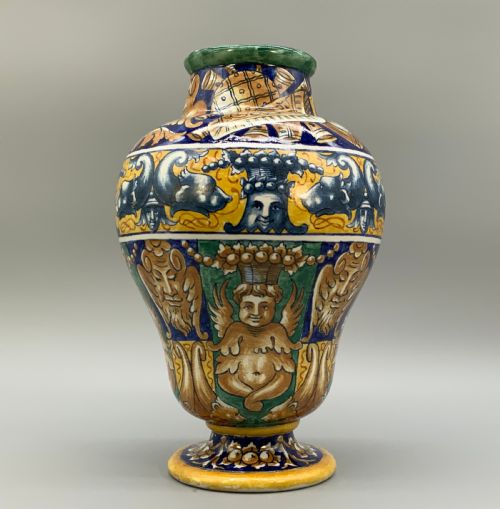
When you search for glazed ceramic cherubs, you encounter figural groups, candlesticks, wall plaques, and centrepieces populated by winged putti or cupids. These objects span periods from the eighteenth century through to the Edwardian era and the nineteen-thirties, crossing various European traditions.
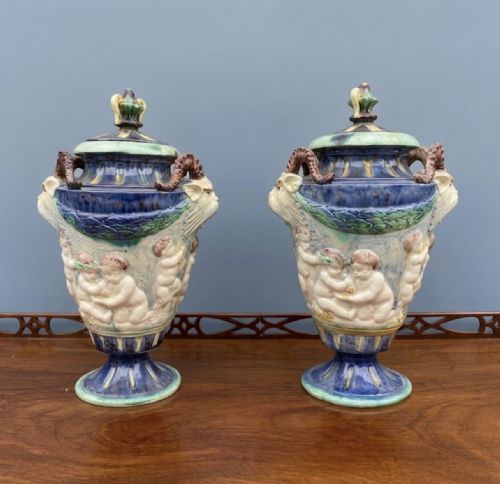
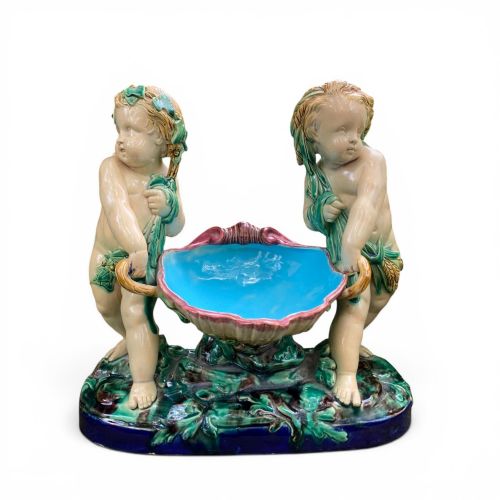
You are most likely to meet nineteenth-century majolica and porcelain interpretations on this page, often modelled as baskets, compotes, or urns. English and continental factories utilised these winged motifs extensively to animate functional vessels and decorative display pieces.
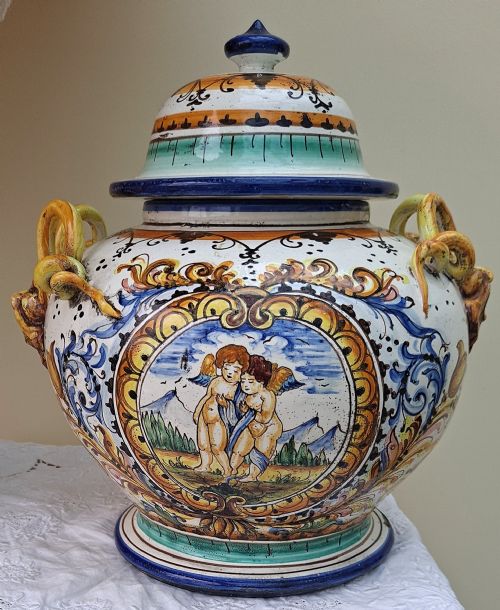
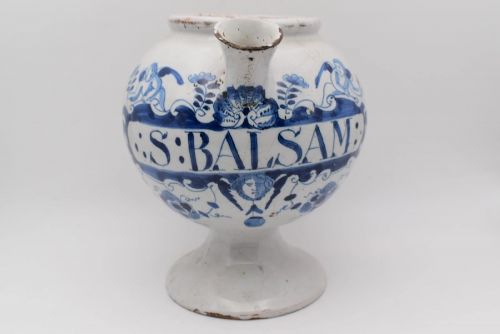
The forms range from small apothecary jars and single figures to large centrepieces and wall brackets. Each piece integrates the cherub figure either as the primary subject or as a supportive architectural element.
Materials and construction
Makers shaped these pieces using earthenware, porcelain, and tin-glazed ceramic bodies, applying coloured glazes or delicate paintwork before firing. Earthenware iterations often rely on rich majolica and faience glazes to achieve vibrant surface colour.
Porcelain examples employ smooth white bodies, sometimes left as blanc de chine or enhanced with subtle polychrome details and gold leaf. Potters cast or hand-modelled the figures and applied them to vessels, plaques, and bases prior to kiln firing.
Glazed Ceramic Cherubs Retail Price Guide 2026
Typical asking prices for glazed ceramic cherubs among the pieces listed under this phrase on Sellingantiques today, from the lower quarter to the upper quarter. They describe what is for sale here now, not the wider market.
Several cherubs double as candle holders, ensuring your dinner table is eternally supervised by small, glazed infants.
Assessing quality and execution
The sophistication of the painting and the complexity of the form distinguish standard production wares from exceptional studio and factory output. Firing stability also plays a role, with superior items maintaining clean glaze surfaces and balanced proportions.
Clement Messier·H Schubert·Paul Scheurich·George Kemper·Reginald Robert Tomlinson·Veuve Perrin·Karl Tutter
The Glazed Ceramic Cherubs Glossary
- Majolica
- A type of earthenware covered with an opaque tin glaze and painted with coloured metal oxides. It produces a glossy, colourful finish characteristic of many nineteenth-century revival pieces.
- Albarello
- A type of majolica or faience pharmacy jar used for holding dry drugs, ointments, or syrups. These cylindrical jars frequently feature decorative scrolls and figural elements.
- Putto
- A figure of a small winged boy, often depicted in classical art and decorative objects. They appear frequently in these listings as cherubs supporting vessels or acting as musicians.
- Blanc de Chine
- A French term for white porcelain produced in China, later adopted in Europe to describe unpainted white porcelain figures. It highlights the pure texture of the ceramic body without glaze interference.
- Faience
- Tin-glazed earthenware produced in various European centres, particularly France and Italy. It provides a smooth white background for hand-painted ornamentation.
Glazed Ceramic Cherubs: Frequently Asked Questions
What are glazed ceramic cherubs?
They are three-dimensional figures and decorative vessels incorporating winged putti, manufactured from materials like earthenware and porcelain.
These pieces function as centrepieces, candlesticks, and wall plaques across various historical styles.
How were these ceramic pieces used?
Historically, they served both decorative and practical purposes, from holding liquids in pharmacy jars to gracing dining tables as centrepieces and compotes.
Wealthy households displayed them on mantelpieces and sideboards as conversation pieces reflecting classical tastes.
How should I live with them?
Place them on stable surfaces where their glazed surfaces catch natural light, away from heavy foot traffic that might risk impacts.
Keep them out of direct sunlight and clean them gently with a soft, dry cloth to protect the glaze and any applied gold leaf.
How do I tell periods apart?
Look to the glaze technology, body material, and stylistic markers such as Art Nouveau curves or Victorian revival heaviness.
Earthenware majolica often points to the nineteenth century, while tin-glazed faience typically suggests eighteenth-century origins.