

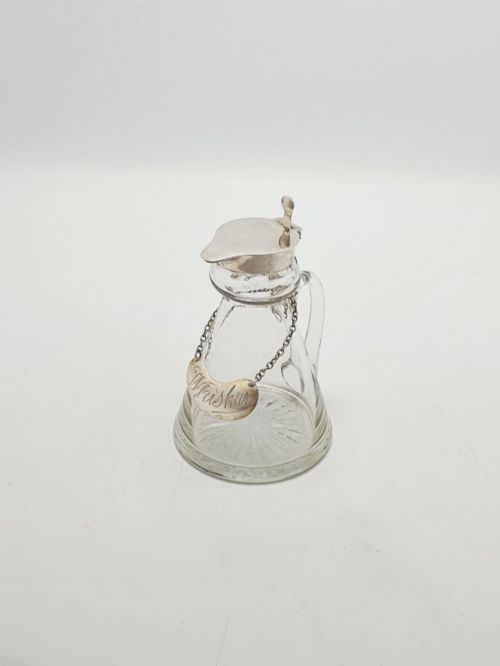


Glass Whisky Flagon
A glass whisky flagon brings substantial weight and brilliance to the sideboard, offering a proper pour for your favourite spirit.
Glass Whisky Flagon
When you search for a glass whisky flagon, you are looking at substantial vessels designed to hold and pour spirits with elegance. These pieces include individual noggins with silver mounts alongside larger decanters meant for the dining table.
You are most likely to meet Edwardian and Victorian examples on this page, reflecting the eras when these vessels were standard accompaniments to hospitality. They appear in clear glass and heavy cut crystal, often fitted with precious metal collars, labels, or stoppers.
The forms range from compact noggins with single handles to tall, panel-cut jugs intended for whisky or claret. English makers dominate these listings, showcasing traditional craftsmanship in domestic glassware.
Materials and construction
These vessels utilise clear glass and heavy lead crystal, shaped by blowing and often finished with deep wheel-cutting. The optical clarity of the material allows the colour of the spirit inside to catch the light.
Mounts and collars of sterling silver or silver plate secure the necks and lips, frequently paired with matching spirit labels. Leather work also appears in the construction of fitted sets for antique spirit bottles.
Glass Whisky Flagon Retail Price Guide 2026
Typical asking prices for glass whisky flagon among the pieces listed under this phrase on Sellingantiques today, from the lower quarter to the upper quarter. They describe what is for sale here now, not the wider market.
Some antique spirit sets include leather cases, ensuring your portable beverages survived carriage rides with utmost dignity.
Judging quality and distinction
Quality rests in the crispness of the glass cutting and the weight of the metal mounts. Pieces with deep, precise facets and heavy lead crystal display superior light refraction compared to simpler moulded vessels.
The integration of sterling silver collars and hallmarked mounts elevates a piece, particularly when accompanied by an original matching label. Finer examples retain their original stoppers and show careful hand-engraving on the glass surface.
The Glass Whisky Flagon Glossary
- Noggin
- A small vessel designed for a single measure of spirits, typically fitted with a single handle and a silver mount.
- Lead crystal
- Glass containing metal oxides that increase weight, brilliance, and the sonorous quality of the material.
- Sterling silver
- An alloy of silver used for the decorative collars, rims, and pouring lips found on many of these vessels.
- Decanter
- A stoppered glass container used for holding and serving wine or spirits.
- Wheel-cutting
- A decorative technique where the glass is held against rotating wheels of various sizes to carve patterns into the surface.
Glass Whisky Flagon: Frequently Asked Questions
What is a whisky noggin?
A whisky noggin is a small, single-serving decanter fitted with a handle and often a silver mount. It was traditionally kept close at hand for an individual measure.
These pieces typically date from the Victorian and Edwardian periods and represent a more personal scale of entertaining than the large dining table decanter.
How do I date a glass flagon?
Dating relies on the style of the glass cutting, the shape of the vessel, and any accompanying silver hallmarks. Edwardian and Victorian pieces exhibit distinct decorative motifs.
Silver mounts often bear date letters and assay office marks that provide a precise year of manufacture for the metal components.
Are these pieces suitable for daily use?
These vessels are robust enough for regular service provided they receive careful hand washing. The heavy glass and solid silver mounts were built for practical hospitality.
Avoid extreme temperature changes to protect antique glass from thermal shock.
What is the difference between a flagon and a decanter?
A flagon generally implies a vessel with a handle and a spout or pouring lip, whereas a traditional decanter is lifted by the body or neck to pour. In practice, historical terminology often overlaps.
Many pieces listed as flagons incorporate handles and silver mounts specifically configured for steady pouring.