






Glass Tantalus Box
A glass tantalus box secures fine spirits behind a locking mechanism, keeping coveted bottles safe from unauthorized access with elegant domestic theatre.
Glass Tantalus Box
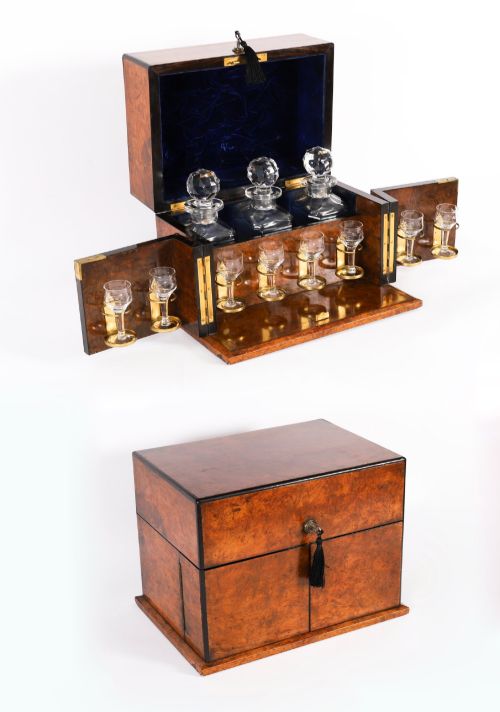
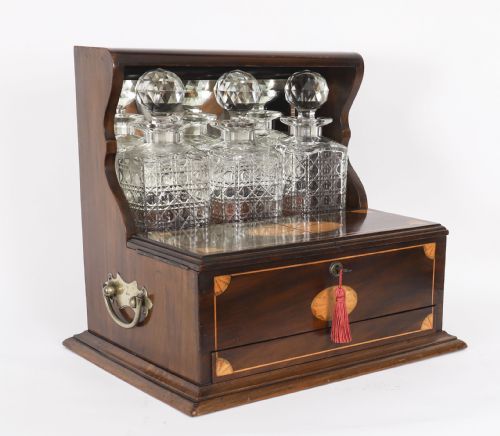
When you search for a glass tantalus box, you encounter secure drinking cabinets and locking decanter frames designed to safeguard spirits from servants or guests. These items combine a protective timber housing with visible crystal vessels, often incorporating games compendiums or dry bar fittings.
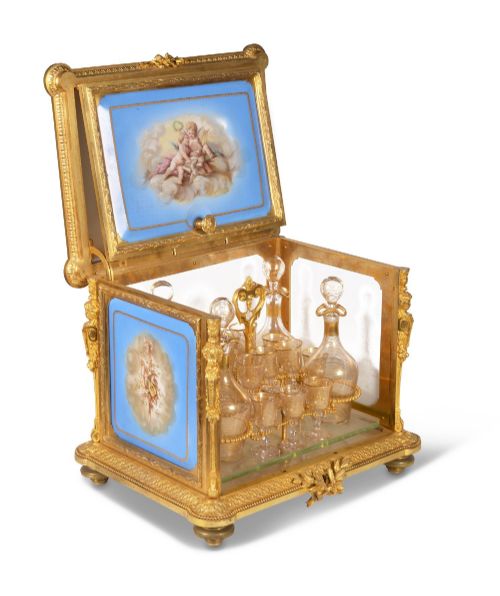
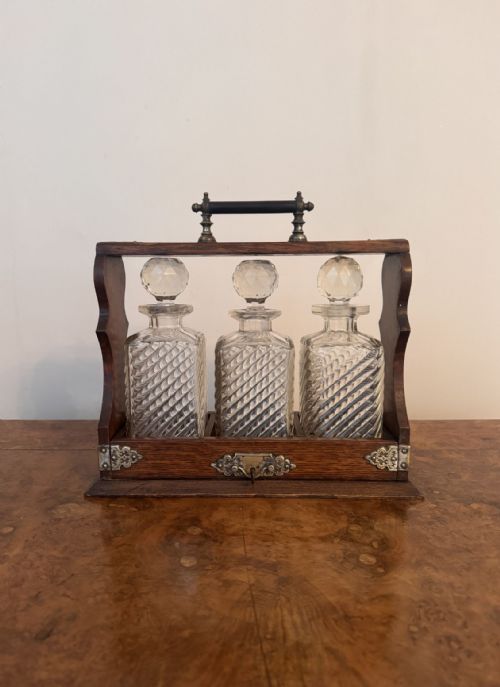
The versions most common on this page date from the Victorian and Edwardian periods, constructed primarily as oak or mahogany frames mounted with brass and holding two or three cut crystal decanters. French examples typically take the form of caves a liqueur housed within hinged boxes lined with velvet or mirror glass.
Earlier iterations from the eighteenth century appear as fitted campaign sets or mahogany decanter boxes, while specialised forms include coromandel scent bottle caskets and Black Forest woodcarvings. Each variation serves the core purpose of displaying cut glass barware while maintaining physical security through a functioning lock.
Cabinetwork and mechanism execution
Quality in a glass tantalus box rests on the precision of the cabinetwork, the heft of the timber, and the complexity of the integrated functions. Finer pieces incorporate comprehensive games compendiums, elaborate brass mountings, and highly figured woods like coromandel rather than plain oak.
The execution of the locking mechanism and the clarity of the cut crystal further differentiate standard production from superior examples. Heavy ormolu decoration, gilt detailing, and intact matching sets of decanters elevate the standard of manufacture across nineteenth-century editions.
Glass Tantalus Box Retail Price Guide 2026
Typical asking prices for glass tantalus box among the pieces listed under this phrase on Sellingantiques today, from the lower quarter to the upper quarter. They describe what is for sale here now, not the wider market.
Listings feature oak, mahogany, coromandel, and satinwood alongside silver-plated brass mounts and Baccarat crystal.
Philip Ashberry·Baccarat
The Glass Tantalus Box Glossary
- Tantalus
- A locking device that secures decanter stoppers in place so the bottles cannot be removed without a key. The name derives from the mythological figure of Tantalus, who was kept just out of reach of food and water.
- Cave a liqueur
- A French fitted liqueur box or tantalus, usually featuring a hinged or folding case containing a set of small decanters and matching glasses. These units often display elaborate ormolu mounts and mirror glass interiors.
- Games compendium
- A multi-use box containing equipment for various parlour games, frequently integrated beneath or alongside the decanter storage in nineteenth-century dry bars. Such items demonstrate the Victorian appetite for multifunctional entertaining furniture.
- Coromandel
- A dense, dark cabinet timber featuring distinctive contrasting streaks, highly prized for luxury nineteenth-century boxes and writing slopes. It provides a rich, glossy surface when polished.
- Marquetry
- The art of applying decorative veneer pieces in geometric or pictorial patterns onto a wooden structure. Stringing refers to very thin inlaid lines of contrasting wood used to accent panel edges.
Glass Tantalus Box: Frequently Asked Questions
How does a tantalus lock work?
A vertical metal bar engages with a locking mechanism on the base or frame, sliding over the glass stoppers of the decanters. This prevents the stoppers from being lifted, which in turn stops the bottles from being pulled free from their fitted compartments.
Turning the key releases the retaining bar, allowing the owner to lift out individual bottles for pouring while keeping the contents secure when unattended.
What is the difference between a tantalus and a decanter box?
A decanter box is a fully enclosed wooden case with a hinged lid and doors that completely encase the bottles within fitted compartments. These boxes often feature lift-out trays and are designed to protect the glassware during travel or formal storage.
A tantalus typically exposes the bodies of the decanters while locking only the necks or stoppers in place via a metal security bar. Both forms serve to store barware securely, but one hides the bottles entirely while the other displays them.
Were these boxes used for travel?
Some early examples, such as eighteenth-century campaign sets and specific decanter boxes, were built with sturdy brass carrying handles and robust frames intended for transit. Officers and travellers used them to transport spirits safely across long distances.
Later Victorian and Edwardian iterations functioned primarily as static household furniture for the dining room, drawing room, or smoking room rather than portable luggage.
How do you distinguish Victorian from Edwardian pieces?
Victorian examples tend to feature heavier, highly figured timbers like coromandel and walnut, often accompanied by elaborate brass mounts, Gothic revival details, or complex marquetry. The craftsmanship emphasises dense ornamentation and multi-functional combinations like games compendiums.
Edwardian pieces generally lean towards simpler oak frames mounted with silver plate, reflecting a shift towards lighter domestic interiors while retaining the traditional locking bar mechanism for household spirits.