



Liquor Decanter Chest
These liquor decanter chest examples combine secure storage with fine presentation, offering a tangible link to period entertaining.
Liquor Decanter Chest
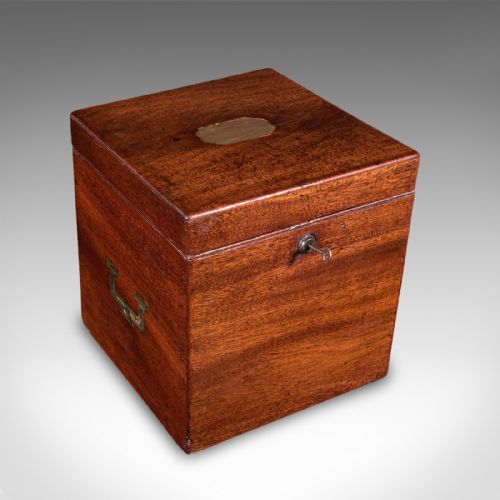
A liquor decanter chest gathers glass bottles and spirit containers into a single locked enclosure, designed for secure storage and elegant table service. When searching for a liquor decanter chest, you encounter forms ranging from Georgian mahogany wine boxes and cellarettes to Victorian tantalus sets and French caves a liqueur.
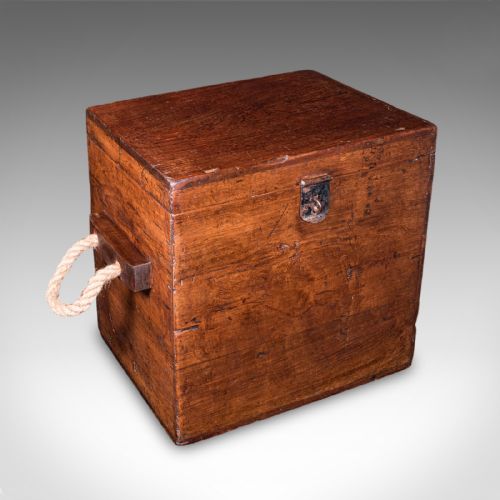
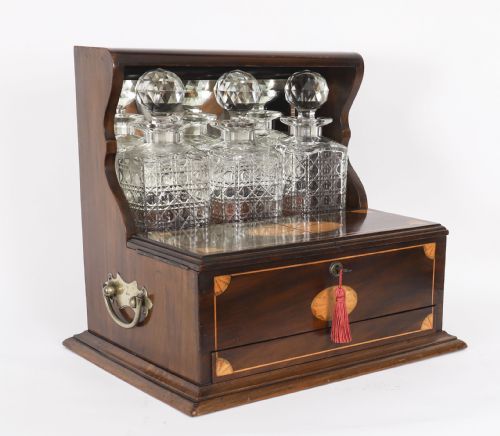
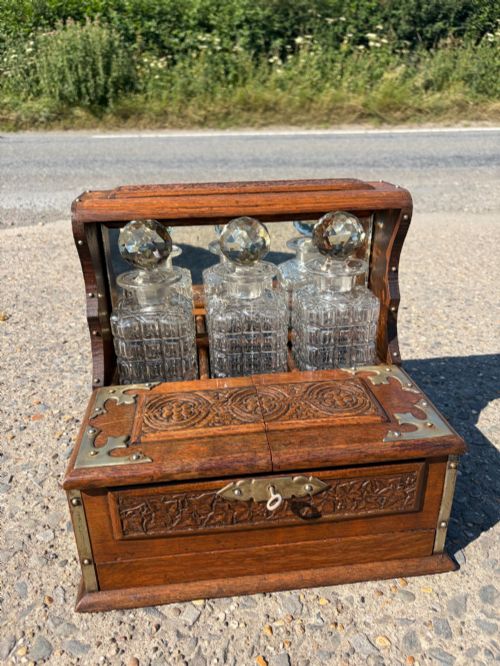
The selection on this page centres on wooden boxes and frames, primarily in mahogany, oak, and coromandel, often fitted with brass mounts or mirror glass. These pieces span the eighteenth and nineteenth centuries, taking the shape of tantalus sets, wine coolers, and fitted decanter boxes.
You are most likely to meet Victorian and Georgian iterations, featuring cut crystal or Baccarat glass decanters nestled inside partitioned wooden interiors. Some examples incorporate games compendiums or campaign sets, reflecting the versatile entertaining habits of the period.
How they were made
Cabinetmakers constructed these chests using dense timbers such as mahogany, padouk, oak, and coromandel, often employing fine veneers, inlay, or marquetry. Frames feature robust joinery designed to support the heavy weight of glass decanters and liquid contents.
Metalwork played a structural and decorative role, with brass carrying handles, escutcheons, corner brackets, and ormolu mounts securing the wooden carcasses. Interior compartments were custom-fitted with wooden dividers or velvet linings to hold cut crystal decanters and glasses safely in place.
Liquor Decanter Chest Retail Price Guide 2026
Typical asking prices for liquor decanter chest among the pieces listed under this phrase on Sellingantiques today, from the lower quarter to the upper quarter. They describe what is for sale here now, not the wider market.
Some nineteenth-century tantalus sets secretly doubled as games compendiums, concealing playing cards and counters beneath the liquor bottles for impromptu parlour entertainment.
What varies in quality
The distinction between standard and superior pieces lies in the choice of cabinet timber, the precision of the joinery, and the integration of internal fittings. Higher-tier examples utilise figured veneers, intricate brass or ormolu mounts, and comprehensive internal layouts that include matching crystal glassware.
The Liquor Decanter Chest Glossary
- Cellarette
- A cabinet, box, or stand designed to hold bottles of wine and spirits near the dining table. They frequently appear in Georgian and Regency interiors.
- Tantalus
- A locking drink stand that holds decanters upright in a metal frame, displaying the bottles while preventing unauthorized pouring. The locking bar secures the stoppers in place until released by a key.
- Cave a liqueur
- A French fitted box containing miniature decanters and liqueur glasses, often adorned with ormolu mounts and Baccarat crystal. These portable cellars were popular during the nineteenth century.
- Marquetry
- The art of applying decorative pieces of veneer to a structural structure to form pictorial designs or geometric patterns. It appears on finer Victorian cabinetwork.
- Campaign set
- Portable furniture and equipment designed for travel, featuring reinforced corners and flush fittings. These sets allowed officers and travellers to transport glassware securely.
Liquor Decanter Chest: Frequently Asked Questions
What is a liquor decanter chest?
A liquor decanter chest is a portable or stationary wooden box designed to hold glass decanters and drinking vessels securely. These containers protected valuable spirits and glassware while allowing hosts to serve guests in different rooms.
Most examples feature internal wooden partitions and a locking mechanism. Styles range from simple eighteenth-century mahogany wine boxes to ornate nineteenth-century tantalus sets.
How do you use a tantalus?
A tantalus holds glass decanters within a metal frame that prevents the stoppers from being removed while the locking bar is engaged. To serve drinks, you turn a key to release the top bar, allowing the decanters to be lifted free.
This clever mechanism earned its name from the mythological figure Tantalus, keeping the contents visible yet frustratingly out of reach until unlocked.
How do I date a liquor chest?
Dating relies on timber selection, hardware design, and decorative techniques characteristic of specific periods. Georgian and Regency pieces favour solid mahogany with brass campaign handles, while Victorian versions often introduce oak, coromandel, and elaborate marquetry.
Examining the construction methods of the interior partitions and the style of the cut crystal glassware also helps narrow down the decade of manufacture.
Where were these boxes kept?
These chests typically rested on sideboards, side tables, or dedicated stands in dining rooms and drawing rooms. During the nineteenth century, portable versions accompanied travellers on ships and military campaigns.
Because spirits were expensive and often kept under lock and key by the master of the house, the chest remained in public reception rooms rather than private cellars.