



Glass Shelf Clock
A glass shelf clock brings transparent elegance to a mantelpiece, combining intricate mechanical movements with light-catching panels to anchor a room.
Glass Shelf Clock
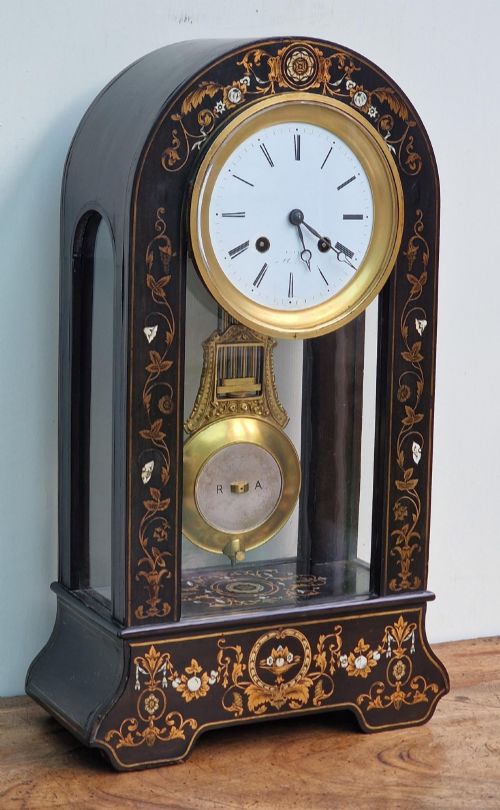
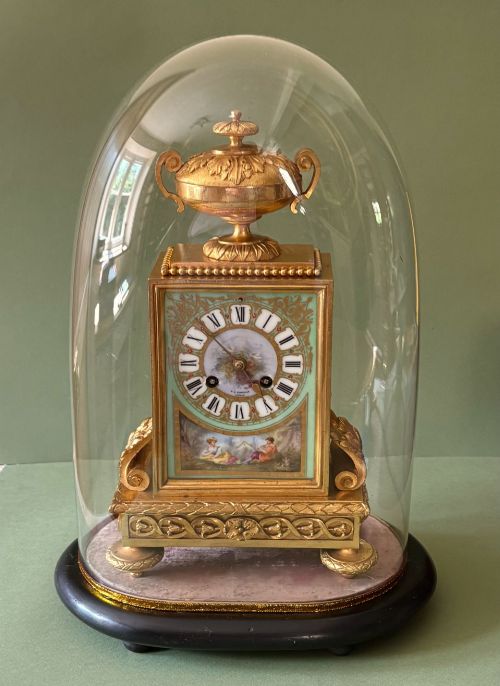
When you search for a glass shelf clock, you encounter timepieces designed to sit on mantels, brackets, and ledges while offering a clear view of their internal mechanics. The selections here span the nineteenth century into the mid-twentieth century, encompassing Victorian interpretations and later Art Deco designs.
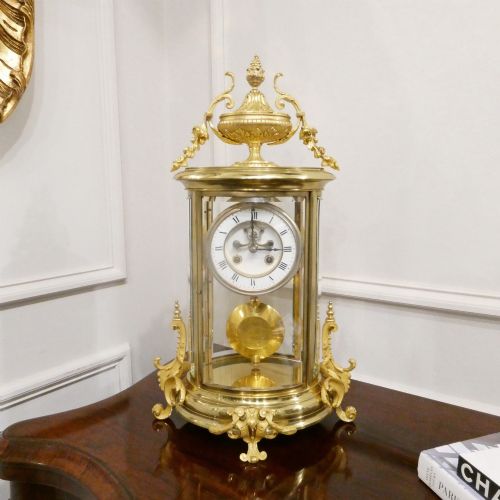
Mantel clocks and four-glass variants dominate the forms, frequently employing brass, gilt bronze, or chrome framing to support transparent panels. You also find carriage clocks and wall-mounted pieces that utilise similar glazing techniques to expose the dial and movement.
Origins stretch across French workshops, British makers, and American makers, demonstrating how different horological traditions adapted glass housing. These pieces range from classical French crystal regulators to geometric Art Deco creations in opaline glass and chrome.
Materials and construction
Glass panels are fitted into rigid metal frameworks of brass, gilt bronze, or chrome, providing structural support while maximising light intake. Ebonised wood, marble, and mother of pearl sometimes form the base or accents, grounding the transparent structure.
Movements are housed centrally, often featuring enamel dials and visible escapements that operate through mechanical gear trains. Gilt finishes and painted panels decorate the metallic components, complementing the clarity of the surrounding glass.
Glass Shelf Clock Retail Price Guide 2026
Typical asking prices for glass shelf clock among the pieces listed under this phrase on Sellingantiques today, from the lower quarter to the upper quarter. They describe what is for sale here now, not the wider market.
Listings feature periods spanning from the nineteenth century to the 1960s, incorporating brass, chrome, and marble alongside glass.
Evaluating quality
The sophistication of the mechanical movement dictates much of the standing of a piece, distinguishing standard timekeepers from striking and repeating mechanisms. Superior examples often include complications such as thermometers or specialised chimes like Westminster movements.
The precision of the metal casting and the thickness of the bevelled glass panels define the physical execution. Maker attribution and the integration of fine materials like gilt bronze or porcelain mounts further elevate the piece.
Samuel Marti·Drocourt·L Epee France·Jaeger Le Coultre
The Glass Shelf Clock Glossary
- Crystal regulator
- A mantel clock featuring glass panels on four sides that reveal the movement suspended within. This style gained popularity in nineteenth-century France.
- Carriage clock
- A portable timekeeper with a glass-sided brass case and a folding handle, originally designed for travel. Many examples from the late nineteenth century include striking or repeating functions.
- Four glass clock
- A mantel clock enclosed by glass on the front, back, and sides, allowing an unobstructed view of the mercury pendulum or delicate gear train. They frequently utilise brass or gilt bronze framing.
- Escapement
- The mechanical linkage in a clock that controls the release of power from the mainspring or weights to the gear train. Visible escapements are a common feature in many glass-cased clocks.
- Gilt bronze
- Copper alloy coated with a thin layer of gold, providing a durable and lustrous metallic surface. This material appears frequently on nineteenth-century French clock cases.
Glass Shelf Clock: Frequently Asked Questions
How do I wind a glass shelf clock?
Most mechanical shelf clocks use a key inserted into winding arbours on the dial face to tension the mainsprings. Care must be taken not to overwind the movement.
Striking and chiming models may require specific sequences or synchronization after winding to ensure the correct hour is sounded.
Where should I place a glass shelf clock?
These clocks require a stable, level surface such as a mantelpiece, sturdy shelf, or bracket to maintain proper pendulum beat. Placing them away from direct sunlight and drafts protects the delicate internal mechanisms.
Because the glass panels offer transparency, positioning them where light can pass through enhances their visual impact.
How do I identify the period of a glass shelf clock?
Stylistic cues such as ornate gilt bronze mounts point to nineteenth-century French production, while streamlined geometric lines indicate Art Deco designs from the 1930s. Examining the construction of the brass framing and dial materials provides further dating evidence.
Maker signatures etched on the movement backplate often offer precise manufacturing dates or maker attribution.
What maintenance do these clocks require?
Periodic professional cleaning and oiling ensure the metal gear trains continue to operate without excessive wear. Dust accumulation inside the glass housing should be addressed carefully by a specialist.
Checking the level of the clock and the beat of the escapement helps maintain accurate timekeeping over long periods.