



Glass Reservoir Brass Lamp
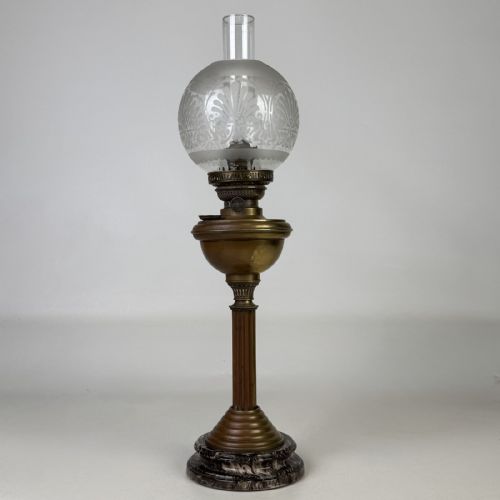
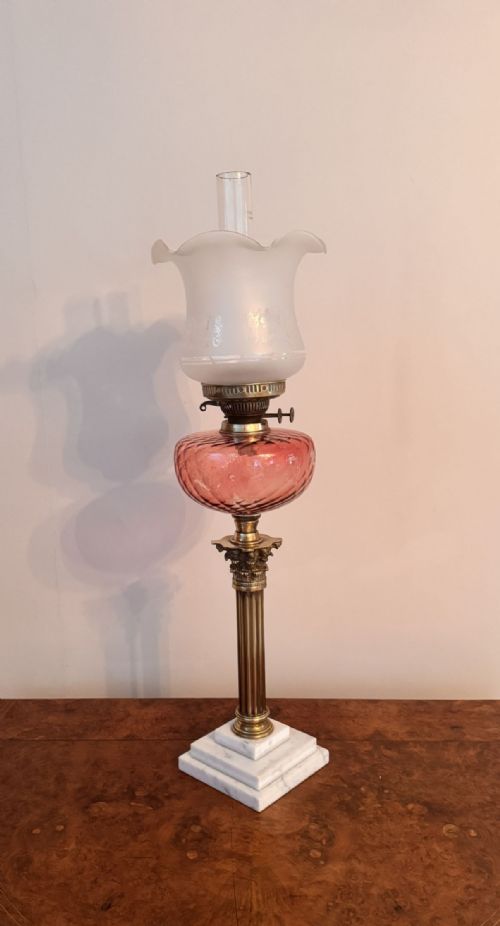
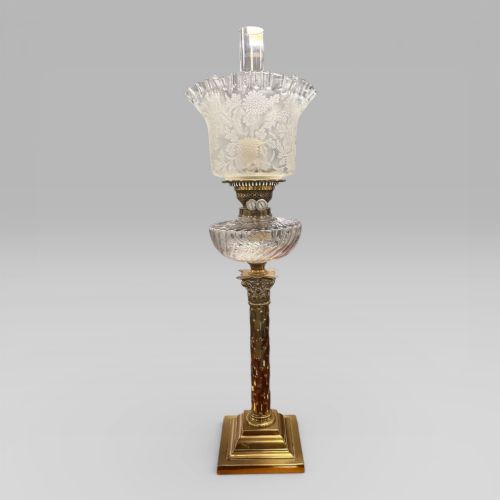
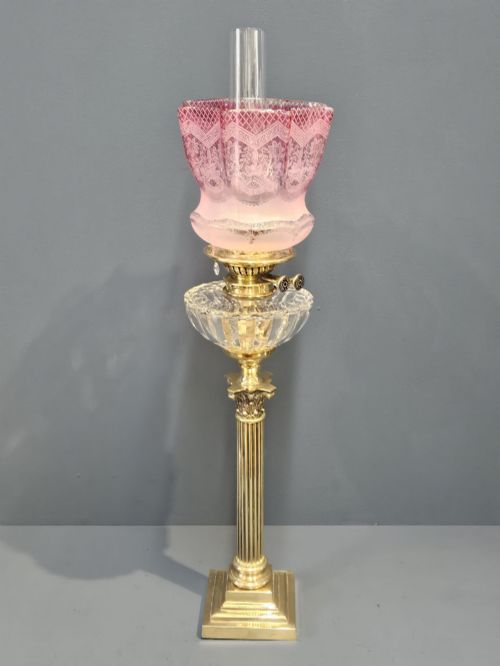
A glass reservoir brass lamp combines a heavy metal column with a decorative glass font to hold fuel.
Glass Reservoir Brass Lamp
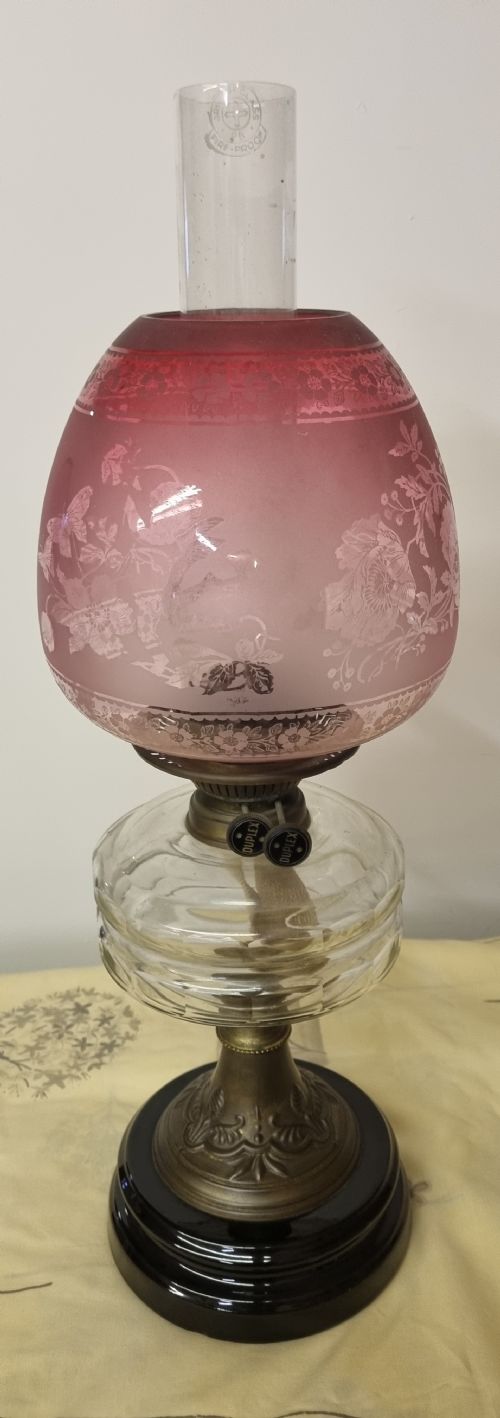
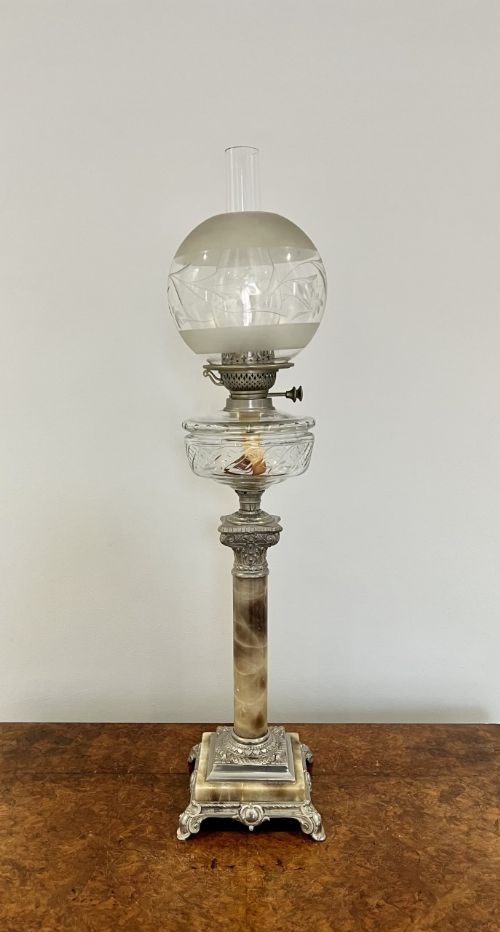
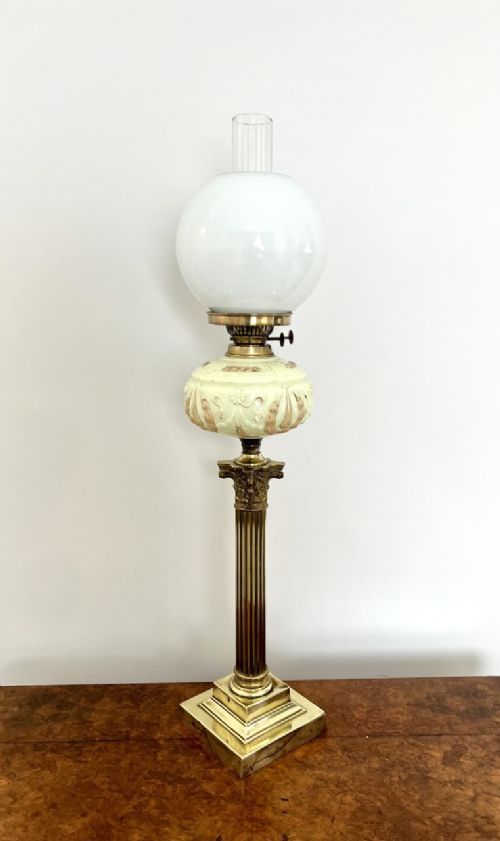
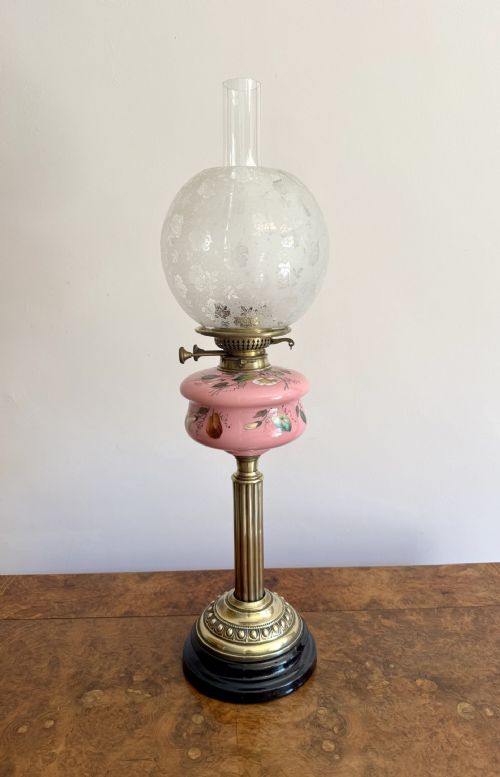
When you search for a glass reservoir brass lamp, you are looking at domestic lighting pieces that date principally from the Victorian and Edwardian periods. These objects combine a metal stand with a translucent or coloured container for paraffin or oil, often finished with a matching fabric or glass shade. The most common form on this page is the tall table lamp, frequently featuring classical architectural columns or reeded stems.
The materials span brass, copper, and gilt bronze paired with clear, cut, moulded, frosted, or coloured glass fonts. Some examples incorporate ceramic sections or sit upon black glass bases, showing stylistic influences ranging from William IV designs to Neoclassical Revival and Victorian Art Nouveau. Table lamps and oil lamps dominate the selection, spanning decades of nineteenth-century domestic manufacturing.
How they were made
Makers constructed these lamps by mounting heavy brass or bronze columns onto solid bases, often utilising classical orders such as the Corinthian style. The metal components were cast, turned, and sometimes silver plated, providing a sturdy foundation to support the fuel container above.
The glass reservoirs were produced through moulding, cutting, or crystal shaping techniques, yielding clear or brightly coloured vessels in shades of pink, blue, green, and cranberry. These fonts were then fitted with metal burners, collars, and galleries designed to hold chimneys and fabric shades securely in place.
Glass Reservoir Brass Lamp Retail Price Guide 2026
Typical asking prices for glass reservoir brass lamp among the pieces listed under this phrase on Sellingantiques today, from the lower quarter to the upper quarter. They describe what is for sale here now, not the wider market.
Some lamps feature cranberry glass fonts that cast a remarkably cheerful pink glow across the Victorian parlour.
What varies in quality
Quality in these lamps depends largely on the weight of the metal casting and the crispness of the detailing on columns and bases. Heavier brass structures and finely cut crystal reservoirs represent the upper end of domestic production, whereas lighter, plain mouldings sit at the simpler end.
The sophistication of the burner mechanism and the presence of signed maker components further distinguish the finer examples. Materials such as solid copper, gilt bronze, and undamaged coloured glass fonts indicate higher standards of original manufacture.
Hinks of Birmingham·Messenger·Harrods·Young's Special
The Glass Reservoir Brass Lamp Glossary
- Font
- The oil or paraffin reservoir container, usually made from clear, cut, moulded, or coloured glass.
- Corinthian column
- A classical architectural column style featuring ornate leaf ornamentation at the top capital, frequently utilised for Victorian lamp stems.
- Peg lamp
- A smaller oil lamp designed with a lower spigot that inserts directly into a candlestick or receiver rather than standing on its own base.
- Burner
- The metal mechanism fitted to the top of the glass reservoir to control the wick and flame.
- Gallery
- The metal ring fitted around the burner that holds the glass chimney in place.
Glass Reservoir Brass Lamp: Frequently Asked Questions
How do I operate an old oil lamp?
These lamps function by drawing paraffin oil up through a cotton wick housed inside the metal burner mechanism.
Modern users typically convert them for electricity or retain them for display, as operating them with fuel requires careful wick trimming and chimney management.
Are these lamps safe for daily use?
Most antique lighting pieces found here have been converted to electrical wiring for modern domestic safety and convenience.
Original oil reservoirs and burners remain intact on many examples, though electrical fittings allow them to serve as functional table lamps.
How do I clean the brass and glass?
Brass components respond well to gentle cleaning with appropriate metal polishes, avoiding abrasive cloths that might damage fine surface details.
Glass reservoirs can be detached where possible and washed in warm, soapy water to restore clarity to cut or coloured surfaces.
How can I tell a Victorian lamp from a later piece?
Victorian examples frequently display heavy cast brass Corinthian columns, hand-cut crystal fonts, or distinctive maker stamps on the burner galleries.
Later Edwardian versions often incorporate different ceramic combinations, onyx bases, or simpler moulded glass designs dating towards nineteen hundred.