


Glass Preserve Jar Silver
These glass preserve jar silver table pieces combine bright vessels with metal mounts for dining tables.
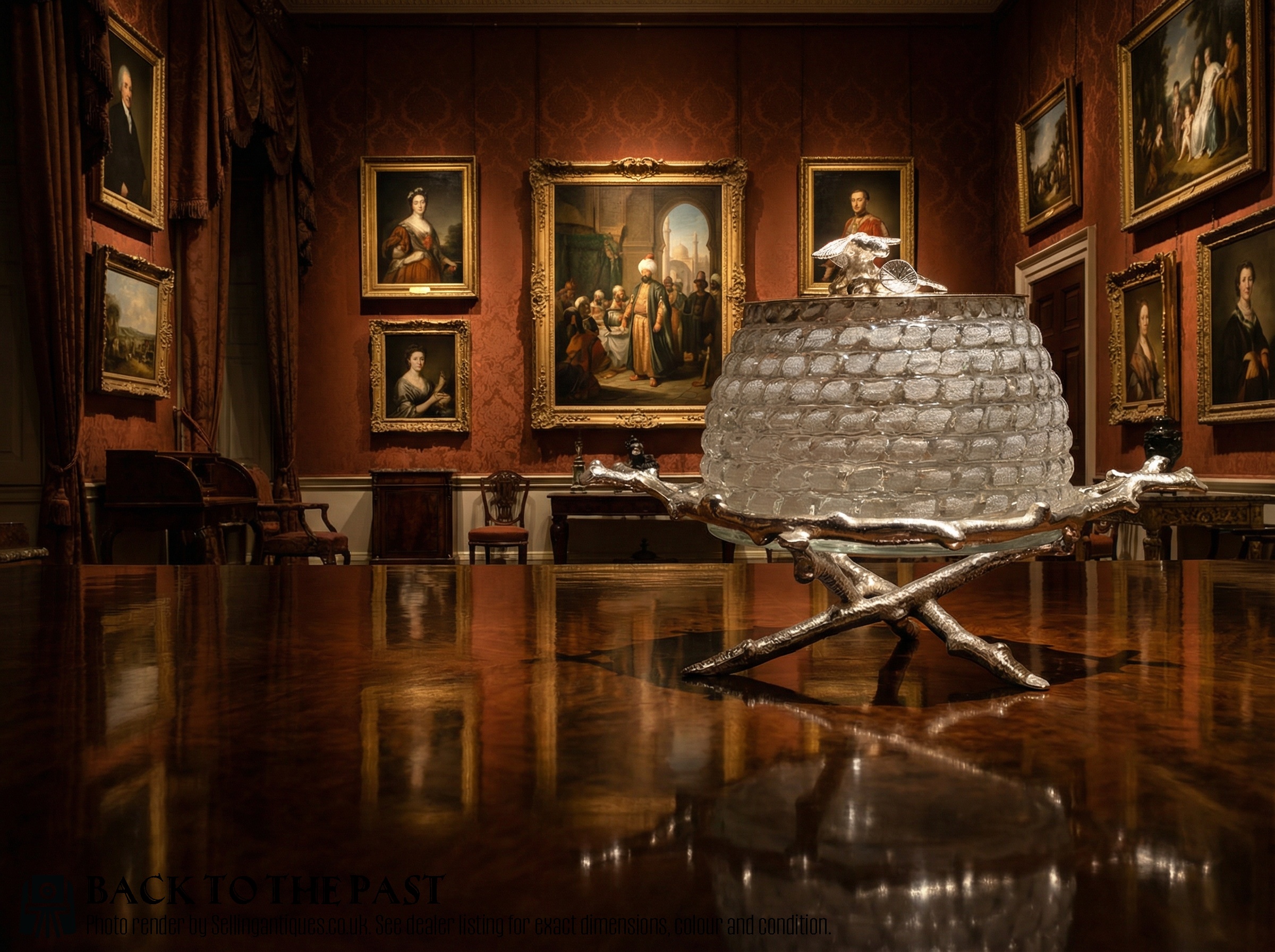
Glass Preserve Jar Silver
A glass preserve jar silver combination serves sweet preserves, honey, and condiments at the table. These vessels appear in forms such as preserve pots, condiment jars, biscuit barrels, and jam dishes.
The most common versions met on this page span the Victorian, Edwardian, and Art Deco periods into the mid-twentieth century. Makers rendered these pieces in sterling silver and silver plate alongside cut glass, cranberry glass, and vaseline glass.
Tableware from this category often includes fitted spoons and stands, functioning as practical containers as well as decorative items.
Materials and construction methods
Cranberry glass, vaseline glass, and heavy cut glass form the bodies of these vessels, shaped through blowing and pressing before undergoing wheel-cutting or etching. Metal components use sterling silver or silver plate for mounts, lids, and stands.
Silversmiths constructed hinged lids, swing handles, and collars to fit the glass bodies precisely, often incorporating floral finials or decorative piercing. Hallmarks stamped into the silver parts record the assay office, maker, and year of production.
Several preserve jars take the uncanny form of a realistic glass apple, complete with a silver stem and leaf.
Judging the quality of these pieces
Quality rests on the crispness of the glass cutting and the weight of the silver or silver plate used for the mounts. Pieces by recognised makers display superior finishing in the mounts and better integration between the glass vessel and its metal fittings.
The presence of matching original spoons and intact stands elevates a piece. Finer examples retain clear hallmarks on the silver and undamaged glass free from chips on the faceted edges.
Hukin and Heath·Walker and Hall·George Unite·Wilson and Gill·Synyer and Beddoes·Henry Wilkinson·Martin and Hall
The Glass Preserve Jar Silver Glossary
- Silver Plate
- A base metal coated with a thin layer of silver through electroplating. This technique allowed manufacturers to produce decorative tableware at a lower cost than solid sterling silver.
- Cranberry Glass
- A translucent pink-red glass coloured by the addition of gold chloride to the molten batch. It gained popularity during the Victorian and Edwardian eras for decorative tableware.
- Vaseline Glass
- A transparent or translucent yellow-green glass containing uranium dioxide that glows under ultraviolet light. Makers utilised this distinct material for Victorian and Edwardian preserve dishes.
- Biscuit Barrel
- A covered container designed to hold dry biscuits or crackers on the dining table. These vessels frequently feature glass bodies with silver-plated or sterling silver mounts and swing handles.
- Hallmark
- A series of official marks stamped onto precious metal items indicating the maker, assay office, standard of purity, and year of assay.
Glass Preserve Jar Silver: Frequently Asked Questions
What were glass preserve jars used for?
These vessels served jams, jellies, honey, and condiments at formal dining tables and breakfast spreads. They kept preserves covered between uses while allowing diners to view the contents through the clear or coloured glass.
Many examples included matching spoons resting in dedicated slots or hanging on side hooks. Lids often featured cut-outs to accommodate the spoon handle while keeping the jar closed.
How do I date a silver and glass preserve jar?
Dating relies heavily on the silver hallmarks stamped onto the mounts, rims, or lids. These marks indicate the assay office and the exact year the metal component was tested and certified.
Stylistic indicators also help, as heavy cut glass and ornate floral motifs suggest Victorian or Edwardian origins, whilst geometric lines point towards Art Deco production.
What is the difference between sterling silver and silver plate?
Sterling silver consists of a solid alloy containing a high fixed proportion of pure silver by weight, marked with standard assay symbols like the lion passant. Silver plate involves a thin layer of silver bonded to a base metal core such as brass or nickel silver.
Plated items generally show base metal beneath worn spots where the silver layer has rubbed thin over decades of use.