




Glass Hunting Flask
A glass hunting flask is a portable spirit container for the field, combining thick glass and precious metal.
Glass Hunting Flask
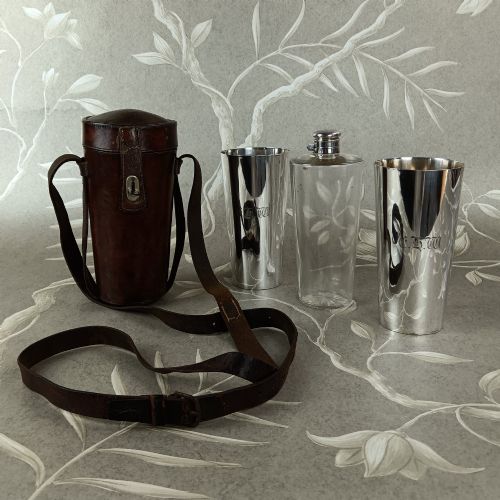
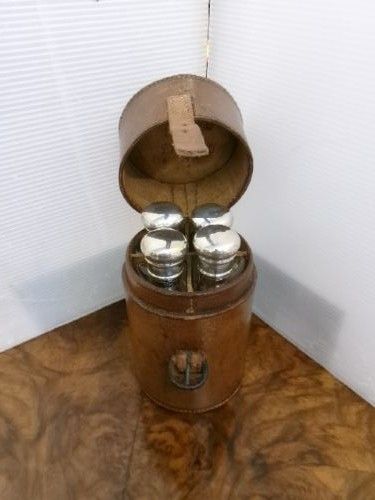
A glass hunting flask is a portable spirit container designed for the field, appearing in forms such as saddle flasks, hip flasks, and campaign sets. These pieces bridge utilitarian outdoor gear and refined barware, intended to carry spirits during equestrian pursuits and country sports.
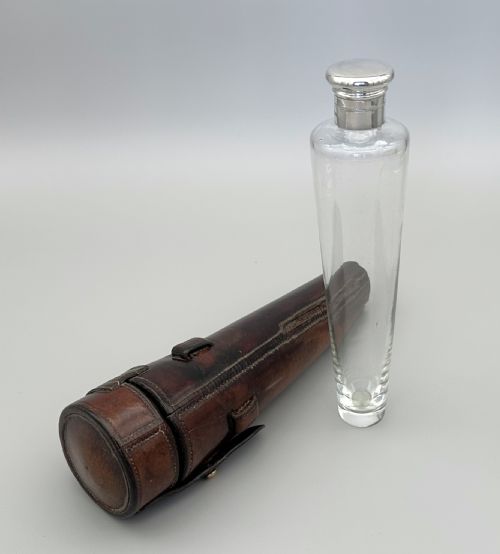
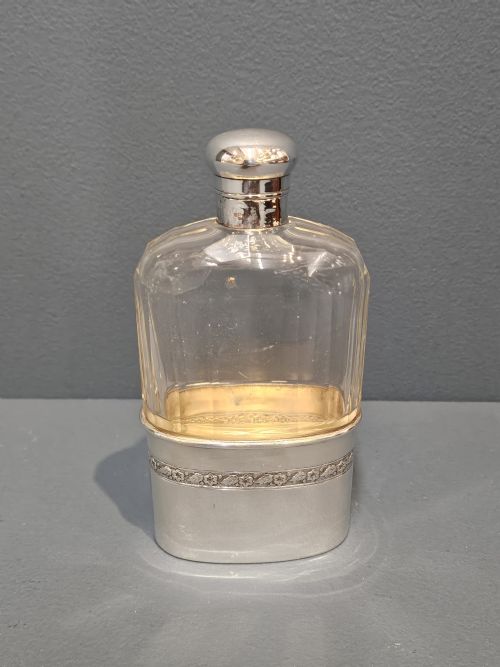
Buyers browsing this selection will most frequently encounter Edwardian and Victorian examples housed in leather cases or fitted with sterling silver and silver plate. The materials combine robust clear or cut crystal glass bottles with protective leather sleeves, crocodile skin, and hinged metal caps.
The objects span the nineteenth century through the nineteen-thirties, reflecting stylistic shifts from ornate Victorian craftsmanship to clean-lined Art Deco and George V designs. Makers such as James Dixon and Sons and Asprey London produced specialised forms for field use, including variants with collapsible cups and multi-flask campaign sets.
How they were made
Makers formed the inner vessels from thick glass and cut crystal, ensuring the bottle could withstand rigorous movement in the field. Artisans then fitted these glass bodies with custom leather cases, crocodile skin, or tightly wrapped metal mounts.
Metalwork involved sterling silver and silver plate, often featuring hammered finishes, engraved floral patterns, or secure bayonet caps designed to prevent leakage. Silversmiths integrated hinged cups at the base and complex locking mechanisms to complete the portable drinking vessel.
Glass Hunting Flask Retail Price Guide 2026
Typical asking prices for glass hunting flask among the pieces listed under this phrase on Sellingantiques today, from the lower quarter to the upper quarter. They describe what is for sale here now, not the wider market.
Listings feature glass hunting flasks spanning the Victorian era through the nineteen-thirties, incorporating cut crystal, sterling silver, silver plate, and crocodile leather.
What varies in quality
Quality rests in the weight and clarity of the glass, the precision of the metal mounts, and the integrity of the leather or crocodile skin casing. Superior examples retain their original fitted leather cases, matching silver tops, and integrated collapsible cups without replacement parts.
The distinction between standard production pieces and premier work lies in the maker's mark and the complexity of the housing, such as multi-flask campaign sets or fully integrated spirit compartments. Hand-hammered sterling silver and detailed leather stitching elevate the execution beyond straightforward silver-plate and plain glass.
James Dixon And Sons·Asprey London·W A Ellwick Ltd
The Glass Hunting Flask Glossary
- Saddle flask
- A glass flask shaped with a captive base or tapered profile to slide securely into a leather holster on a horse's saddle. These pieces kept riders supplied with spirits during hunts.
- Campaign set
- A portable collection of glass bottles and silver beakers housed together in a fitted leather case for travel. Officers and travellers utilised these compact units for dining outdoors.
- Sterling silver
- An alloy consisting of ninety-two point five percent silver by mass, with the remainder composed of other metals for durability. Silversmiths stamped these pieces with hallmarks indicating the assay office and year.
- Silver plate
- A layer of silver fused to a base metal core, providing the appearance of solid silver at a lower cost. Victorian and Edwardian manufacturers applied this technique extensively to barware.
- Cut crystal
- Glass containing lead oxide that increases brilliance and weight, allowing artisans to cut geometric patterns across the surface. This heavy material resisted tipping and added durability to field flasks.
Glass Hunting Flask: Frequently Asked Questions
How do I tell Victorian from Edwardian flasks?
Victorian flasks often display heavier ornamentation, deeply chased floral patterns, and robust silver-plated mounts. Edwardian pieces tend to show cleaner lines, smoother leather stitching, and more restrained sterling silver detailing.
Examining the hallmarks on the silver caps provides definitive dating for pieces marked with assay office stamps and date letters.
Why do some flasks have leather cases?
Leather and crocodile skin cases provided essential physical protection for the glass bottle during rugged outdoor activities and horseback riding. The tight leather sleeve absorbed impacts and prevented the glass from shattering against saddles or equipment.
Original fitted cases also featured secure straps and caps that kept the flask firmly anchored during movement.
How were these flasks used historically?
Participants in fox hunting, shooting parties, and outdoor expeditions carried these flasks to hold warming spirits during long hours in the field. The attached cups and beakers allowed the user to pour drinks without needing additional glassware.
Campaign sets served a similar purpose for travellers and military officers requiring portable refreshment.