




Glass Globe Table Light
A glass globe table light brings soft illumination and character to a room, drawing on decades of design from the Victorian era to Art Deco.
Glass Globe Table Light
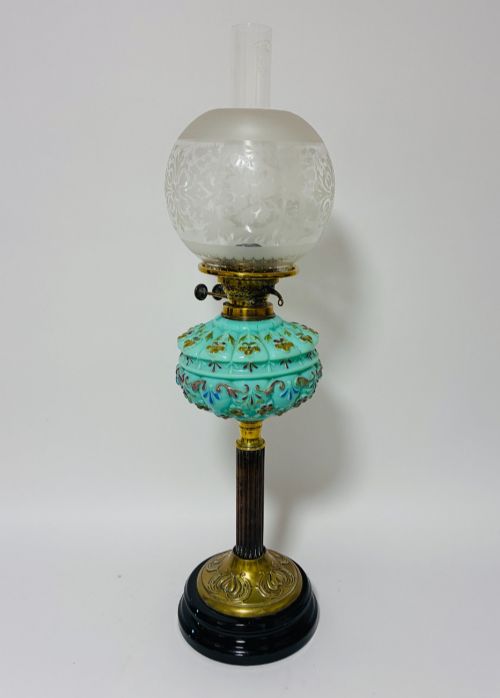
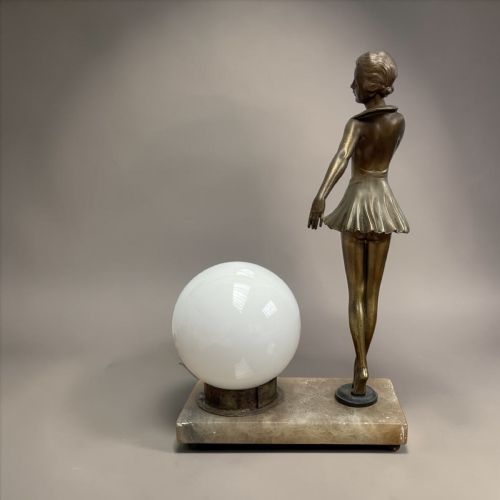
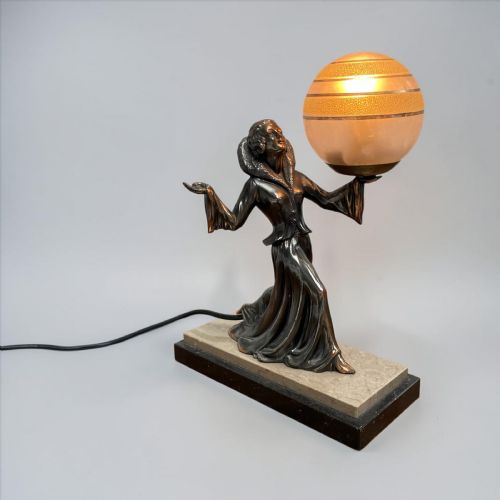
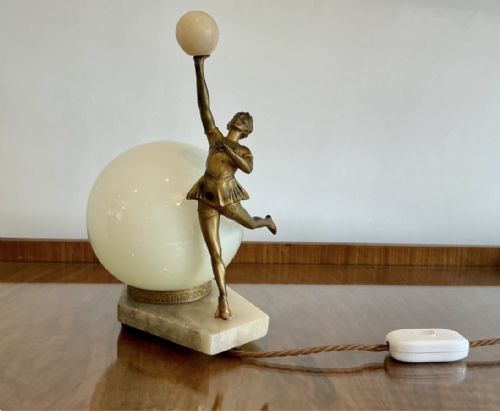
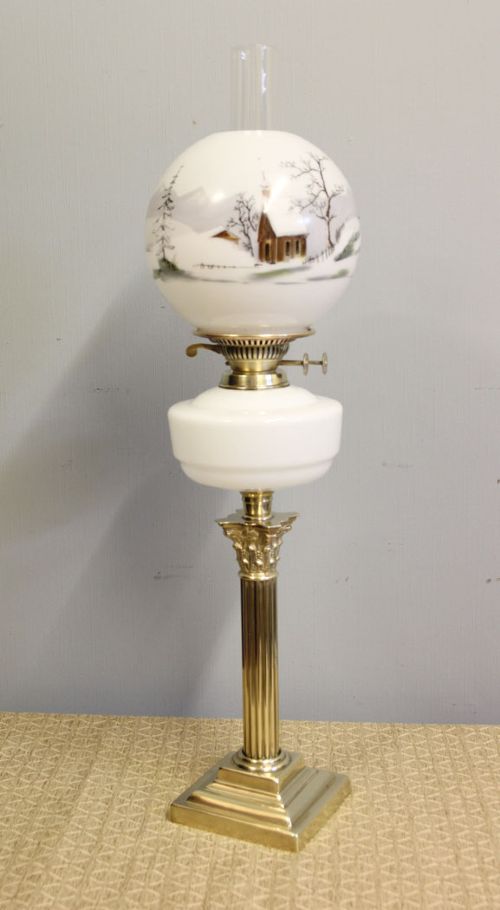
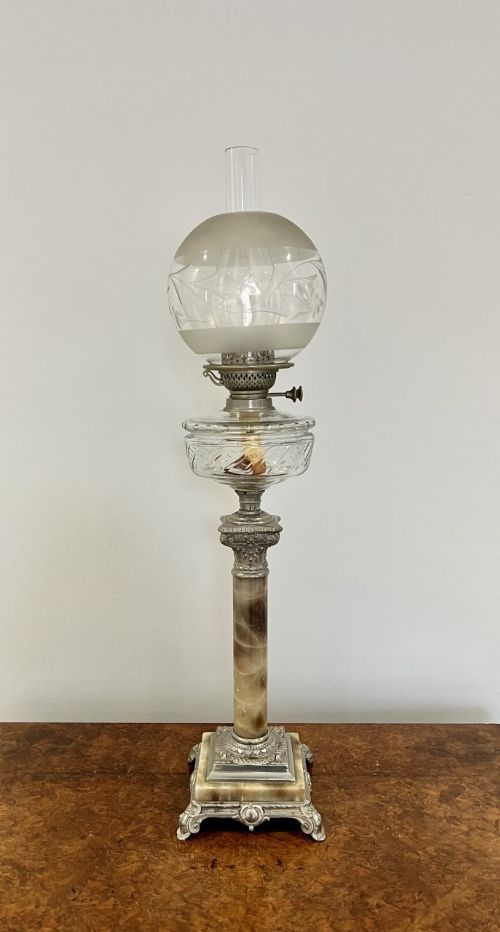
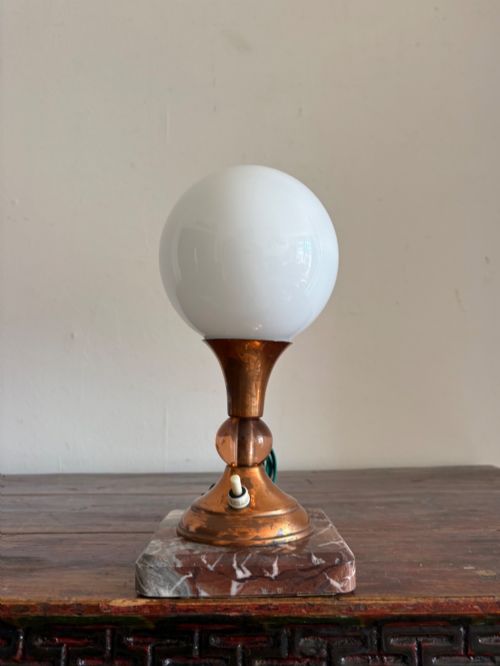
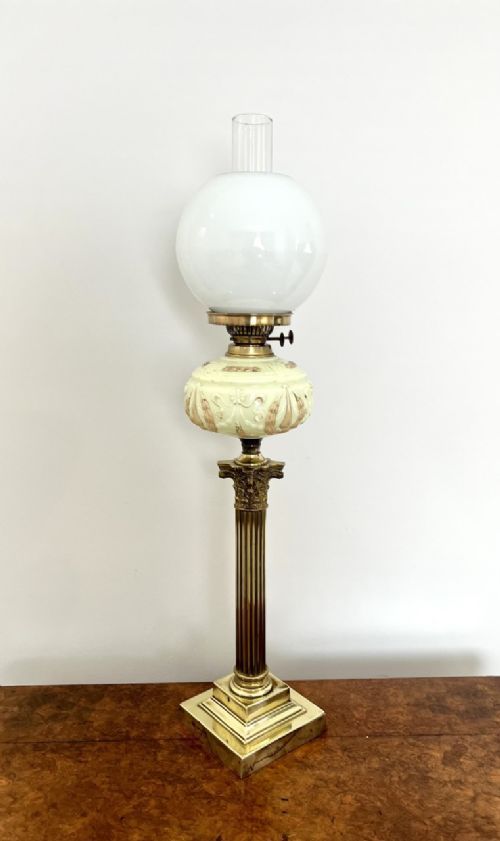
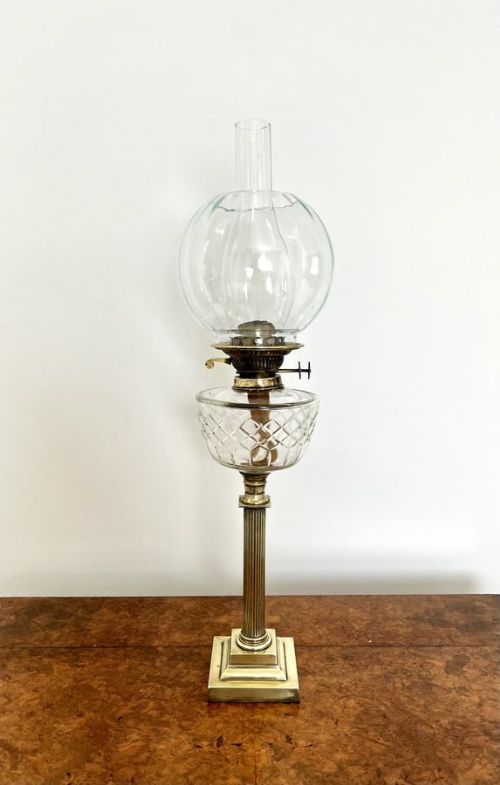
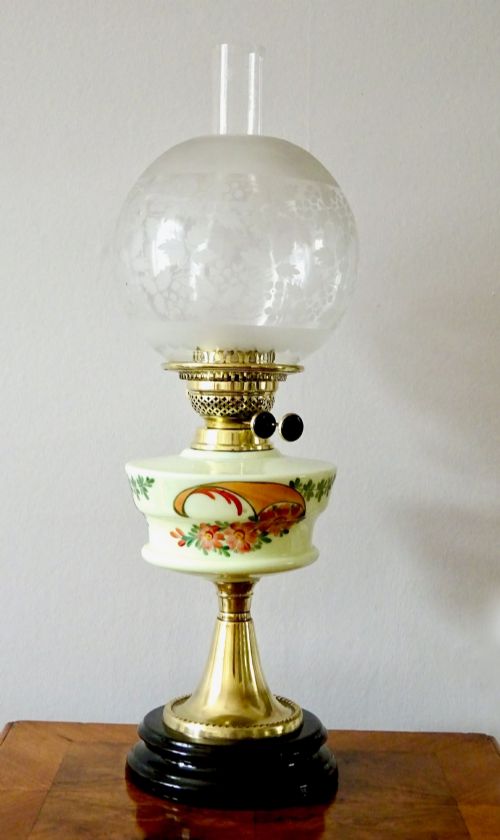
A glass globe table light encompasses a variety of illuminated decorative objects found in this selection, ranging from converted Victorian oil lamps to 1930s figural table lamps and French Art Deco designs.
The versions most frequently met on this page include period brass and ceramic oil lamps fitted with patterned or opaline shades, alongside geometric Art Deco lamps featuring marble bases.
Makers and origins span English Victorian workshops, French studios, and Chinese export pieces, capturing diverse aesthetic movements from Gothic Revival to Art Nouveau.
Materials and construction methods
Makers constructed these pieces using a combination of cast brass, polished marble, chrome, and bronze, often pairing metal bases with blown or frosted glass shades.
Font construction frequently involved coloured ceramic, cranberry glass, or carved stone, supporting detailed metalwork and figural spelter or bronze components.
Listings feature items spanning the 19th Century, Victorian, Edwardian, 1900, 1920, 1930, and 1940 periods.
Judging the quality of the range
Quality rests upon the weight and finish of the foundational materials, distinguishing heavy cast brass, solid marble, and substantial bronze castings from lighter substitutes.
Refinement shows in the hand-etching of the glass shades and the precise joining of multi-component bases, where superior examples retain intact patination and original glass components.
Hinks of Birmingham·Messengers·Harrods
The Glass Globe Table Light Glossary
- Opaline glass
- A type of semi-translucent glass that diffuses light softly, commonly utilised for period lamp shades.
- Spelter
- An alloy of zinc and other metals cast into figural sculptures, frequently found on Art Deco mood lamps.
- Font
- The liquid-holding reservoir section of an oil lamp, often rendered in coloured glass, ceramic, or brass.
- Gothic Revival
- An architectural and decorative style drawing on medieval forms, seen here in early twentieth-century brass chandeliers and light fittings.
- Bakelite
- An early form of synthetic plastic utilised for electrical and decorative elements in 1930s lighting designs.
Glass Globe Table Light: Frequently Asked Questions
What periods do these lights cover?
The pieces span from the 19th century and the Victorian era through Edwardian designs to the Art Deco period of the 1930s and 1940s.
Individual pieces reflect the shifting aesthetic preferences of these decades, moving from ornate brass oil lamps to streamlined figural lamps.
Were these lamps originally for oil?
Many of the Victorian and Edwardian examples began as functional oil lamps before later conversion to electrical lighting.
Other designs from the Art Deco era were conceived specifically for electricity from their initial manufacture.
What materials make up the bases?
Bases utilise a broad selection of materials recorded in the evidence, including brass, marble, chrome, ceramic, bronze, and spelter.
Combinations such as French marble paired with copper or brass appear frequently among the 1920s and 1930s items.