


Glass Front Bookcase Stand
A glass front bookcase stand offers a practical home for cherished volumes and fine objects while keeping dust at bay.
Glass Front Bookcase Stand
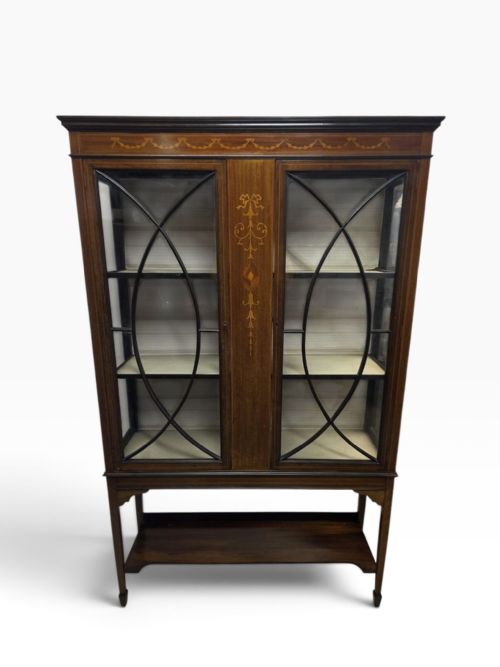
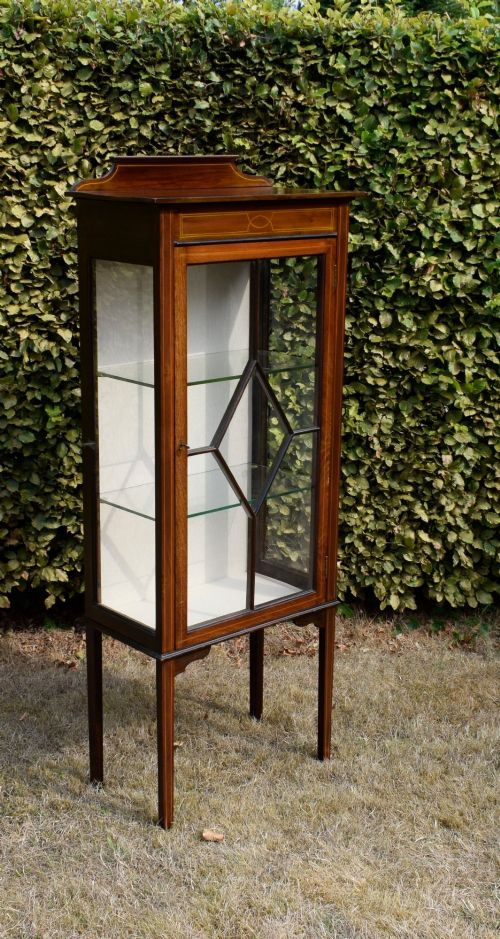
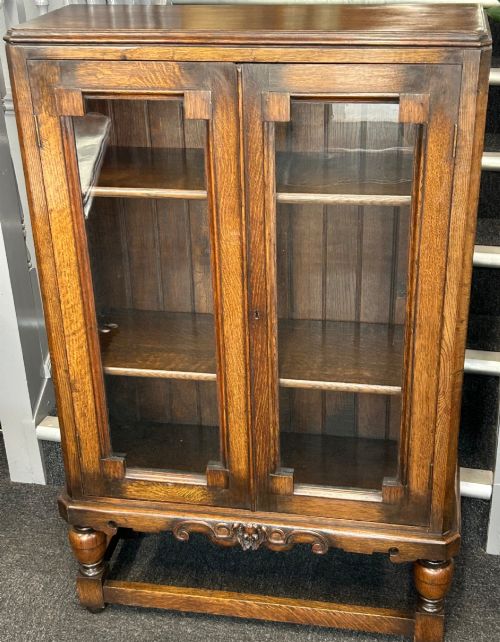
When buyers search for a glass front bookcase stand, they encounter standing cabinets, display pieces, and corner units designed to showcase books and objects. The examples seen here span periods from the Georgian era through the Edwardian years and into the 1930s, reflecting a rich history of cabinetmaking. Most options belong to the Edwardian period or the late nineteenth century, offering glazed doors to protect the contents within.
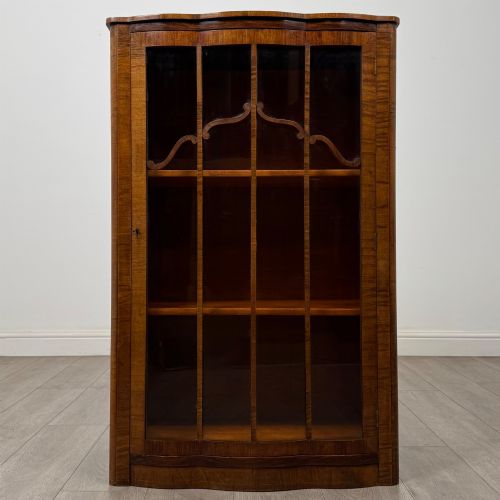
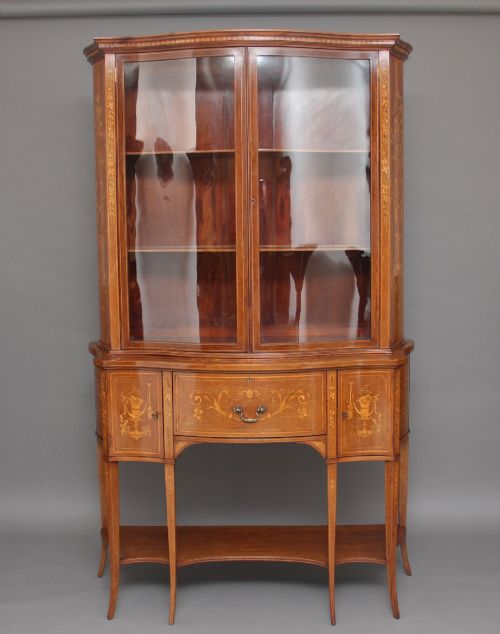
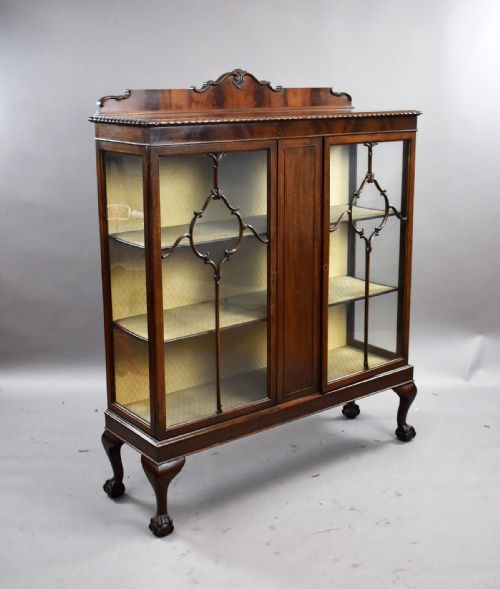
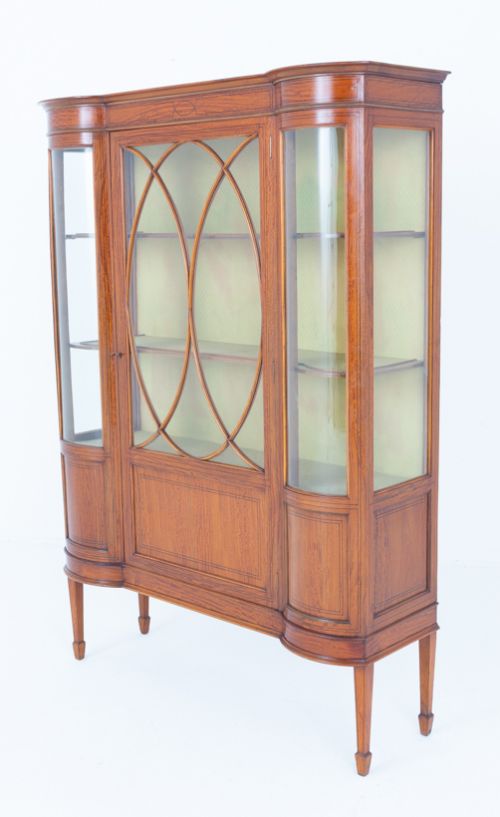
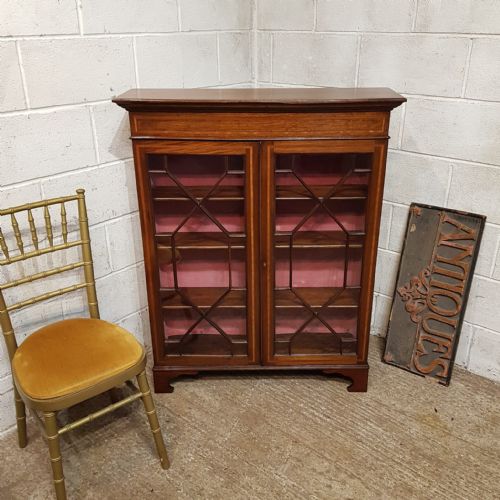
Forms vary from straightforward double-door bookcases to serpentine display cabinets, corner cupboards, and tall standing units. Mahogany forms the predominant timber across the selection, often accompanied by satinwood, walnut, and oak. These pieces function as both storage furniture and decorative focal points for a room.
How they were made
Cabinetmakers utilised solid timbers and veneers, predominantly mahogany, alongside oak, walnut, and satinwood, to construct the carcasses of these bookcases and display units. Workshops applied detailed inlay work, marquetry, and painted finishes to enrich the surfaces, drawing upon Sheraton Revival, Chippendale style, and Chinoiserie design motifs.
Glazing techniques involved individual glass panes held within wooden frames or astragal bars, allowing clear visibility into the interior shelves. Brass hardware, including handles and locks, completed the construction, ensuring functional doors for everyday use.
Some cabinets feature Chinese influence designs alongside traditional Edwardian inlay.
What varies in quality
The standard of craftsmanship separates standard utility furniture from finer pieces bearing maker signatures. Choice of timber grain, such as figured walnut or carefully selected mahogany, dictates the visual depth of the exterior.
Precision in the joinery, the delicacy of satinwood inlay, and the complexity of shaped fronts like serpentine or bow designs indicate the skill invested by the maker. Intricate astragal glazing bars and balanced proportions further distinguish superior examples.
Edwards & Roberts·Epstein
The Glass Front Bookcase Stand Glossary
- Astragal
- Moulding framing the individual glass panes within a door. These bars divide the glazing into smaller geometric sections.
- Marquetry
- Decorative veneer work forming pictures or patterns using different coloured woods. Craftsmen cut various timbers to fit precisely together on the surface.
- Serpentine
- A curved line of furniture featuring a convex centre flanked by concave ends. This shaping requires expert woodworking skill.
- Vitrine
- A glass-fronted cabinet designed specifically for displaying objects. These pieces often feature glass sides to maximise light inside.
Glass Front Bookcase Stand: Frequently Asked Questions
What periods do these pieces date from?
The listings include pieces spanning from the Georgian era through the nineteenth century, the Edwardian period, and into the 1930s.
Edwardian and late nineteenth-century examples appear most frequently among the current selection.
How do I identify a display cabinet?
Display cabinets feature glazed doors and frequently glass side panels to allow maximum visibility for items placed inside.
They often include adjustable shelving and decorative inlay or painted details suited to formal reception rooms.
Where should I place a corner cabinet?
Corner cabinets fit neatly into room junctions, making efficient use of awkward spaces while providing storage.
Standing corner cupboards and display units work well in dining rooms or studies to house books or porcelain.
What woods were used in these cabinets?
Mahogany forms the primary timber across the majority of the pieces, appearing with satinwood inlay or marquetry.
Other examples utilise oak, figured walnut, or painted finishes depending on the specific period and style.