


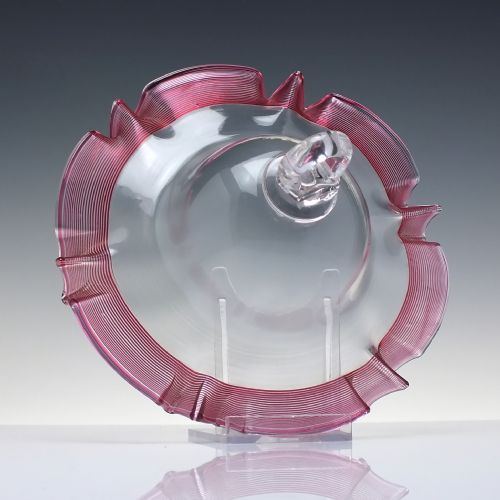

Glass Dressing Table Jar
A glass dressing table jar brings refined storage for cosmetics and trinkets to any bedroom counter, combining functional utility with decorative elegance.
Glass Dressing Table Jar
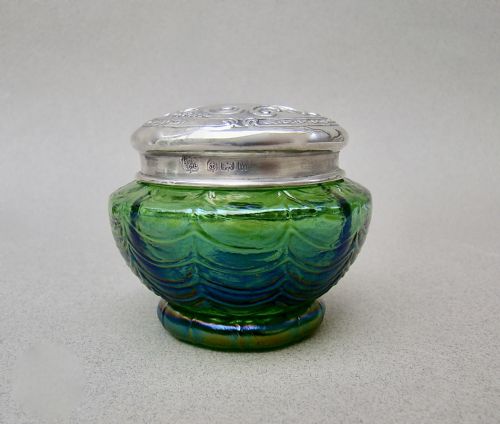
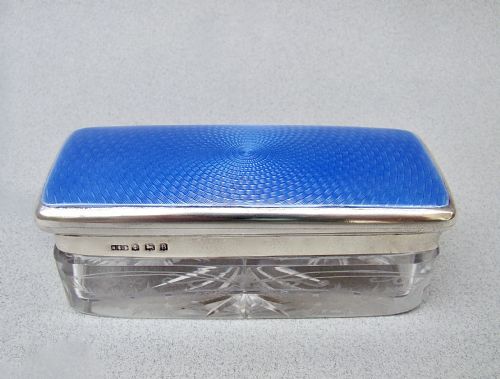
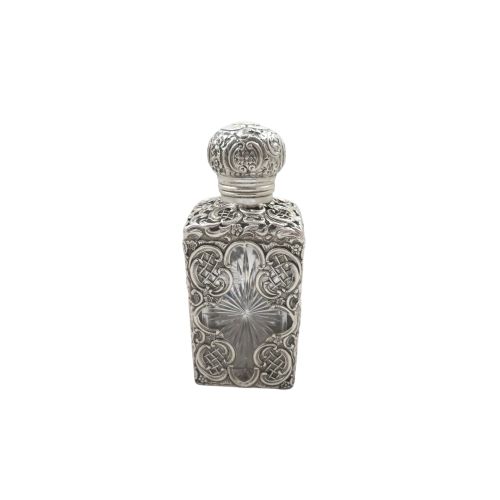
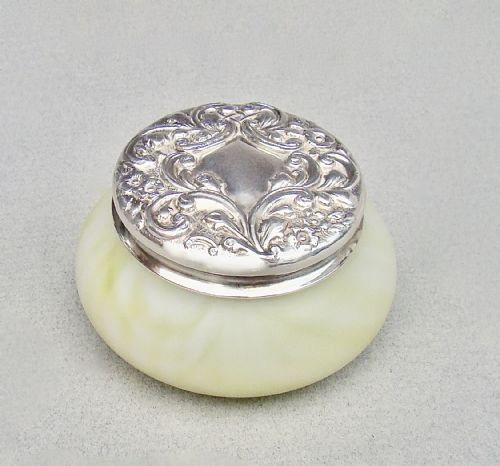
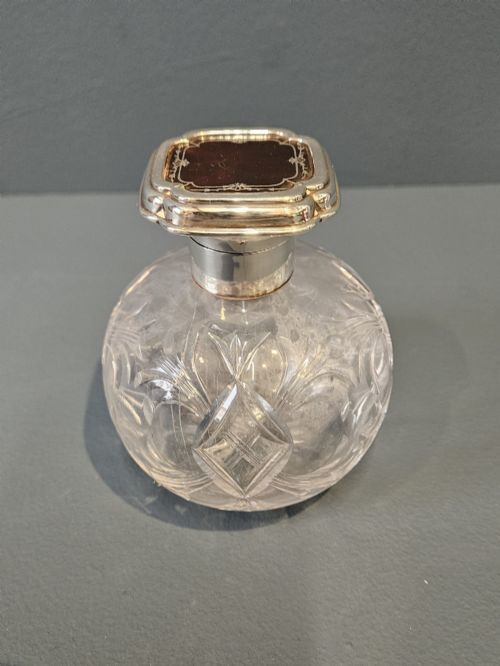
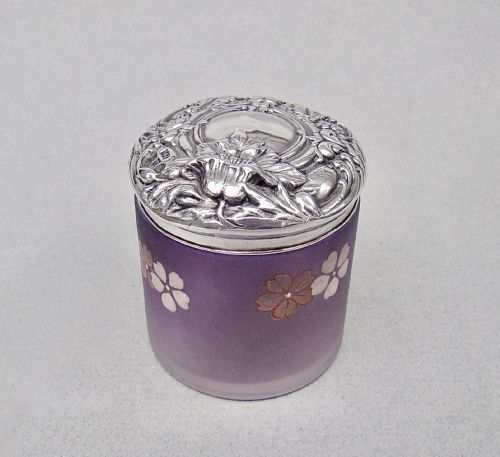
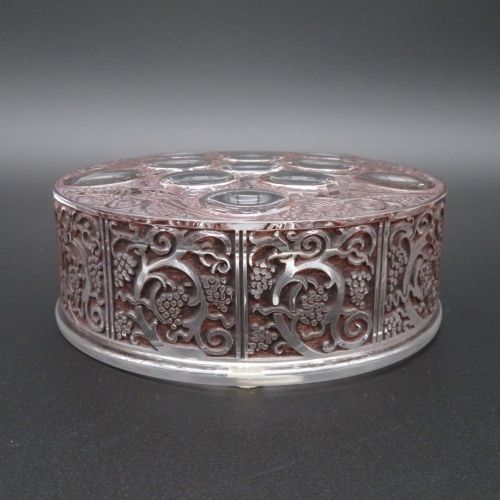
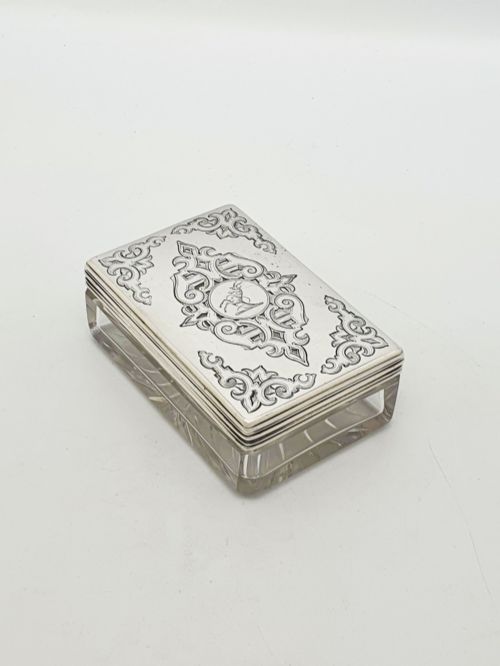
A glass dressing table jar serves as a container for powders, creams, pins, or perfumes, designed to sit neatly upon a vanity or dressing chest. These items span various forms including round powder boxes, hinged trinket boxes, and tall scent bottles.
Examples on this page reflect eras ranging from the Georgian period through the Victorian and Edwardian decades into the Art Deco and Mid-Century Modern styles. Buyers regularly encounter pieces pairing moulded or cut glass bodies with fitted metal lids.
How they were made
Bodies are formed from clear cut crystal, heavy moulded glass, or coloured varieties such as cranberry, Bristol blue, satin, and amethyst glass. Makers often decorated the glass surfaces with wheel-cutting, etched motifs, or overlay techniques.
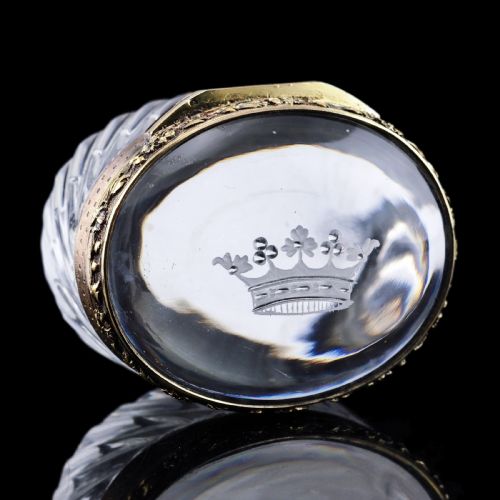
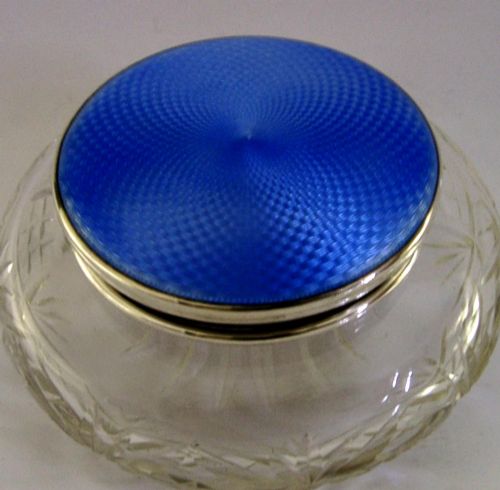
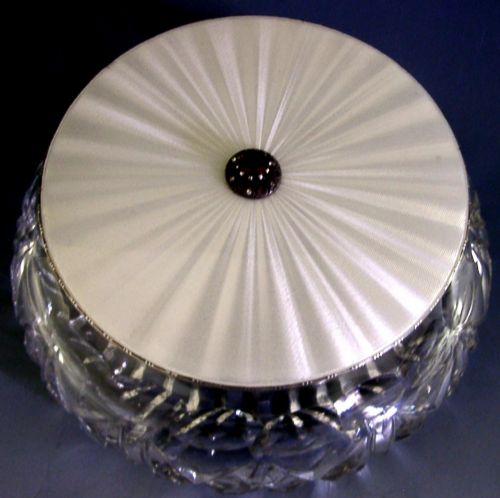
Lids and mounts utilise sterling silver, silver gilt, or ormolu, frequently featuring hallmarks from assay offices like Birmingham and London. Artisans embellished these metal closures with guilloché enamel, tortoiseshell panels, repoussé floral designs, and engine-turned patterns.
Victorian ladies often matched their cranberry glass vanity jars to their ruby-tinted scent bottles for a coordinated splash of colour.
What varies in quality
The sophistication of the glass cutting and the weight of the crystal establish the primary baseline of refinement. Deep, sharp facets and unblemished coloured glass indicate superior manufacturing standards.
Metalwork complexity elevates certain items above standard production, particularly when lids incorporate multi-coloured guilloché enamel, intricate hand-engraving, or heavy cast silver mounts by notable makers.
A. J. Pepper & Co·Henry Clifford Davis·A. Bromet & Co·Rene Lalique·Henry Perkins·Posen·Barnsley & Co·Adie Brothers Ltd·Robert Pringle & Sons·Mappin & Webb·Henry Matthews·W.C. Griffiths·Synyer & Beddoes·William Aitken·John Douglas·Thomas Ingleton·Jenner and Knewstub·Baccarat
The Glass Dressing Table Jar Glossary
- Guilloché enamel
- A decorative technique where geometric patterns are engine-turned into metal beneath a translucent layer of coloured enamel. This method was widely utilised during the Edwardian and Art Deco periods.
- Cranberry glass
- A rich red-pink transparent glass created by adding gold chloride to the molten batch. It frequently appears in Victorian and Edwardian dressing table accessories.
- Repoussé
- A silversmithing technique where metal is hammered from the reverse side to form raised decorative reliefs on the surface. Lids decorated this way often display floral or scroll motifs.
- Ornithological or figural motifs
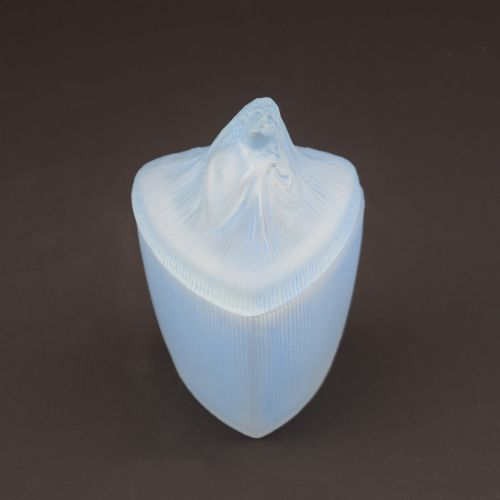
- Decorative designs depicting birds or human figures pressed or etched onto glass or metal. These appear selectively on specialty vanity containers.
- Overlay
- A manufacturing method involving a layer of coloured glass cased over a clear or contrasting glass body, then selectively cut away to expose the underlayer.
Glass Dressing Table Jar: Frequently Asked Questions
What were glass dressing table jars used for?
These jars held daily cosmetics, hair pins, loose powder, and scented liquids for personal grooming. They kept delicate items protected while adding ornamental display value to dressing tables.
Over time, they evolved from utilitarian containers into highly decorative vanity accessories reflecting the design trends of their respective decades.
What is the difference between a trinket box and a powder jar?
Powder jars typically feature wide, shallow cylindrical bodies designed to hold loose cosmetic powder and puffs. Trinket boxes often have shallower profiles or varied geometric shapes meant for jewellery and small keepsakes.
Both items utilise fitted or hinged lids, though powder jars generally lack the intricate internal compartments sometimes found in larger trinket containers.
How do I clean antique glass and silver jars?
Glass bodies tolerate warm soapy water and gentle brushing to remove dust from cut facets or crevices. Metal lids require careful polishing with a soft cloth, avoiding contact between polish and any enamel or tortoiseshell panels.
Harsh chemical dips should be avoided to preserve the original patina and delicate applied decorations on both the glass and the mounts.