




Glass Dome Desk Clock
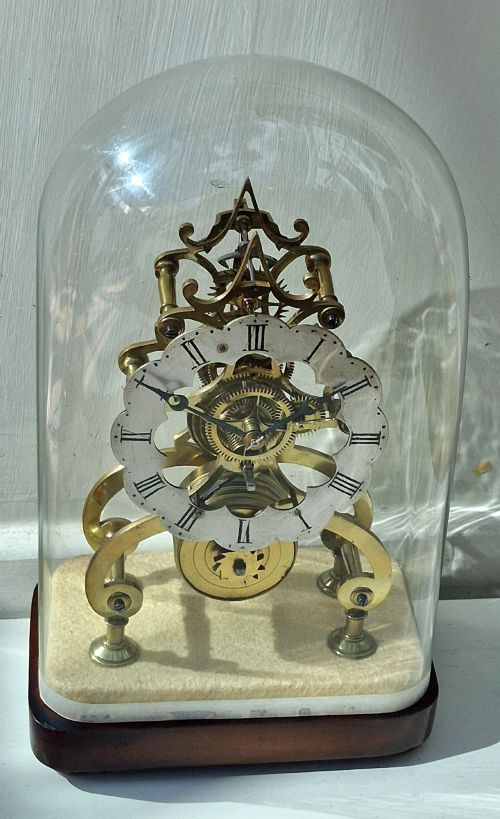
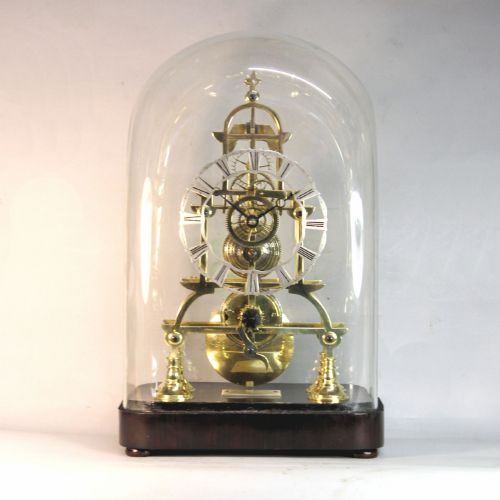
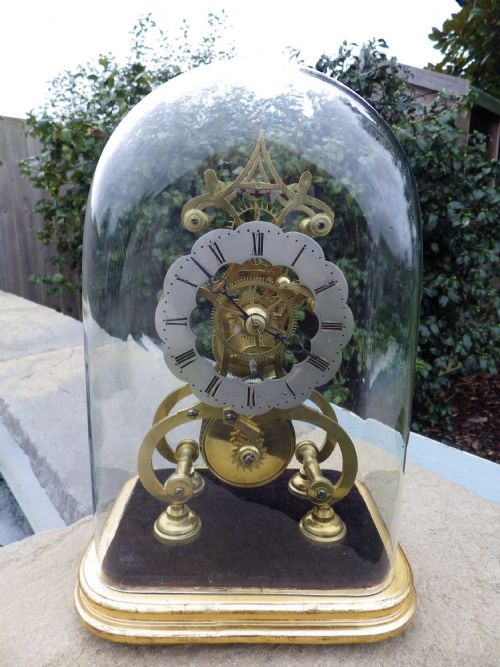
A glass dome desk clock sits beneath transparent glass, protecting delicate mechanisms from dust while displaying intricate wheelwork.
Glass Dome Desk Clock
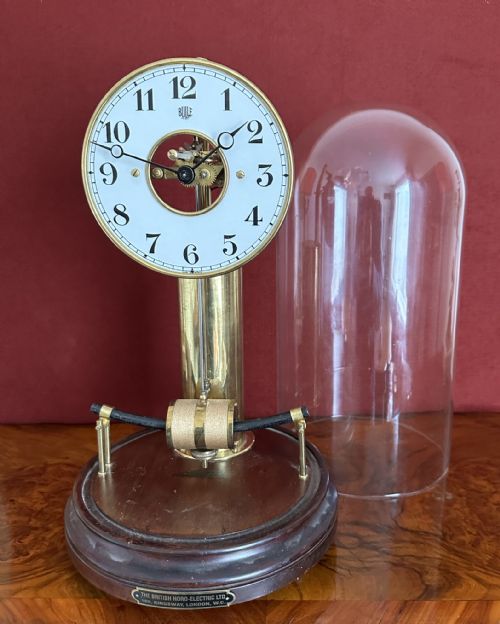
A glass dome desk clock brings together precision timekeeping and protective display, often housing skeleton movements, torsion mechanisms, or striking mantel clocks. These pieces range from mid nineteenth century French gilt bronze works to Victorian English fusee designs and later electric movements.
Most examples encountered here sit upon a wooden or marble base beneath a blown or pressed glass cover. The variety spans compact anniversary clocks, gothic revival architecture, and elaborate swinging cherub designs.
Collectors seek these items for their visible mechanical action and the preservation afforded by the original glass cover. The combination of brass gear trains and protective housings defines the category across Victorian and Edwardian periods.
Construction and materials
Brass and gilt bronze form the primary metalwork for the movement plates, wheel trains, and decorative mounts. Artisans shaped these components by hand or utilised early industrial machining to create exposed skeleton frameworks.
Blowing or forming clear glass created the protective domes, which rest securely upon bases fashioned from mahogany, marble, or velvet-covered wood. Enamel dials and painted ceramic panels frequently provide the face for numerical reading.
A swinging cherub holds the pendulum aloft, transforming a standard mantel clock into a kinetic sculpture.
Distinctions in quality
The refinement of the wheelwork and the complexity of the escapement separate standard timepieces from superior examples. Six spoke wheel work, fusee movements, and intricate skeleton designs indicate higher workshop skill.
The clarity and integrity of the original glass dome alongside the choice of base materials mark the distinction between ordinary production and finer decorative objects. Matching components, such as original brass feet and signed enamel dials, elevate the standing of a piece.
Richard Winter of Chieveley·Maurice & Marcel Moulin Favre-Bulle·Farcot
The Glass Dome Desk Clock Glossary
- Skeleton clock
- A timepiece designed with open metal plates that expose the gear train and movement to view. This construction allows light to pass through the mechanism beneath the glass dome.
- Torsion pendulum
- A weighted pendulum suspended by a thin ribbon of metal that rotates back and forth instead of swinging. It operates on a slow cycle, allowing anniversary clocks to run for long periods between windings.
- Fusee
- A conical pulley connected to the mainspring by a cord or chain that equalises the torque as the spring unwinds. This mechanism improves timekeeping accuracy throughout the running cycle.
- Gilt bronze
- Metal cast and coated with a thin layer of gold, commonly known as ormolu on French decorative pieces. It provides a durable, reflective surface for clock cases and bases.
Glass Dome Desk Clock: Frequently Asked Questions
What is a glass dome desk clock?
A glass dome desk clock is a mechanical timepiece enclosed within a protective glass cover resting on a base. This design shields the delicate moving parts from dust while permitting an unobstructed view of the interior mechanism.
Such clocks encompass various styles including skeleton movements, torsion anniversary mechanisms, and French mantel pieces dating from the Victorian and Edwardian eras.
How do skeleton clocks work?
Skeleton clocks operate through an exposed gear train where the brass plates are cut away to reveal the inner mechanics. Energy is typically supplied by a mainspring and regulated by an escapement and pendulum.
The open structure allows the observer to watch every interaction of the wheels and levers directly beneath the protective glass enclosure.
Are the glass domes usually original?
Many surviving pieces retain their original blown or formed glass covers, which often exhibit subtle bubbles and irregularities characteristic of older manufacturing methods. Replacement domes do occur due to the fragile nature of glass over long periods.
A correct dome fits the groove or base precisely and matches the proportions of the clock it protects.
How should I clean my clock?
Cleaning requires great care to avoid disturbing the delicate brass wheels, escapement, and hairsprings of the movement. Dusting the exterior of the glass dome can be done with a soft cloth, but internal mechanical cleaning is best left to a professional horologist.
Lifting the glass cover should be done cautiously using both hands to support the base and prevent accidental damage to the clock.
How do I identify the period?
Dating relies on stylistic clues such as the architectural form, the materials used for the base, and the design of the dial and numerals. Victorian Gothic examples feature pointed arches, while Edwardian torsion clocks often display simpler, restrained brass framing.
Signatures or maker marks engraved on the movement plates provide further evidence of the exact era of manufacture.