




Glass Display Console
Glass display console pieces combine surface utility with glass-fronted storage or display, offering a practical way to present items.
Glass Display Console
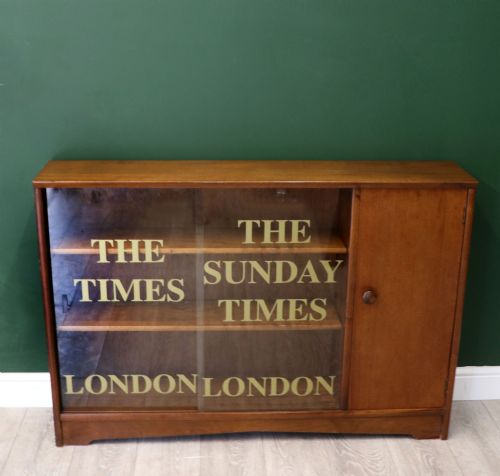
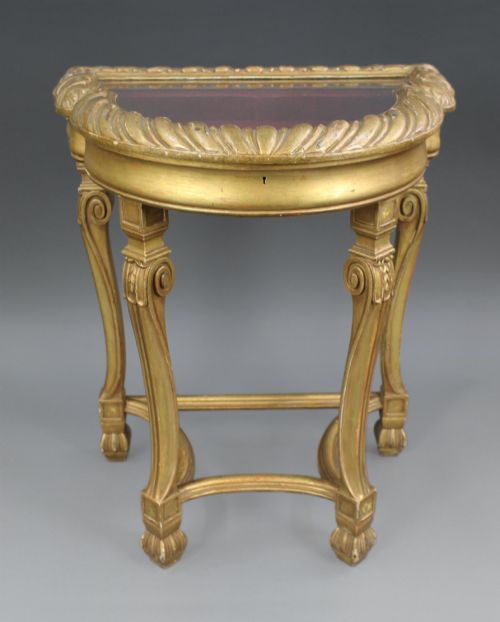
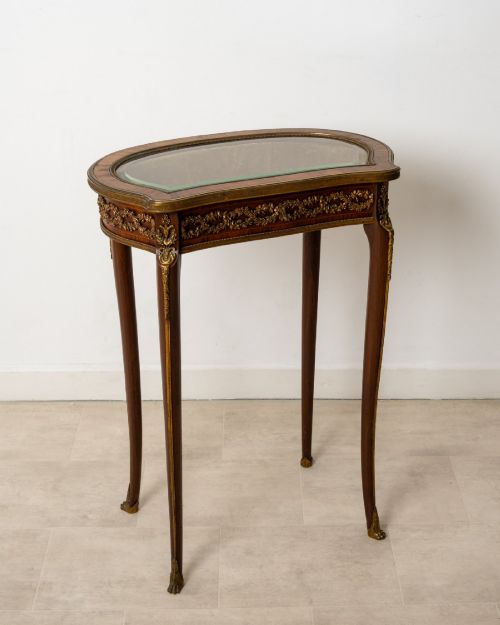
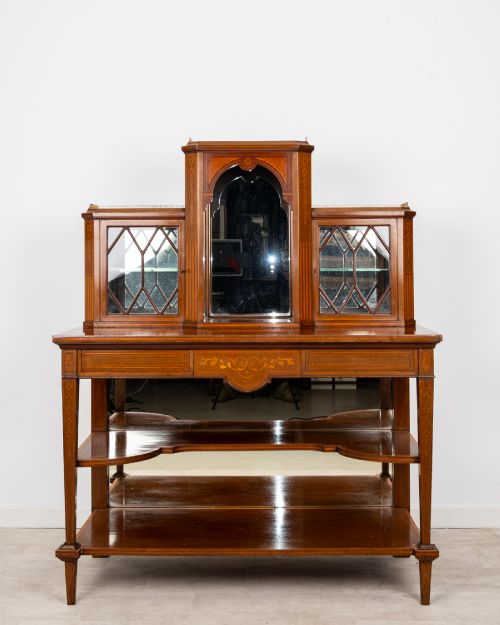
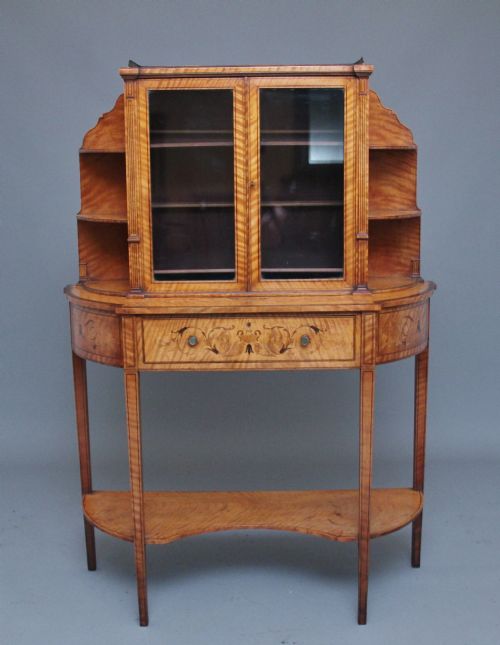
A glass display console brings together furniture for surface placement and glazed compartments for showing items within domestic spaces. When buyers search for glass display console examples, they encounter a mix of side cabinets, bijouterie tables, and vitrine display tables spanning periods from the Victorian era through the mid twentieth century.
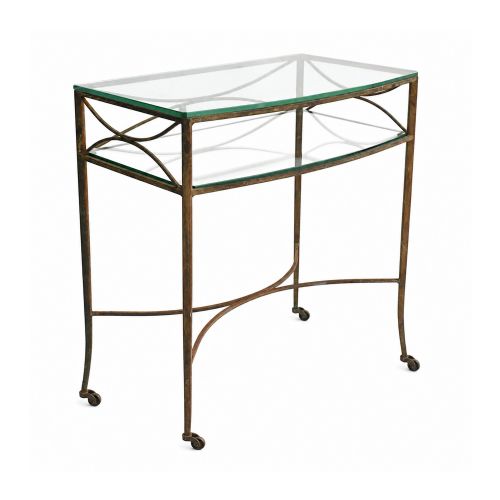
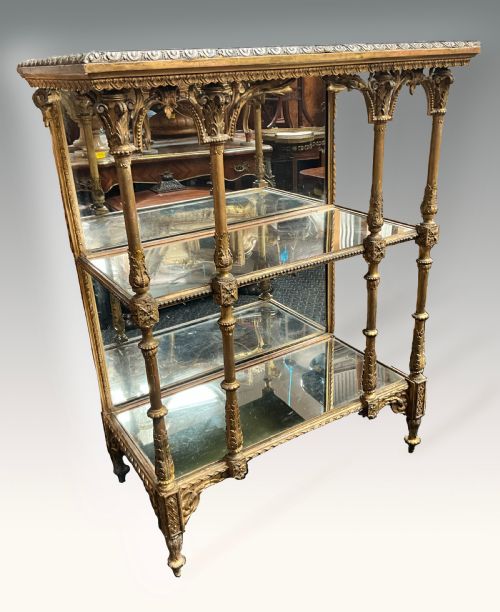
The pieces on this page draw on styles such as Edwardian, industrial, and French revival designs, utilising woods like mahogany, satinwood, and burr walnut alongside metal and glass. Cabinets and tables range from 1860s credenzas to 1960s bijouterie tables, reflecting changing tastes in interior presentation over a century.
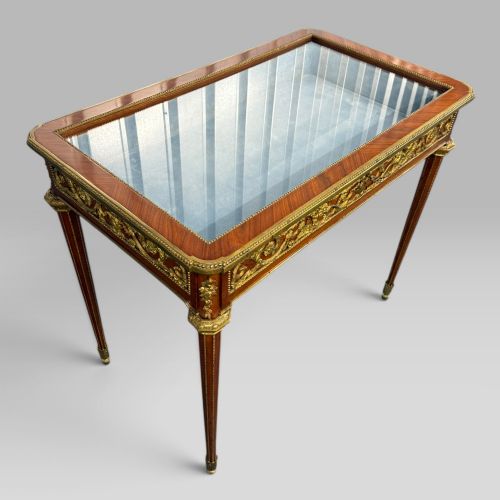
Most items combine timber framing with glass panels or tops, designed to stand against walls or function as central display surfaces in reception rooms. The selection includes inlaid writing desks, tiered industrial metal and cast-iron frames, and gilt bronze decorated vitrines.
Materials and construction methods
Cabinet makers utilised dense hardwoods including mahogany, satinwood, kingwood, and burr walnut, frequently applying wood inlay or brass details to the exterior surfaces. These timbers provided a stable structural carcass capable of supporting glazed doors, lift-up glass display lids, and mirrored backings.
Metal components such as cast iron, ormolu, and gilt bronze mounts were integrated into French revival and industrial pieces to reinforce corners, frame glass inserts, and decorate table legs. Glazing techniques secured transparent panels within timber or metal rebates, allowing visibility into internal shelves or velvet-lined display wells.
Glass Display Console Retail Price Guide 2026
Typical asking prices for glass display console among the pieces listed under this phrase on Sellingantiques today, from the lower quarter to the upper quarter. They describe what is for sale here now, not the wider market.
Some nineteenth-century tables were built specifically so you could admire your collection of pocket watches while drinking tea.
Distinguishing quality across the range
Quality shows in the precision of the timber matching and the execution of wood inlay, where finer examples feature intricate banding and carefully chosen grain patterns in woods like satinwood or walnut. The integration of metal mounts, such as cast ormolu and gilt bronze, separates standard production from pieces with sharply chased and securely fitted decorative hardware.
Structural refinement appears in the joinery of the cabinet frame and the smooth operation of glazed doors or hinged display lids. Superior pieces maintain alignment in the timber carcass over time, ensuring tight closures for glass compartments and stable support for heavy marble or timber tops.
François Linke·Gillow and Co
The Glass Display Console Glossary
- Bijouterie table
- A glass-topped display table specifically designed for showing small valuable items, medals, or jewellery. These tables often feature hinged lids and velvet-lined interiors.
- Vitrine
- A glass-fronted cabinet or display case used for exhibiting porcelain, silverware, and decorative objects. The term derives from the French word for glass.
- Credenza
- A low dining-room sideboard or cabinet originating in the nineteenth century, frequently incorporating cupboard doors and display surfaces. Victorian examples often utilise walnut and elaborate timber veneers.
- Ormolu
- Gilded bronze or brass applied as mounts and decorative hardware on furniture, particularly associated with French revival styles. The finish is achieved through mercury gilding or modern electroplating.
- Bonheur du jour
- A small, light lady's writing desk featuring a tiered superstructure with drawers, shelves, or small cabinets above the main writing surface. Edwardian versions frequently incorporate mahogany and delicate inlay work.
Glass Display Console: Frequently Asked Questions
What is a bijouterie table?
A bijouterie table is a glass-topped display table created to exhibit small decorative items, coins, or jewellery safely beneath a transparent surface. They typically feature hinged lids that allow access to a lined interior compartment.
These tables were popular in nineteenth and early twentieth-century drawing rooms as functional display furniture.
How do I identify Victorian styles?
Victorian furniture spans the mid to late nineteenth century, taking in heavy walnut credenzas, ornate gilt wood and gesso mirrors, and revivalist decorative motifs. Craftsmanship from this era often employs dense hardwoods and visible carving.
Pieces from this period reflect industrial expansion and changing domestic interior fashions across the reign of Queen Victoria.
Where should I place a console table?
Console tables fit well against hallway walls, in reception rooms, or positioned beneath large mirrors and display shelves. Their narrow footprint allows them to occupy circulation spaces while offering a surface for lamps or decorative objects.
Glass-topped or glazed versions also serve to display smaller collectibles without cluttering room layouts.
What is wood inlay?
Wood inlay involves fitting contrasting pieces of timber, shell, or metal into carved recesses on a furniture surface to create decorative patterns or pictures. Craftsmen used techniques like marquetry and parquetry on satinwood and mahogany.
This decorative method defines the surface appearance of many Edwardian and Victorian fine furniture pieces.