





Glass Display Chest
These glass display chest pieces combine glazed compartments with fitted lower sections, offering a practical way to store and exhibit prized collections.
Glass Display Chest
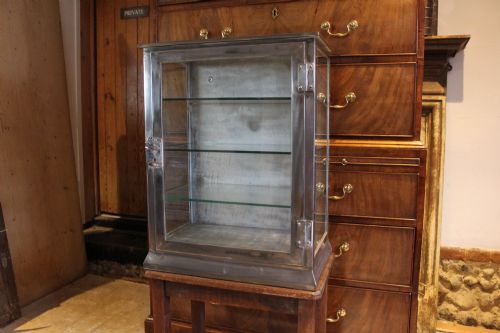
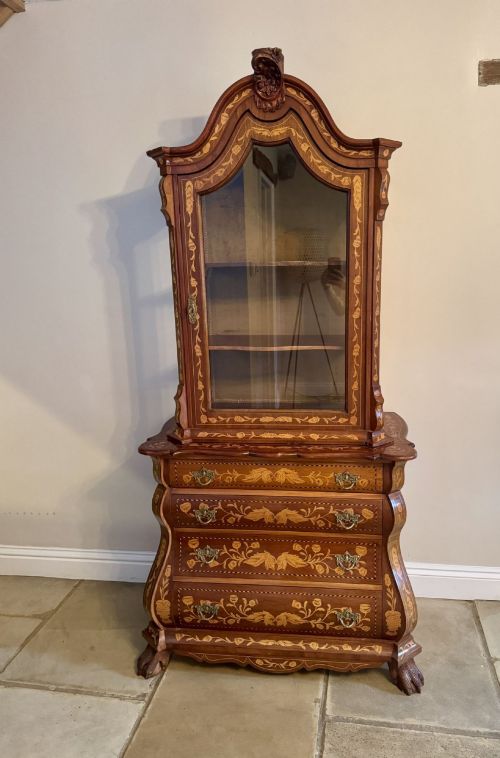
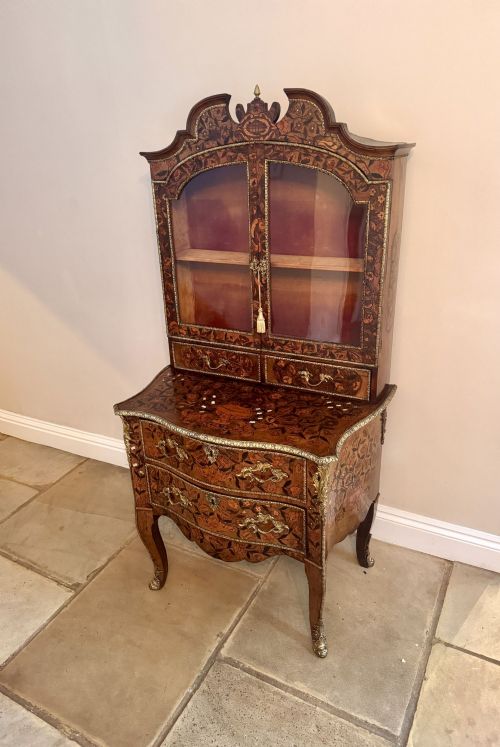
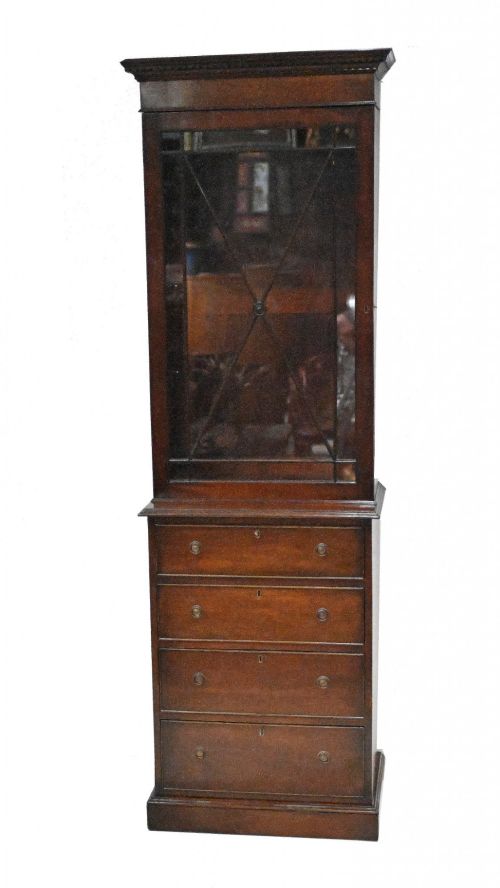
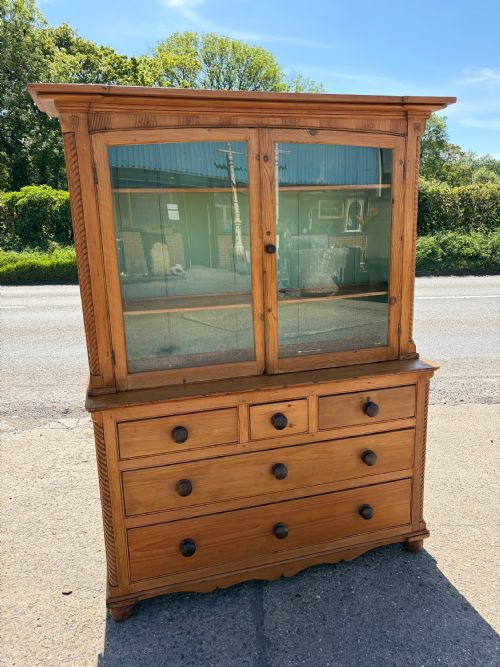
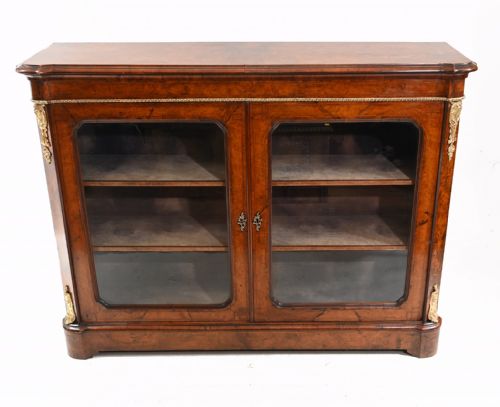
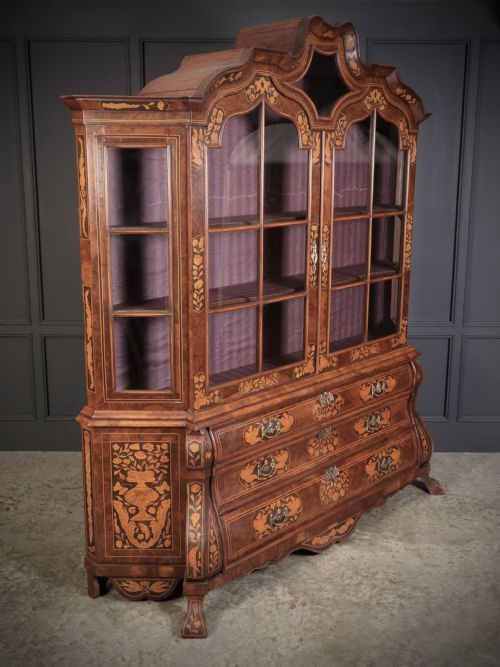
A glass display chest bridges the gap between formal vitrines and utilitarian storage furniture, placing visibility above all else. Buyers searching for a glass display chest encounter forms spanning the eighteenth century through to the Edwardian era, including Dutch marquetry cabinets on chests, Victorian pier cabinets, and specialised specimen or scientific cases.
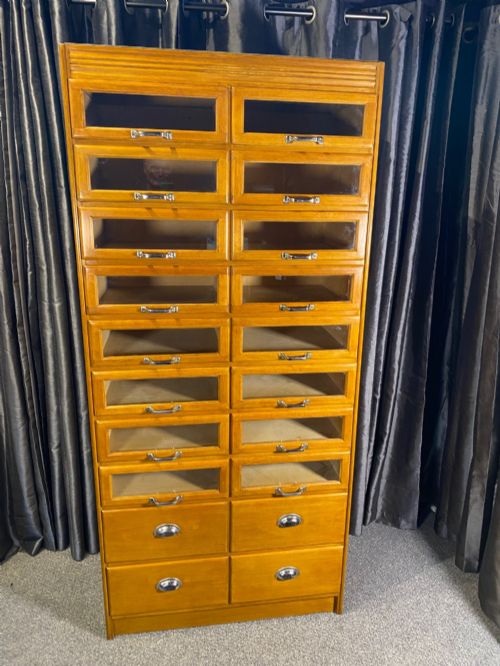
The dominant variations on this page include tall mahogany bookcases, bombe-shaped walnut display cabinets, and fitted music or drapers cabinets with glazed doors. Origins stretch across British workshops and continental European centres, particularly Dutch makers working with intricate floral inlays.
Most examples merge a glazed upper viewing area with a closed chest base, though certain maritime and trade pieces rely entirely on brass-framed glass. Selecting the right piece depends upon whether the intention is to house books, scientific instruments, or delicate decorative objects.
Materials and construction
Makers utilised solid hardwoods like mahogany, walnut, oak, and fruitwood, frequently applying burr veneers or marquetry inlay to the exterior surfaces. Glass panels were hand-blown or cast before being set into wooden frames or held by brass mounts, sometimes featuring bevelled edges.
Structural integrity relied on traditional joinery methods, with dovetailed drawer boxes and mortise and tenon frames supporting heavy glass doors. Cabinet bases often incorporated shaped plinths, bracket feet, or bombe profiles that required considerable skill from the woodworker.
Glass Display Chest Retail Price Guide 2026
Typical asking prices for glass display chest among the pieces listed under this phrase on Sellingantiques today, from the lower quarter to the upper quarter. They describe what is for sale here now, not the wider market.
Listings feature mahogany, walnut, oak, and fruitwood alongside specialist display forms from the eighteenth century to the Edwardian period.
Evaluating quality in these cabinets
Distinction in quality rests upon the crispness of the marquetry inlay, the choice of timber figures such as burr walnut or yew, and the proportionality of the base chest to the glazed upper section. Pieces exhibiting refined hand-carved details or complex bombe shaping sit firmly above standard utility storage.
The integration of original glass, functioning brass locks, and undisturbed patina on the wood surfaces elevates an example significantly. Attention to interior fittings, such as adjustable shelving or tailored velvet linings for scientific and jewellery cases, demonstrates the maker's original ambition.
Ermen and Roby
The Glass Display Chest Glossary
- Bombe
- A swelling, convex curved profile found on the front and sides of certain eighteenth and nineteenth-century cabinet bases. This curving form demands advanced woodworking techniques.
- Marquetry inlay
- Decorative patterns formed by fitting contrasting veneers into a prepared wooden ground. Floral motifs and pastoral scenes frequently appear in Dutch examples.
- Pier cabinet
- A low display cabinet designed specifically to fit the wall space between windows. These pieces often incorporate glazed doors and walnut or mahogany construction.
- Vitrine
- A glass-fronted cabinet designed for displaying fine porcelain, curiosities, or objects of art. The term applies broadly across eighteenth-century and Victorian pieces.
- Tantalus
- A locking wooden frame holding decanters with visible glass necks, preventing unauthorized access to the contents. Edwardian versions often combine this mechanism with display storage.
Glass Display Chest: Frequently Asked Questions
What is a glass display chest?
A glass display chest is a hybrid piece of furniture that unites glazed display compartments with enclosed drawer or cupboard storage below. These cabinets were built to protect and exhibit valuable possessions simultaneously.
Examples range from eighteenth-century Dutch marquetry pieces to Victorian scientific and music cabinets, each reflecting the domestic or commercial requirements of its era.
How do I date a glass display chest?
Dating relies on observing structural characteristics, timber choices, and stylistic traits such as Art Nouveau curves or Georgian proportions. Secondary woods inside drawers and the method of glass production also provide reliable clues.
Comparing the primary decorative elements against known period styles helps narrow the decade of manufacture.
Where were these cabinets used?
Original locations varied widely depending on the specific form of the chest. Library bookcases sat in gentlemen's studies, while pier cabinets occupied formal drawing rooms.
Commercial variants, such as drapers counters and optician lens kits, served trade and professional environments before finding their way into domestic interiors.
How do I care for antique wood and glass?
Maintaining these pieces involves keeping them away from direct sunlight and maintaining stable room humidity to protect vulnerable veneers and old glass. Gentle dusting with a dry cloth preserves the finish without harming the patina.
Avoid chemical polishes that can degrade nineteenth-century French polish or dry out aged timber joints.