
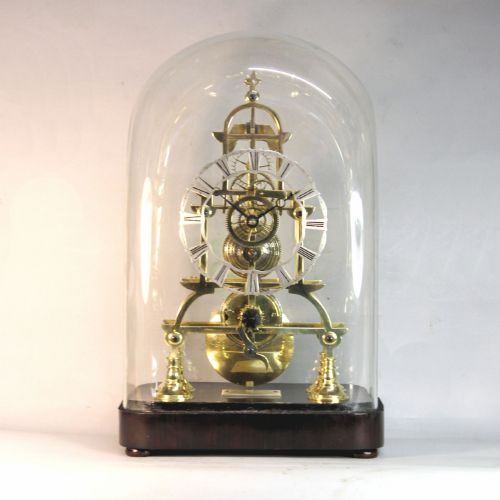


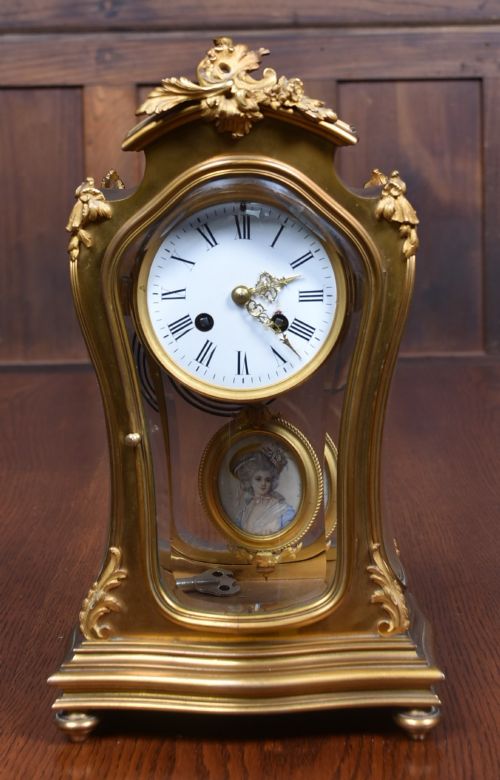


Glass Dial Clock
A glass dial clock brings precision movement together with clear visibility, offering a striking focal point for any mantel or wall.
Glass Dial Clock
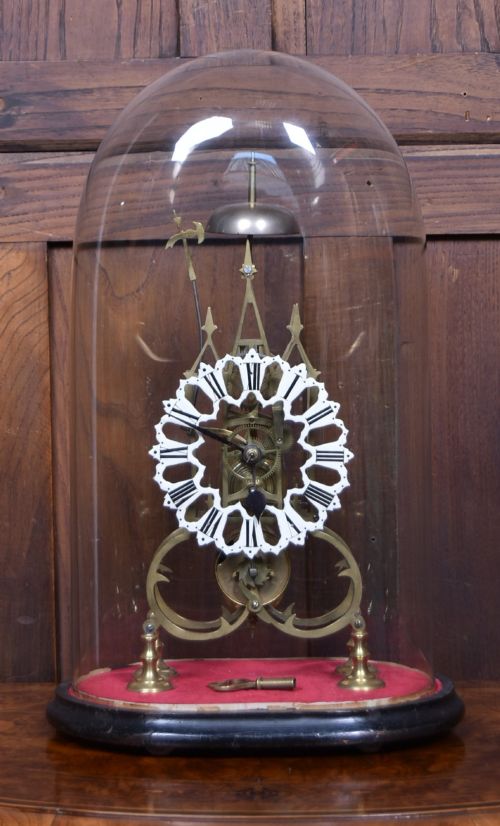
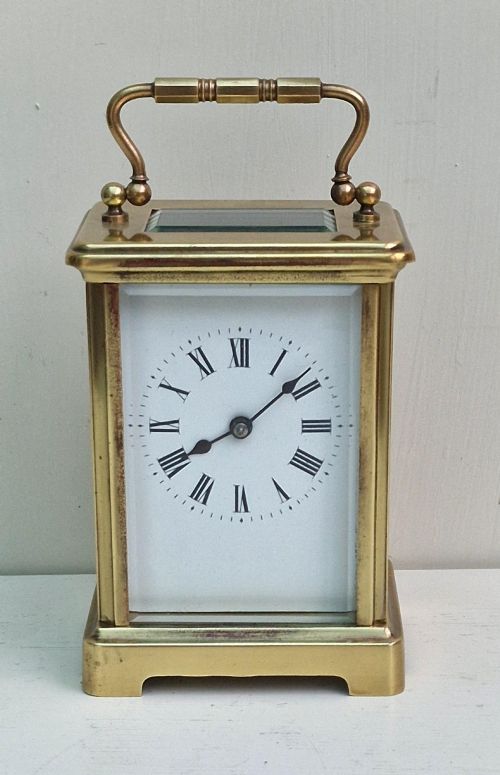
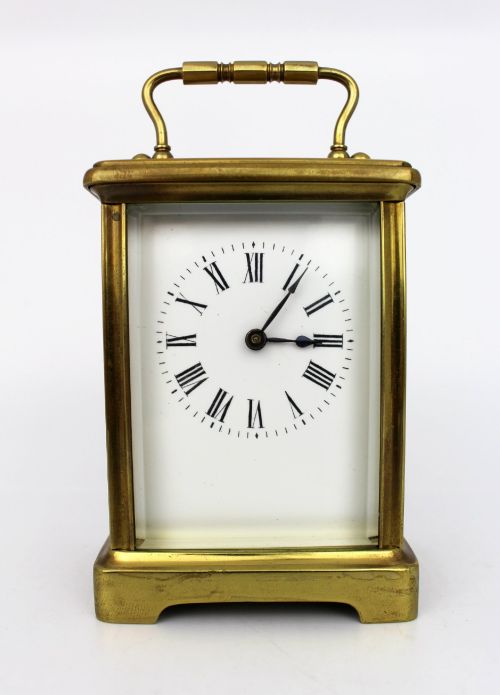
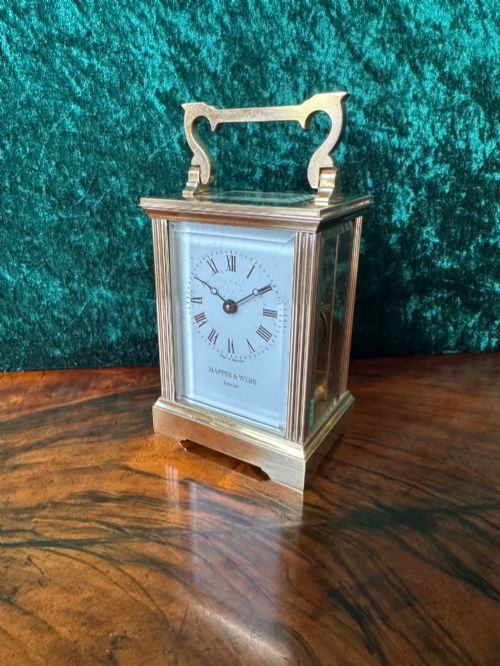
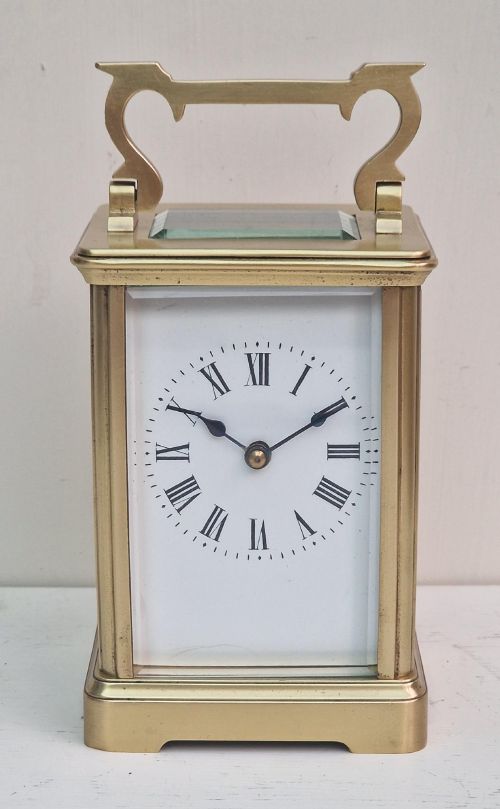
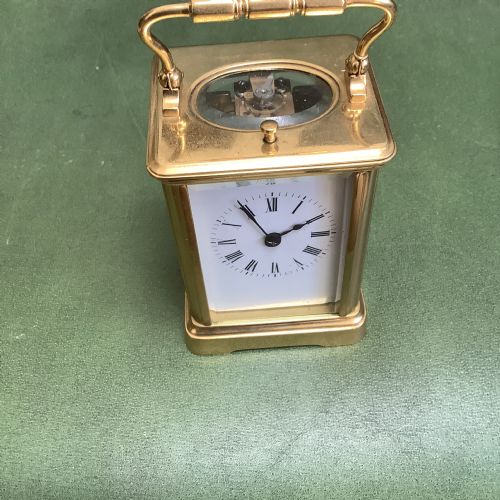
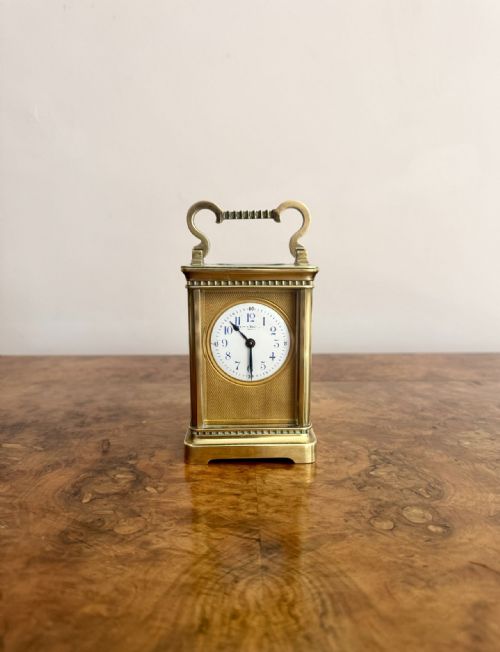
A glass dial clock encompasses various timepieces featuring protective glass panels or transparent dials, ranging from wall-mounted fusee dial clocks to freestanding mantel and carriage pieces. Collectors exploring this selection will frequently encounter French and English examples from the nineteenth and early twentieth centuries.
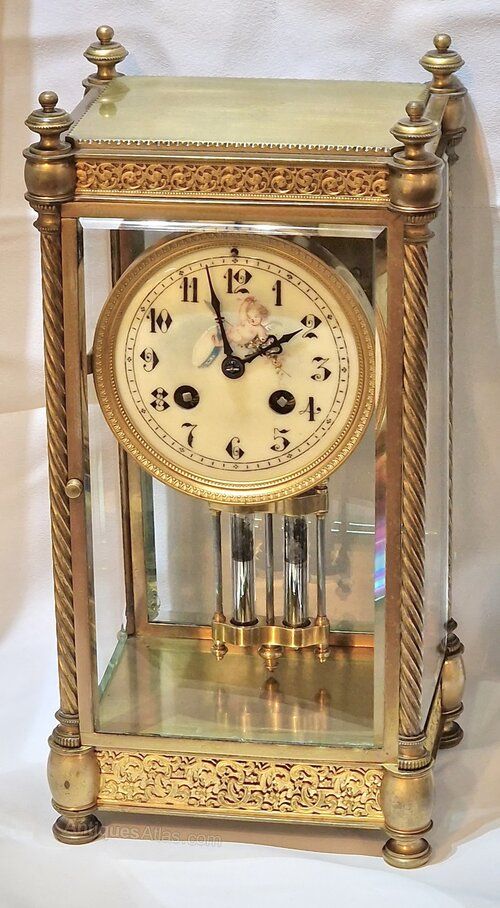
The category spans multiple distinct forms, including robust brass-framed carriage clocks, four-glass library clocks, and wooden wall clocks with convex glass covers. These items reflect the diverse horological output of periods such as the Victorian era, the Edwardian years, and the Art Deco movement.
Makers often housed these mechanisms in mahogany, gilt brass, ebonised wood, or golden oak cases, pairing the prominent glass elements with enamel, porcelain, or silvered metal dials. Such combinations serve domestic and public spaces alike, balancing mechanical utility with decorative presence.
How They Were Made
Horologists constructed these pieces using heavy brass, gilt bronze, and seasoned timbers like mahogany and oak to support intricate internal movements. Workshops relied on fitted glass panels, often curved or bevelled, to enclose the delicate dials and escapements safely.
Dial construction involved enamelled copper, painted porcelain, or engraved silvered metal, paired with specialised mechanical components such as fusee movements and repeat striking trains. Craftsmen finished the metal cases with gilding or polished surfaces, while woodworkers polished the fitted cabinet work.
Listings span wall-mounted dial clocks, freestanding mantel pieces, and portable carriage clocks.
What Varies in Quality
Distinctions in quality often rest upon the precision of the movement, the weight of the brass casting, and the clarity of the bevelled glass panes. Finer examples display signed plates from established makers, delicate hand-painted dial details, and robust escapements that maintain accurate time.
Case construction likewise defines the hierarchy, where solid mahogany or heavy fire-gilded brass gorge cases outlast lighter plated alternatives. Original components, intact enamel free of hairline cracks, and crisp engraving on the dial mask superior workshop provenance.
Richard Winter of Chieveley·Mappin and Web·Rene Lalique·Samuel Marti et Cie·DROCOURT·John Douglass of Chertsey·Winterhalder
The Glass Dial Clock Glossary
- Fusee
- A conical pulley used in mechanical clocks to maintain an even pull as the mainspring unwinds. This mechanism ensures consistent force is delivered to the gear train throughout the winding cycle.
- Carriage clock
- A portable spring-driven timepiece originally designed for travelling officers during the nineteenth century. These clocks typically feature a rectangular brass case with glass panels on all sides.
- Four-glass clock
- A mantel clock housed in a glazed brass frame that allows light to pass through the sides and illuminate the movement. They frequently incorporate mercury pendulums and ornate porcelain dials.
- Convex dial
- A dial face curved outward toward the viewer, paired with a matching curved glass cover. This design reduces glare and improves legibility from wide viewing angles in a room.
- Repeat strike
- A complication that allows the clock to chime the last hour or quarter-hour again upon pressing a button or pulling a cord. It proved useful for checking the time in darkness.
Glass Dial Clock: Frequently Asked Questions
How do I wind a mechanical clock?
Winding requires inserting the appropriate key into the designated arbour on the dial or backplate and turning it gently until resistance is felt. Care must be taken not to overwind the mainspring.
Most eight-day movements need attention once a week, while fusee clocks often require winding through a side or front door using a matching crank key.
Where should I place a carriage clock?
Carriage clocks suit stable surfaces such as mantelpieces, desks, or wooden sideboards where they remain safe from vibrations and accidental knocks. Their compact size makes them adaptable for various rooms.
Because many feature glass panels on multiple sides, positioning them away from direct foot traffic preserves the delicate brass and glass case from knocks.
How do I identify a Victorian clock?
Victorian timepieces often display hallmarks of nineteenth-century design, including heavy cast brass frames, porcelain enamel dials, and robust mechanical movements. Many feature maker signatures or registration marks stamped on the backplate.
Stylistic cues range from ornate gilt carriage cases to dark mahogany or ebonised wood structures popular during the reign of Queen Victoria.