
Glass Column Table Lamp
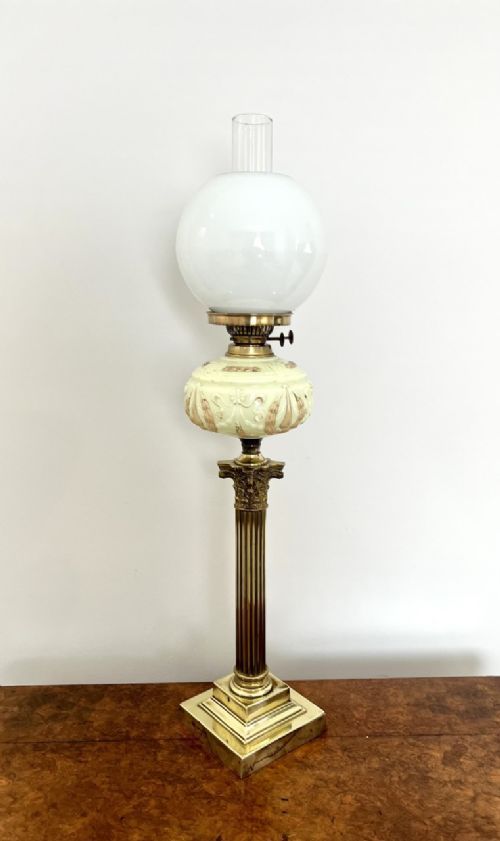
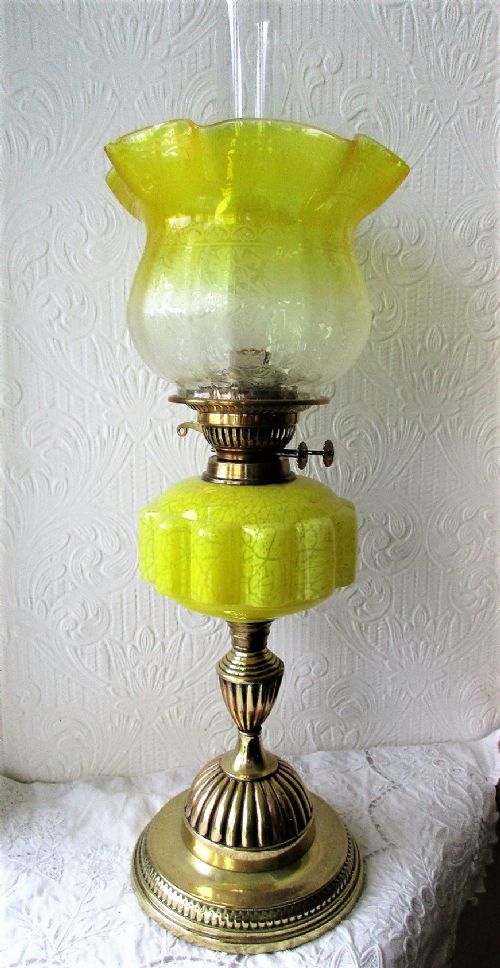
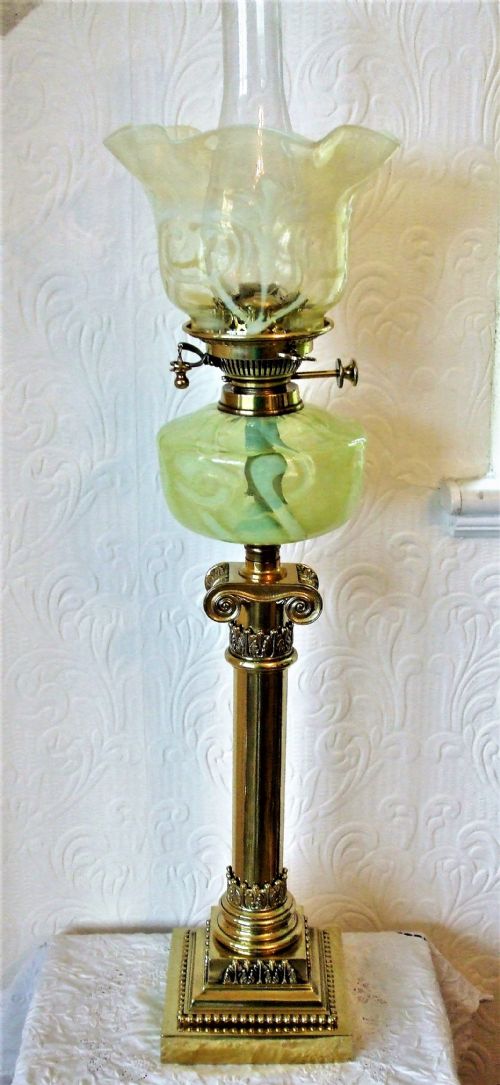
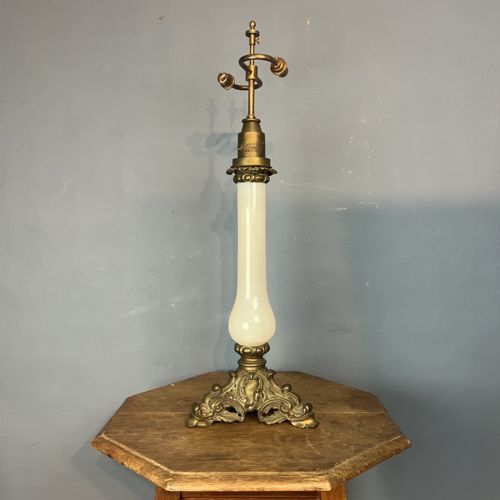
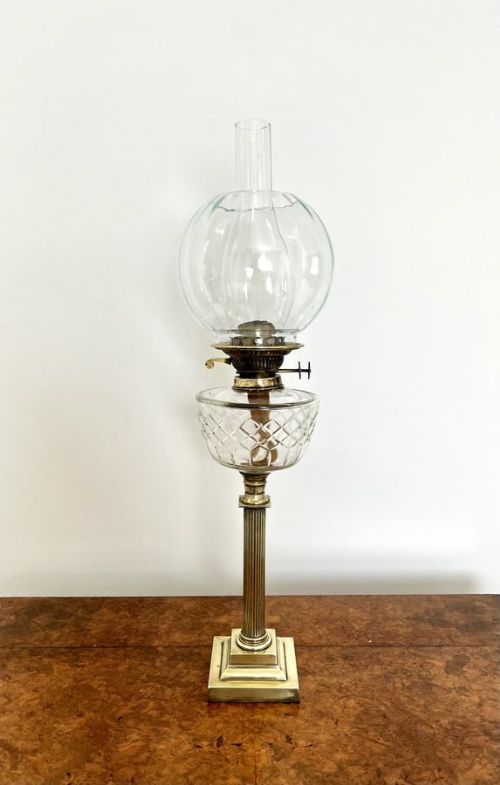
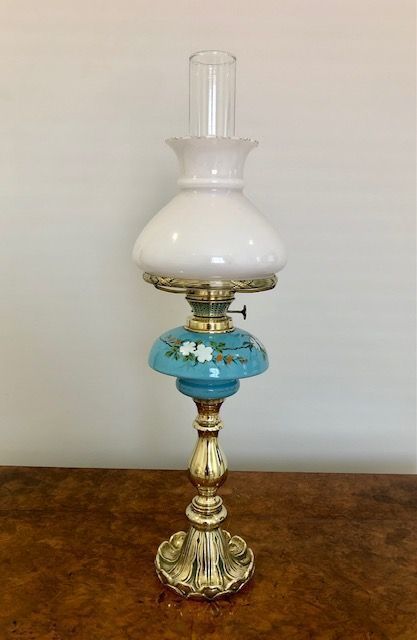
These glass column table lamp examples combine clear or coloured glass shafts with metal bases, providing functional illumination and period character.
Glass Column Table Lamp
A glass column table lamp brings together a slender upright shaft and a sturdy base, frequently originating as period oil lamps before conversion to electricity. The pieces available here span the Victorian era, the Edwardian period, and the Art Deco years, alongside nineteenth-century examples.
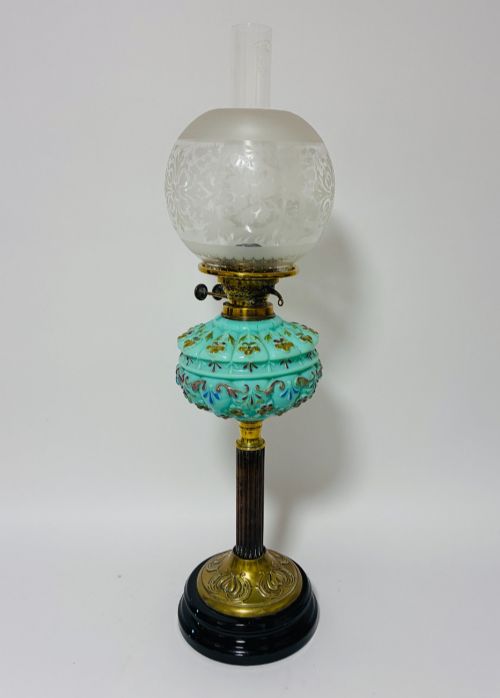
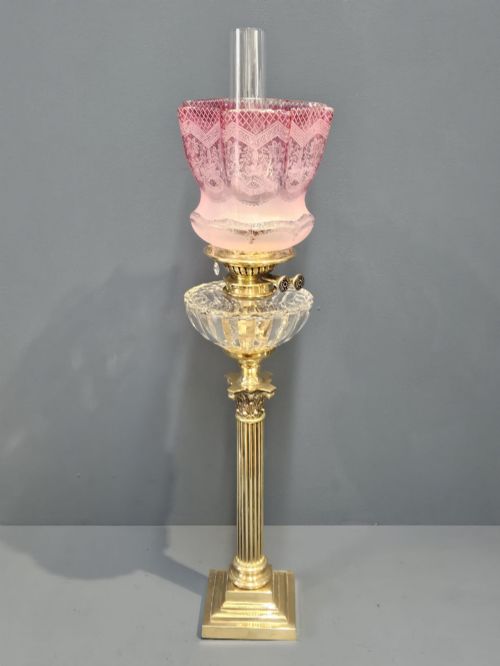
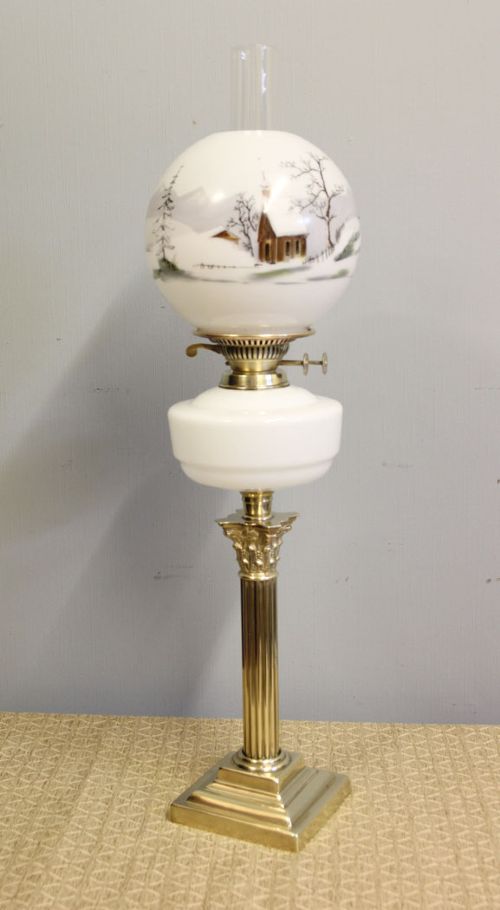
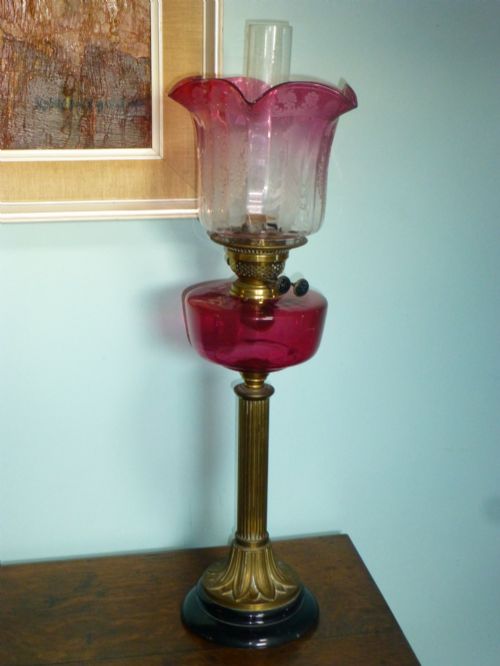
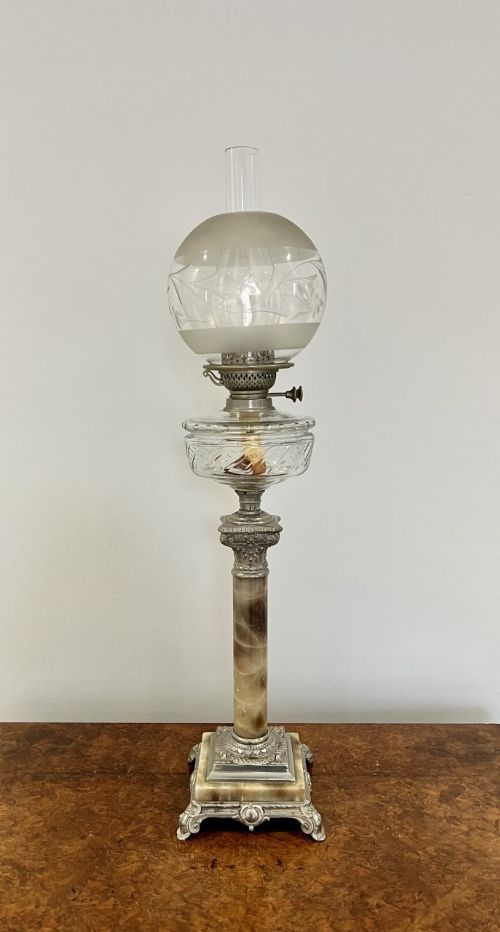
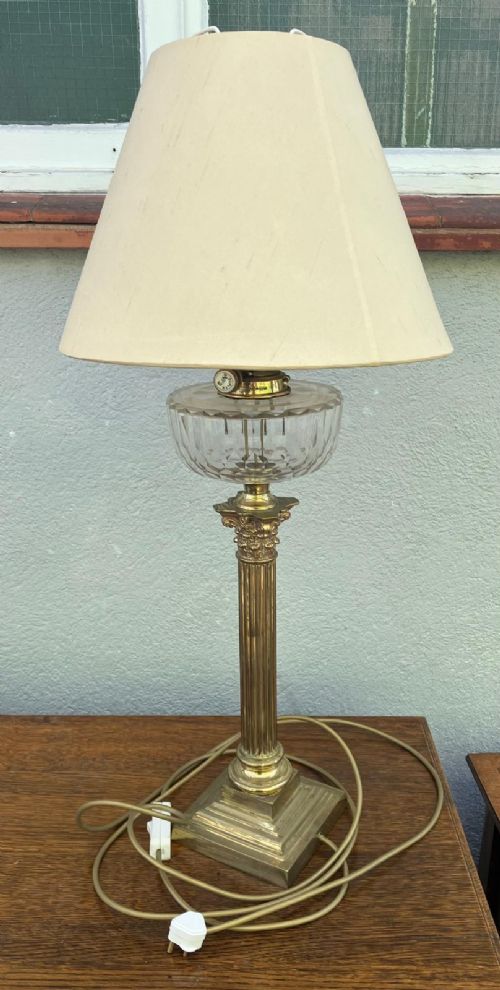
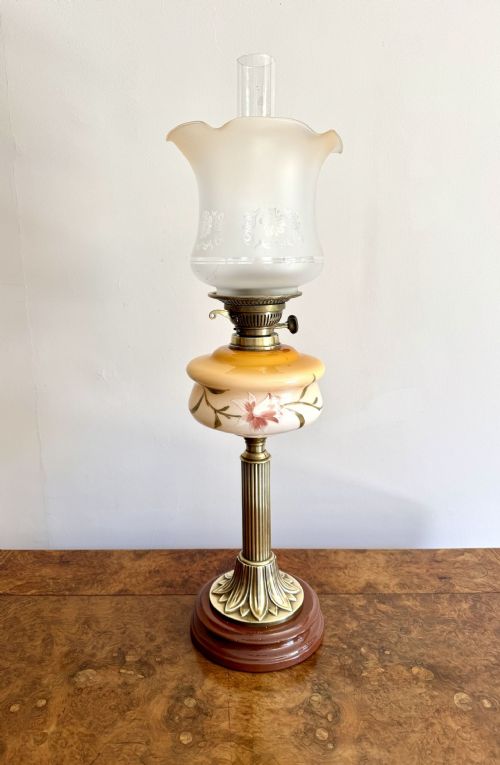
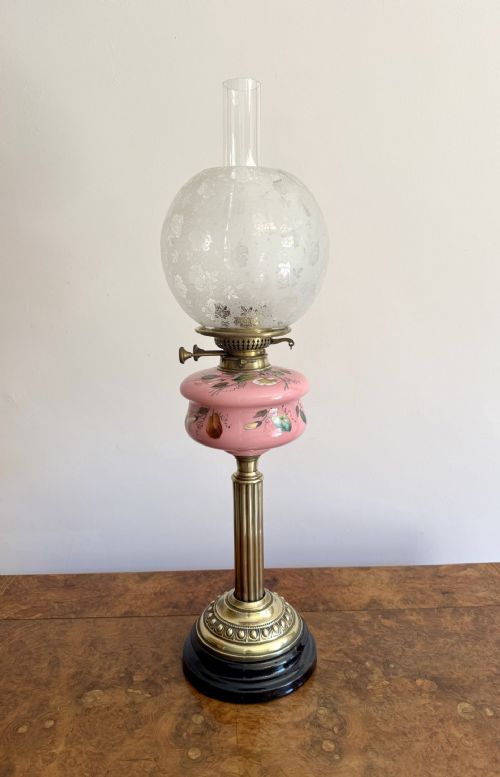
Most items combine glass elements with brass, bronze, or silver plate, often featuring Corinthian or Ionic capitals. Buyers encounter coloured glass fonts in cranberry, pink, or opaline white paired with patterned or etched shades.
The selection ranges from single monumental column lamps to matched pairs suited for side tables or sideboards. Many incorporate cut crystal or moulded glass shafts that reflect light along the vertical fluting.
Materials and construction
Maker workshops combined heavy cast brass or bronze for the stepped bases and capitals with blown, moulded, or cut glass for the central columns and reservoirs. Metal components were frequently gilded, silver-plated, or left with a polished brass finish.
Makers utilised specialised techniques such as acid-etching for glass tulip shades and hand-painting for floral motifs on opaline or cranberry glass fonts. Patents held by makers like Hinks governed the burner mechanisms fitted to the top of these columns.
Several columns double as quiet witnesses to winter through hand-painted snow scenes preserved forever on their glass shades.
Assessing the craftsmanship
Quality rests in the crispness of the metal casting on the Corinthian capitals and the depth of hand-cut facets on the crystal columns. Finer examples display heavier gauge brass and substantial glass reservoirs without internal clouding or chips.
The distinction between standard production and superior manufacture shows in signed burner mechanisms, original etched glass shades, and the stability of the mounted column. Matched pairs with uniform glass colour and identical metal patination command greater attention.
Hinks of Birmingham·Goldsmiths and Silversmiths Company
The Glass Column Table Lamp Glossary
- Corinthian column
- A classical architectural order featuring an ornate capital decorated with acanthus leaves, frequently utilised on the upper section of these lamps.
- Opaline glass
- An opaque, slightly translucent glass developed in pale white or pastel colours, popular during the nineteenth century for lamp fonts and shades.
- Duplex burner
- A double-wick mechanism patented in the nineteenth century to provide increased illumination from an oil reservoir.
- Ormolu
- Finely chased and gilded bronze used for decorative mounts and bases, particularly on French and high-end English pieces.
Glass Column Table Lamp: Frequently Asked Questions
Were these originally oil lamps?
Many examples began as nineteenth-century oil or paraffin lamps utilising burners and glass fonts before later conversion to electrical wiring.
This heritage accounts for the heavy metal bases designed to support fluid reservoirs safely.
How do I date a lamp?
Dating relies on combining the stylistic evidence of the metal capitals, the manufacturing method of the glass column, and any patent stamps on the burner mechanisms.
Victorian pieces often display classical revival detailing, while early twentieth-century examples lean towards simpler crystal or opaline forms.
Are replacement shades period correct?
Finding pieces with their original etched or cranberry glass shades is common, though many acquired replacements over time.
Matching the shade style to the era of the glass column preserves the visual balance of the piece.
How should I clean the glass?
Cleaning requires removing the components where possible and using warm soapy water on the glass while keeping moisture away from electrical fittings and vintage metalwork.
Avoid harsh abrasives on gilded or silver-plated surfaces.