


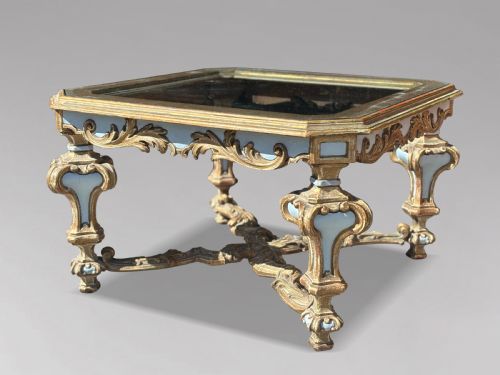


Glass Coffee Tables
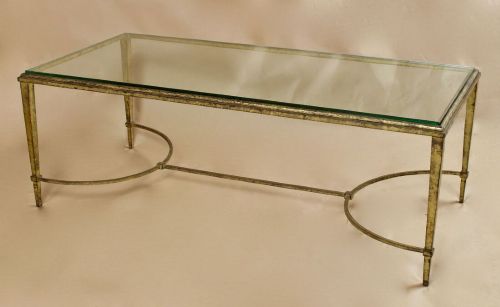
Glass coffee tables bring a reflective surface and structural lightness to a room, ranging from sleek modernist designs to gilded revival forms.
Glass Coffee Tables
Glass coffee tables span several distinct design traditions, including twentieth century modernism, Art Deco, and revival styles with classical roots.
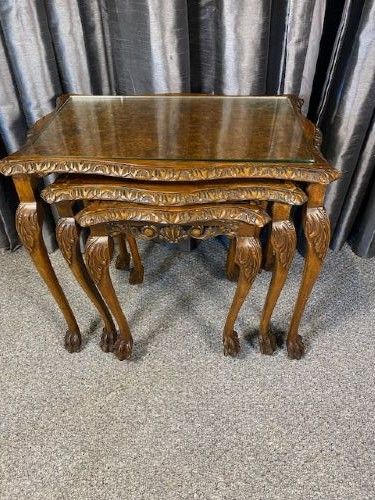
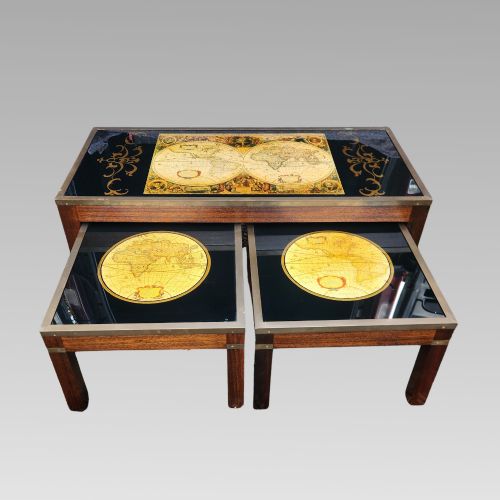
The pieces on this page appear in forms such as coffee tables, nesting tables, side tables, and low serving trays.
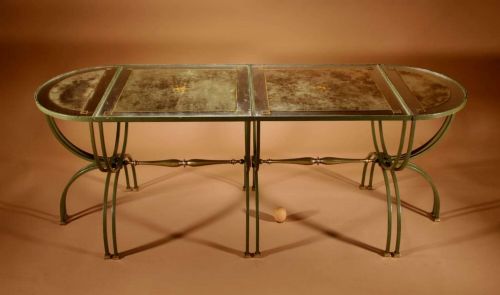
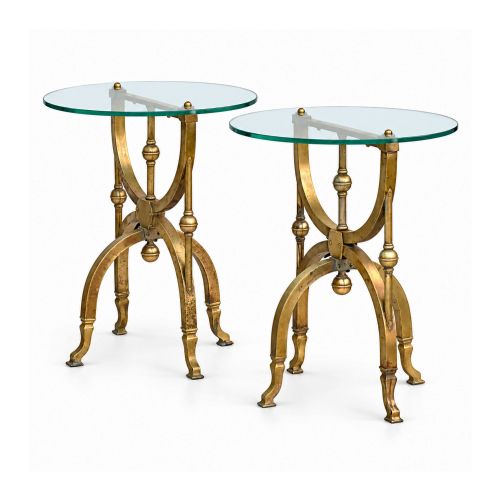
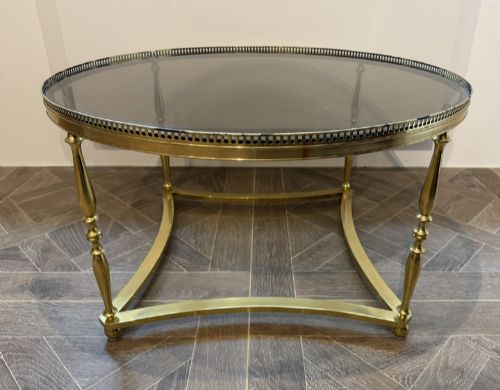
Materials extend beyond the glass top to incorporate brass, chrome, walnut, wrought iron, and giltwood frames.
Materials and Construction
Frames rely on metals like brass, chrome, and wrought iron, alongside timber structures in walnut, rosewood, teak, and bleached pine.
Surfaces combine transparent or mirrored glass panels with decorative elements including gold leaf, paint, and carved wooden details.
Construction techniques range from modernist tubular metal frames to traditional cabinetmaking in nesting and occasional tables.
Glass Coffee Tables Retail Price Guide 2026
Typical asking prices for glass coffee tables among the pieces listed under this phrase on Sellingantiques today, from the lower quarter to the upper quarter. They describe what is for sale here now, not the wider market.
Materials span glass, brass, walnut, wrought iron, chrome, gold leaf, and paint across various twentieth century forms.
Distinctions in Quality
Quality rests upon the execution of the frame, whether through precision metalwork, substantial timber carving, or crisp gilding.
The integration of the glass top with its support structure marks the difference between standard production and higher workshop standards.
Maison Ramsay·Romeo Rega·Maison Jansen·Harry and Lou Epstein·Peter Ghyczy
The Glass Coffee Tables Glossary
- Art Deco
- A design style emerging in the early twentieth century characterised by geometric lines, streamlined forms, and modern materials. It heavily influences many tables from the interwar period.
- Hollywood Regency
- A theatrical interior style combining classical motifs with modern glamour, frequently utilising brass, glass, and gilded finishes. It reflects mid century luxury.
- Nesting Tables
- A set of graduated tables designed to fit neatly beneath one another when not in use. They offer practical surface space while occupying a minimal footprint.
- Chinoiserie
- European artistic styles inspired by Chinese decorative arts, often featuring fretwork panels or carved motifs. It appears on selected wood and glass occasional tables.
Glass Coffee Tables: Frequently Asked Questions
What periods do these glass tables come from?
The selection includes pieces from the nineteenth century through the Art Deco and mid century periods, up to later twentieth century designs.
Revival styles draw on earlier eras such as the Regency and Louis periods, adapting historical motifs for twentieth century interiors.
How do I identify an Art Deco glass table?
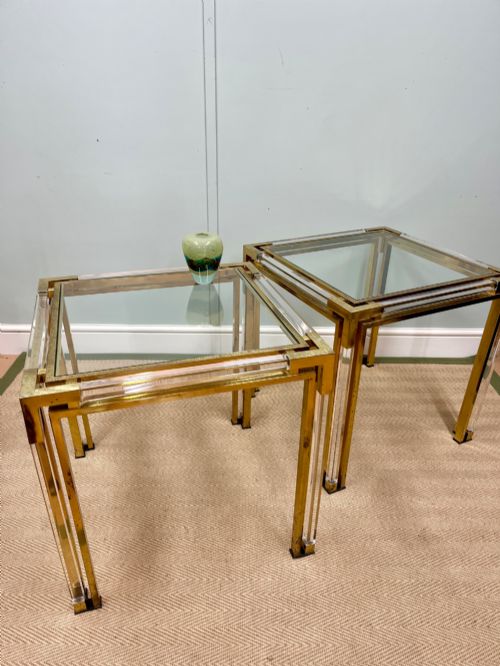
Art Deco tables often feature geometric shapes, symmetrical layouts, and materials like chrome, bleached walnut, and wrought iron.
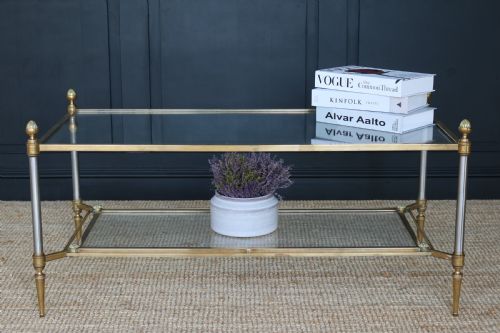
They frequently appear as nests of tables or two tier designs dating from the interwar decades.
Are these tables practical for daily use?
Glass tables serve effectively as central coffee surfaces or side tables, providing durable tops supported by sturdy metal or wooden frames.
Nesting versions offer flexible surface space that can be expanded or tucked away according to room layout needs.
What materials support the glass tops?
Supporting structures include metals such as brass, chrome, wrought iron, and bronze, alongside woods like walnut, teak, rosewood, and pine.
Some examples incorporate decorative finishes including gold leaf, paint, and carved giltwood.