


Glass Bag Chandelier
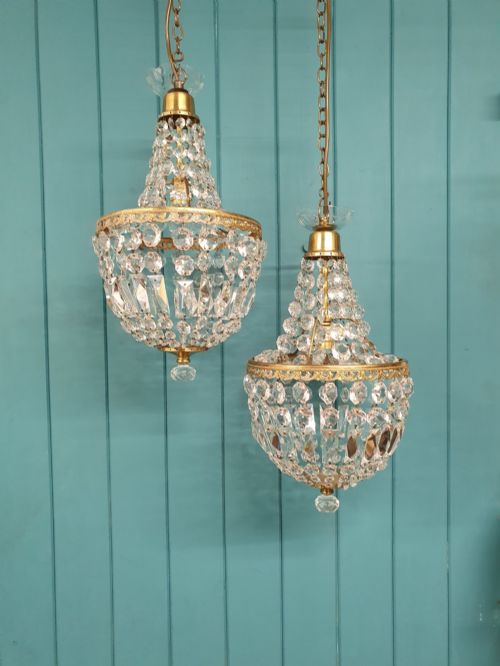
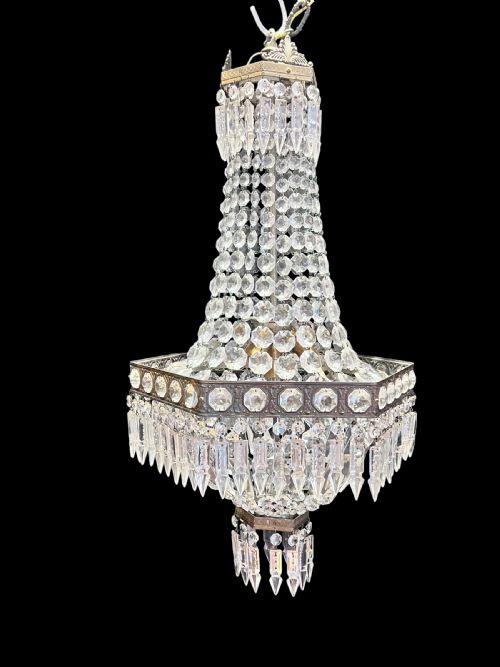
A glass bag chandelier gathers light through tiers of cut crystals gathered into a tapered mesh, bringing historic illumination to a room.
Glass Bag Chandelier
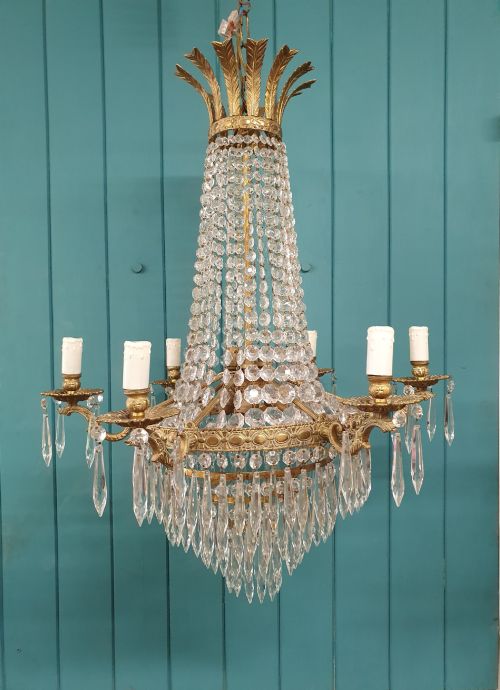
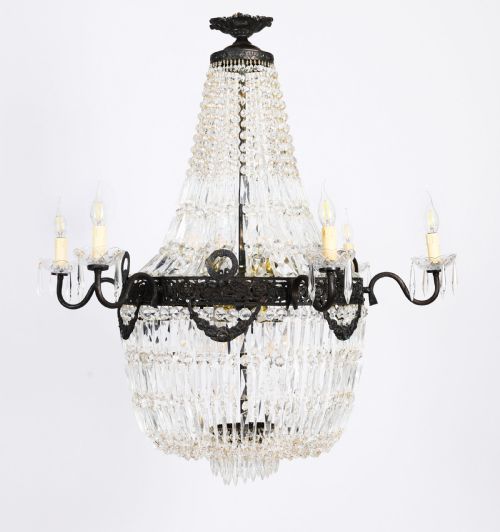
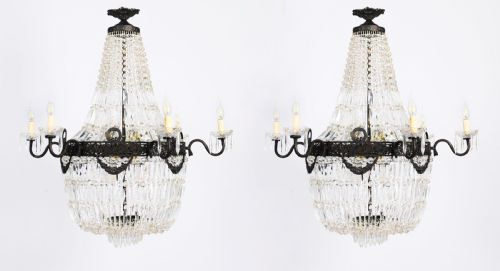
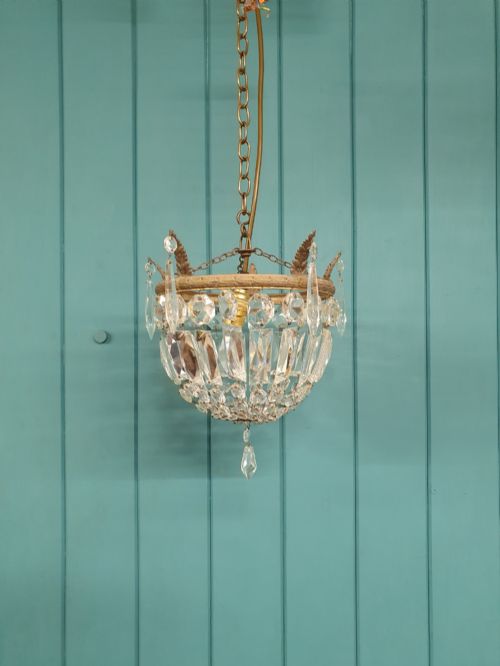
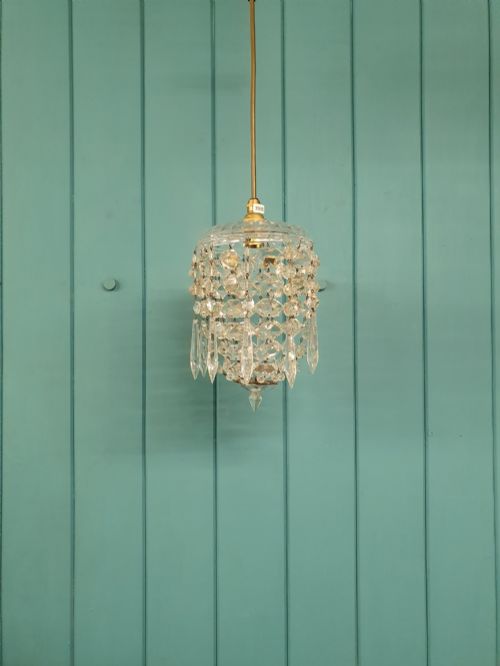
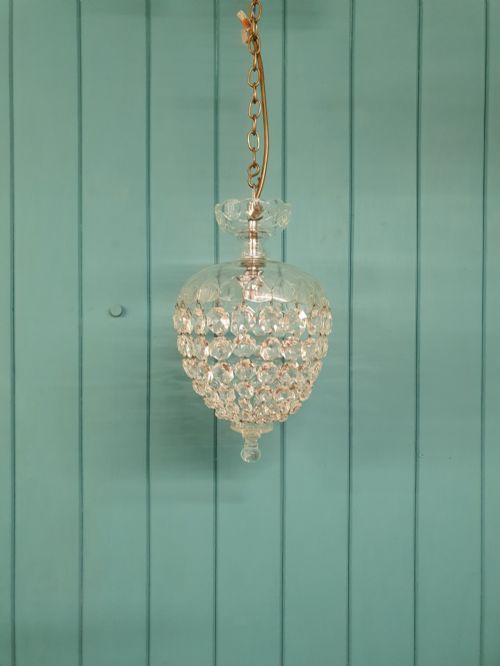
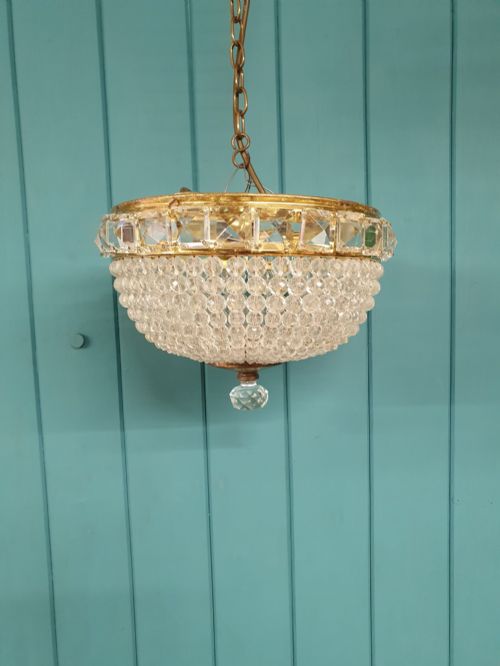
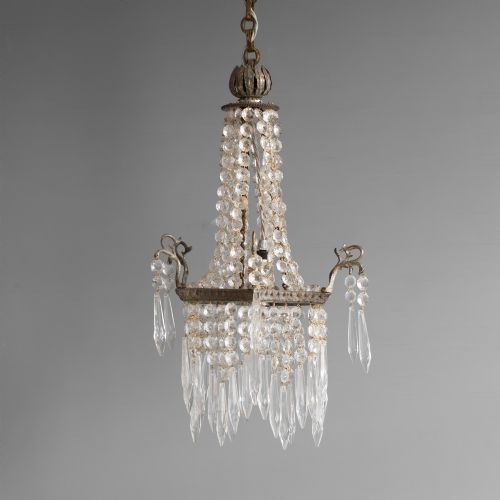
A glass bag chandelier takes its name from the distinctive woven profile of beads and drops that forms a tapered lower basket beneath an upper crown. These ceiling fittings appear frequently from Edwardian and 1930s sources, alongside earlier nineteenth-century examples and eighteenth-century creations.
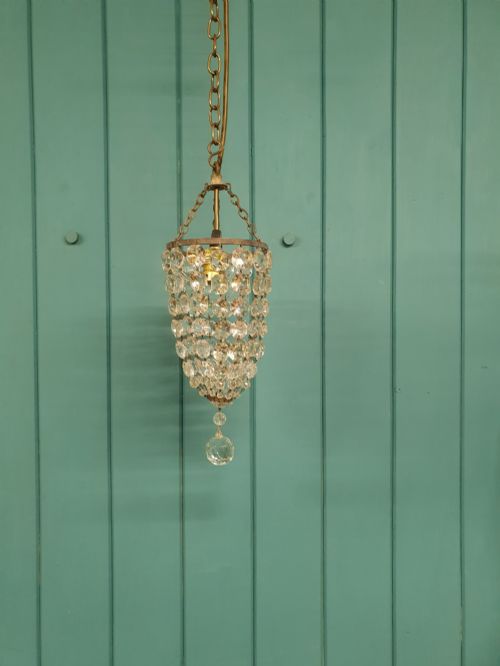
The profile ranges from small domes and tapered pendants measuring only a few inches to large ballroom fixtures spanning multiple lights. Styles stretch across French Empire, Louis Revival, and Art Deco interpretations, reflecting diverse decorative impulses.
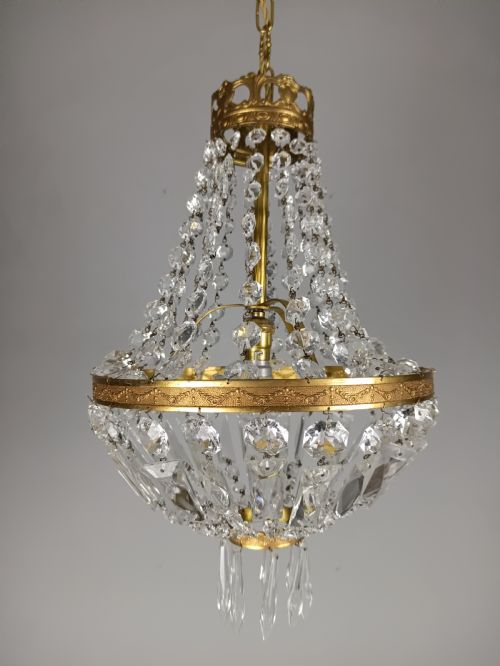
Most examples combine an upper tent of strings with a dense gathering of lower prisms, often described as basket or swag configurations. Buyers select these ceiling lights to introduce period sparkle and intricate glasswork into interior spaces.
Materials and construction
Metal frames of brass, bronze, and plated metal provide the structural skeleton that supports the weight of the glass elements. These mounts often incorporate decorative castings, leaf motifs, or simple tiered rings to anchor the hanging strands.
Cut glass and crystal provide the reflective surfaces, shaped into beads, coffin prisms, pendants, and teardrop drops. Wire threading links these individual glass components together into the characteristic mesh bags and upper tents.
Several early twentieth-century examples incorporate playful glass flowers, cherubs, and tiny red drips hidden among the crystal cascades.
Judgements of quality
The calibre of a piece rests upon the clarity and cutting of the crystal components, where sharp facets catch the illumination far more effectively than softer, pressed glass. Heavier metal mounts in brass or bronze also signal a higher grade of manufacture compared to lighter, utilitarian alternatives.
Complexity of design separates standard utilitarian fittings from grander architectural statements, visible in multi-tiered tent sections, integrated glass flowers, and sculptural bronze work. The completeness of the glass bead mesh and the survival of matching prisms determine the integrity of the whole object.
Wedgwood
The Glass Bag Chandelier Glossary
- Bag chandelier
- A lighting fixture featuring a gathered lower section of glass beads resembling a mesh bag. This design directs light through a concentrated mass of dangling prisms.
- Tent and bag
- A construction style that combines an upper cone of strung beads with a lower basket or bag. This configuration is typical of eighteenth and nineteenth-century lighting designs.
- Coffin prism
- A long, flat-cut glass pendant shaped like a narrow rectangle with a pointed end. These heavier drops appear frequently on early twentieth-century examples.
- Louis Revival
- A decorative style drawing on French eighteenth-century motifs popular during later periods. Such pieces often incorporate ornate metal mounts and generous crystal arrays.
Glass Bag Chandelier: Frequently Asked Questions
How do I hang a glass bag chandelier?
These ceiling lights require secure attachment to a ceiling joist using a metal hook capable of supporting the combined weight of the metal frame and glass components.
Wiring should be assessed by a qualified professional to ensure the internal bulb holders and electrical connections meet current safety standards before installation.
What periods do these chandeliers come from?
The available selection spans from eighteenth-century survivals through nineteenth-century French designs up to Edwardian and 1930s Art Deco interpretations.
Edwardian and 1930s examples appear most frequently, showing how popular the form remained well into the twentieth century.
How do I clean a glass bag chandelier?
Dusting requires a soft brush or microfiber cloth applied gently to the interconnected crystal strands to avoid dislodging the delicate wire threads.
More thorough cleaning involves wiping individual glass drops with a mild solution while the fixture remains securely hung or carefully lowered.
What materials make up these light fittings?
The structural frames rely on metals such as brass, bronze, and general metalwork to form the supporting rings and upper crowns.
Cut glass, crystal, and crystal glass form the pendants, beads, and prisms that create the luminous mesh bags and tents.