



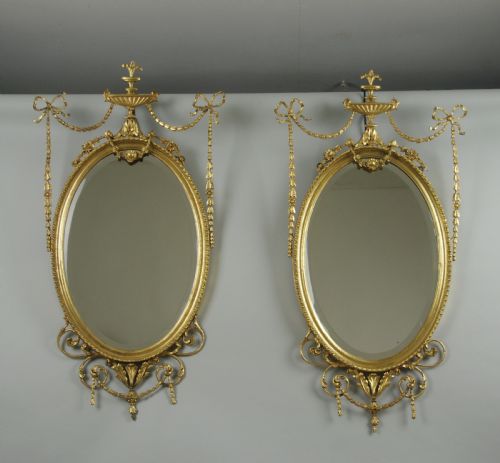


Giltwood Ribbon Crest Mirror
A giltwood ribbon crest mirror brings neoclassical refinement and decorative warmth to any interior through its carved flourishes and gilded surface.
Giltwood Ribbon Crest Mirror
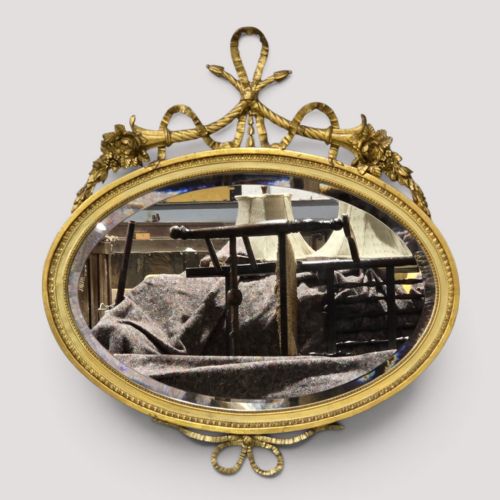
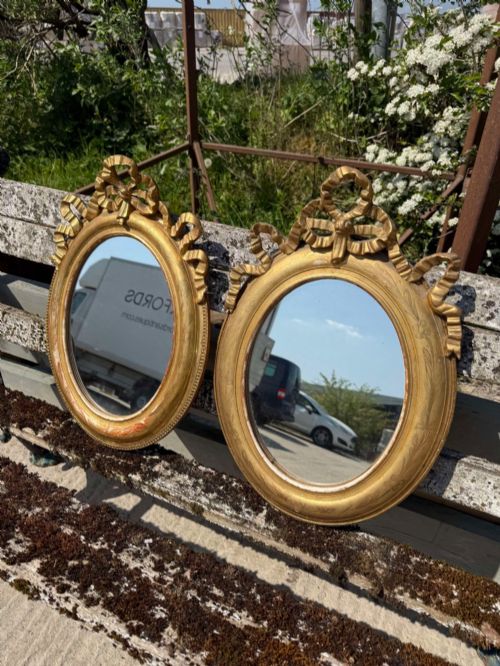
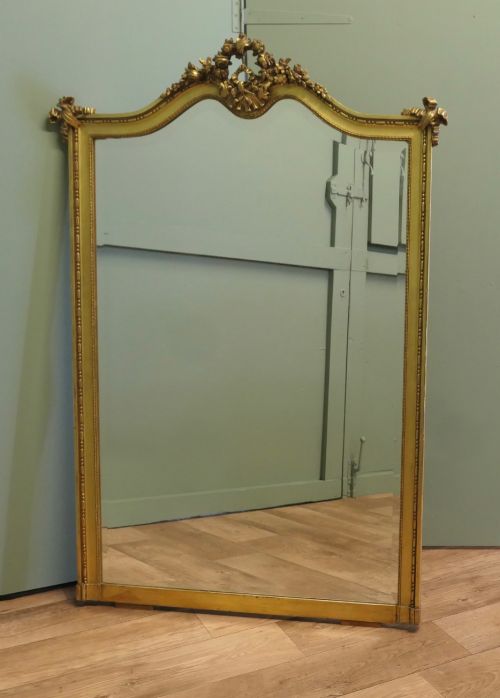
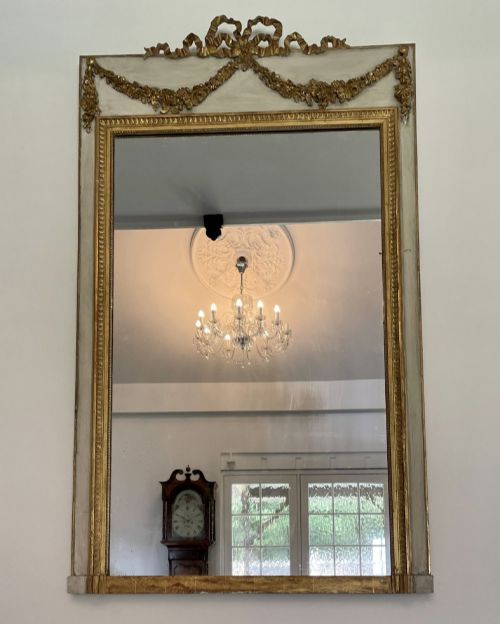
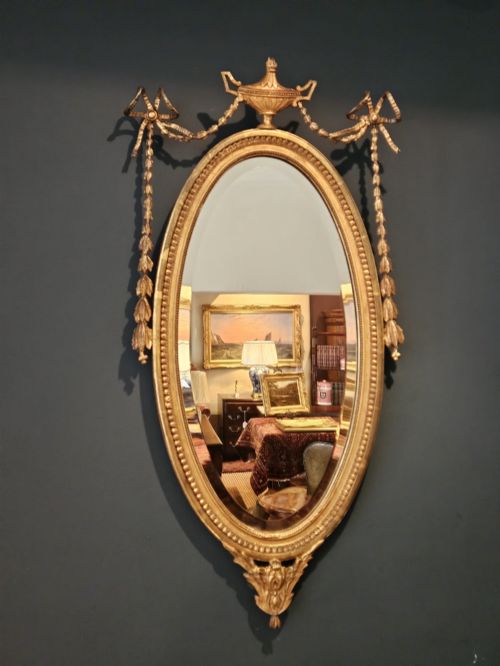
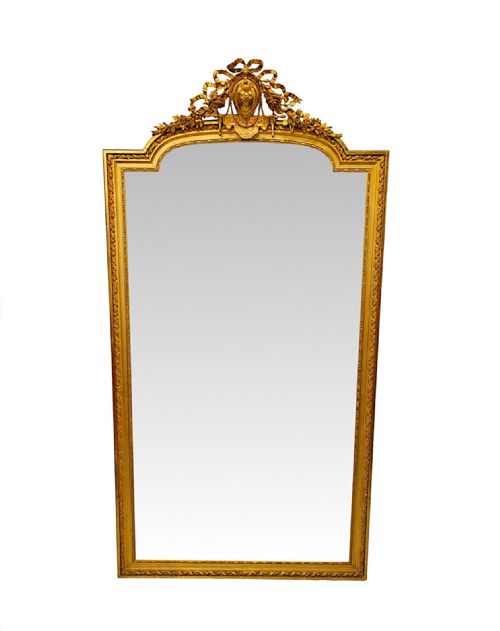
A giltwood ribbon crest mirror is a decorative looking glass defined by ornate carved detailing at the top, specifically styled around ribbons, bows, and neoclassical motifs. These pieces serve primarily as striking wall ornaments or overmantels in reception rooms and hallways.
The versions met most frequently on this page span the nineteenth century, including Victorian interpretations and Adam Revival designs. They appear as oval wall mirrors, large overmantels, and girandoles framed in carved wood and composition.
Origin influences span French neoclassical styles, Irish workshops, and English revivals. Each piece reflects the enduring popularity of Louis XVI and Adam aesthetic vocabularies across the Victorian and Edwardian periods.
How they were made
Makers shaped the core structure from timber such as wood, applying layers of gesso and composition to build up intricate relief ornaments like ribbons and swags. This composite method allowed artisans to carve deep, crisp details that traditional solid wood carving alone could not achieve so swiftly.
The decorative surfaces received applications of gold leaf or metallic paint to achieve the characteristic rich gilt finish. Original mirror glass, often bevelled, was then fitted into the rebate behind secure wooden backing boards.
Giltwood Ribbon Crest Mirror Retail Price Guide 2026
Typical asking prices for giltwood ribbon crest mirror among the pieces listed under this phrase on Sellingantiques today, from the lower quarter to the upper quarter. They describe what is for sale here now, not the wider market.
Some Victorian makers included tiny display brackets beneath oval mirrors, presumably for miniature ornaments or visiting cards.
What varies in quality
The distinction between ordinary and superior examples rests on the crispness of the hand-carved relief and the depth of the gesso mouldings. Finer pieces display sharply defined ribbon folds and delicate proportioning rather than blunt, heavily cast composition details.
The integrity of the original gilding and the preservation of the mirror glass contribute significantly to the character of an antique. Retaining the original plate and surface finish demonstrates greater historical continuity than later overpainting or replacement glass.
Strahan of Dublin
The Giltwood Ribbon Crest Mirror Glossary
- Giltwood
- Wood that has been coated with thin gold leaf or gold paint to create a rich, reflective metallic surface. This finish defines the primary visual character of neoclassical and revival mirrors.
- Gesso
- A plaster-like mixture applied to a wooden base to form a smooth surface for gilding or to create moulded relief ornaments. Artisans apply it in multiple layers before carving or stamping details.
- Composition
- A mouldable mixture of whiting, resin, glue, and oil pressed into metal dies to produce repeatable decorative ornaments. It allowed makers to construct elaborate swags and ribbon crests efficiently.
- Adam Revival
- An eighteenth-century neoclassical style revived during the Victorian period, characterised by symmetrical geometry and delicate classical motifs. Mirrors in this style often incorporate urns, ribbons, and husks.
- Girandole
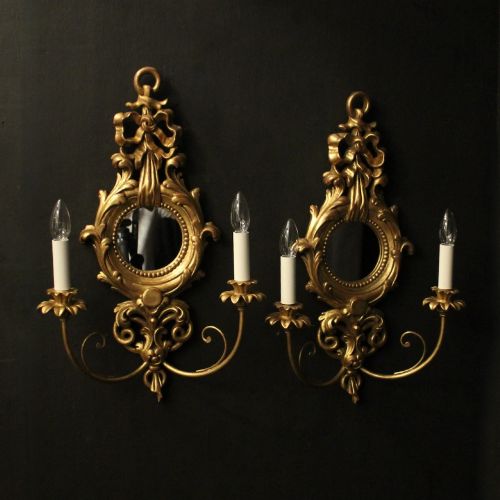
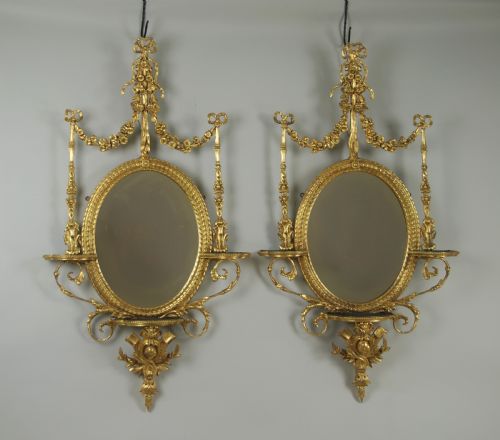
- A decorative wall mirror featuring attached candle sconces that project light further into a room. These dual-purpose fixtures combine illumination with reflective glass.
Giltwood Ribbon Crest Mirror: Frequently Asked Questions
Where should I hang a giltwood ribbon crest mirror?
These mirrors suit principal reception rooms, grand hallways, or above a mantelpiece where their decorative crests can draw the eye. Placing them opposite a window also helps maximise natural light in smaller spaces.
Ensure the wall construction safely supports the weight of a heavy timber and gesso frame before hanging.
How do I identify an Adam Revival mirror?
Adam Revival pieces display characteristic neoclassical symmetry, featuring motifs like ribbons, bows, swags, and urns. The frames rely on crisp relief work rather than heavy Victorian ornamentation.
Look for slender oval or rectangular formats that reflect eighteenth-century proportion and design principles.
Are girandole mirrors different from standard wall mirrors?
Girandoles incorporate built-in candle sconces extending from the frame, designed to multiply the flickering light of candles within a room. Standard wall mirrors serve purely for reflection and decoration without integrated light fittings.
This functional difference gives girandoles a distinct, projecting arm structure on either side of the glass.