
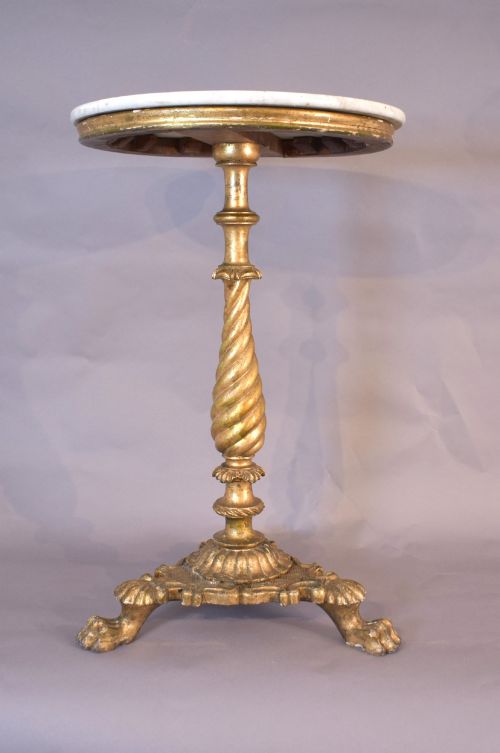
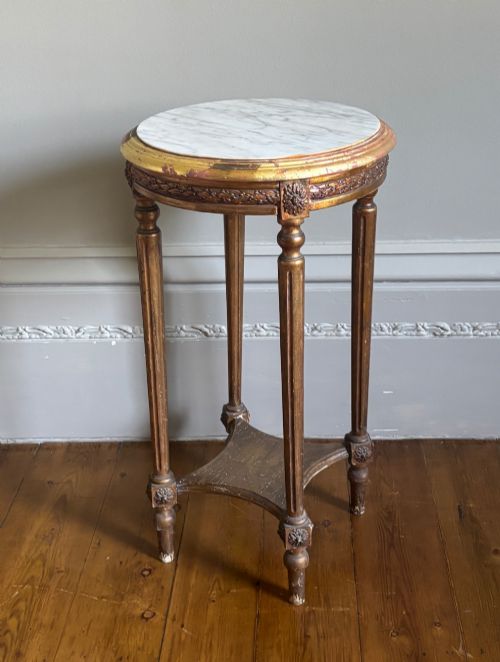


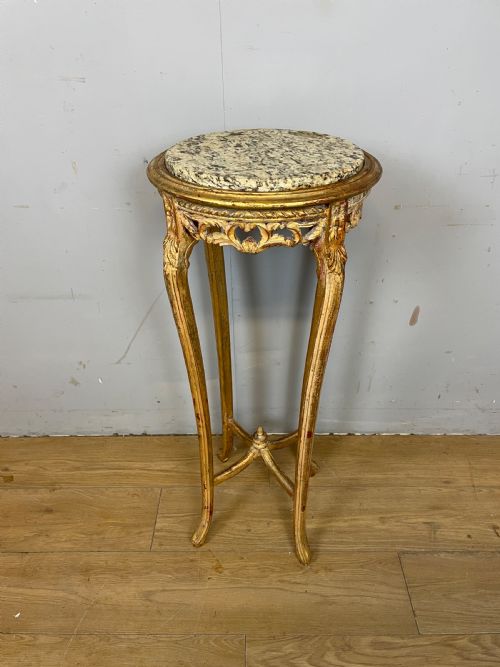
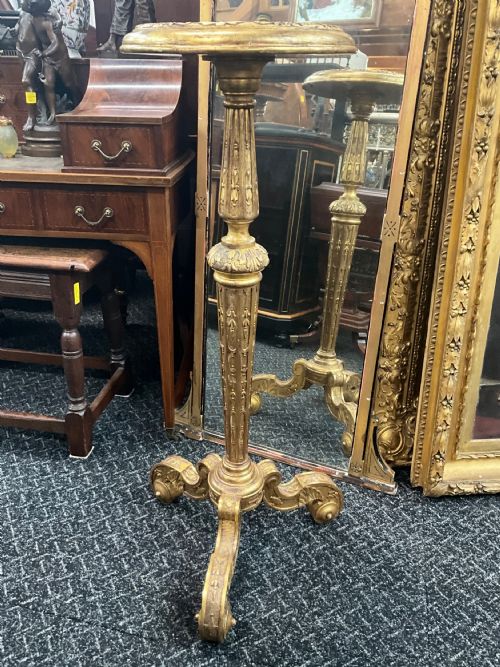



Giltwood Plant Pedestal
A giltwood plant pedestal lifts your favourite botanical display, combining gilded surfaces and carved timber in a classical silhouette.
Giltwood Plant Pedestal
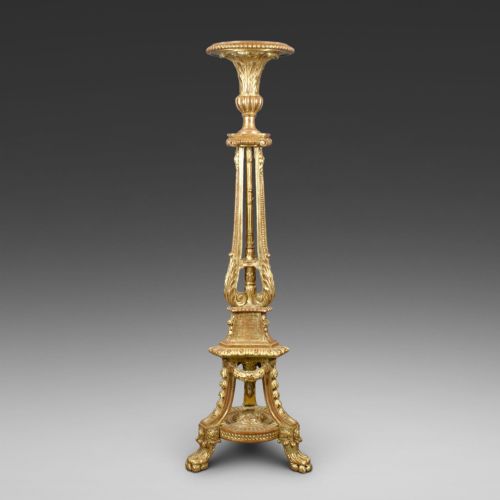
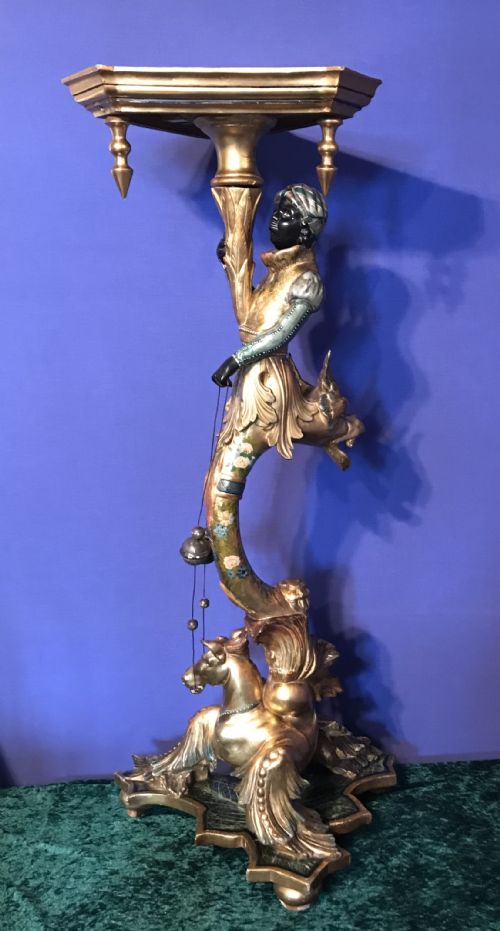
A giltwood plant pedestal serves as an elevated support for plants, urns and ornamental pieces, bringing height and classical proportion to a room. These stands appear in various forms, including torcheres, occasional tables, tripod tables and urn stands, originating from periods spanning the eighteenth century through to the Edwardian era and the nineteen-twenties.
The aesthetic draws heavily on historical European design vocabularies, evident in styles such as French Neoclassical, Italian Baroque, Louis XVI Revival and Victorian Rococo Revival. A buyer searching for a giltwood plant pedestal will encounter tall slender torcheres alongside sturdy tripod tables and low plinths designed to hold heavy vessels.
Origins vary across continental workshops and British makers, utilising regional woodworking traditions to produce ornate display furniture. Whether standing as a freestanding torchere or a low side table, each piece is designed to showcase decorative objects rather than function as a primary work surface.
How they were made
Construction relies primarily on carved wood, gesso and giltwood, where timber frames receive layers of plaster before being covered in gold leaf or paint. Artisans carved intricate flower mouldings, fluted columns and foliate motifs directly into the wooden substrate to create high-relief ornamentation.
Tops frequently incorporate inset marble or polished onyx slabs, adding contrasting weight and a durable surface for plants and water. Joinery techniques from the eighteenth and nineteenth centuries ensure structural stability beneath heavy stone tops and slender upright supports.
Listings feature pieces spanning from the eighteenth century through to the nineteen-twenties, incorporating French Neoclassical and Victorian Rococo Revival aesthetics.
What varies in quality
The distinction between tiers rests upon the depth and crispness of the hand-carved detail in the wood and gesso. Superior examples display sharp undercutting on foliage and crisp moulding profiles, whereas simpler versions rely on moulded composition ornament for decorative effect.
The application of gold leaf versus flat paint significantly alters the visual depth and the way the piece catches ambient light. Furthermore, the selection of inset marble or onyx tops indicates the original intended status of the stand, with figured stones marking the upper echelon of production.
The Giltwood Plant Pedestal Glossary
- Giltwood
- Timber that has been coated with gold leaf over a prepared ground of gesso or size. This traditional finish provides a luminous metallic sheen that ages with a warm patina.
- Torchere
- A tall, slender ornamental stand originally designed to hold a candle or light source. In later periods, these forms were adapted to display floral arrangements and urns.
- Gesso
- A plaster mixture applied to wood surfaces as a smooth base for gilding or painting. It allows craftsmen to model sharp relief details before applying gold leaf.
- Triform
- A structure possessing three sides or three supporting legs, commonly seen in tripod tables and pedestals. This geometric arrangement ensures stability on uneven historical flooring.
- Onyx
- A banded variety of chalcedony used for decorative table tops and insets. Its translucent quality introduces variegated colour and smooth texture to the furniture piece.
Giltwood Plant Pedestal: Frequently Asked Questions
What is a torchere used for?
A torchere functions primarily as an elevated display stand for decorative objects, urns and potted plants. Historically, these tall supports held lighting fixtures in grand rooms.
Today, they serve to introduce verticality and decorative interest into interior spaces without occupying a large footprint on the floor.
How do I style a giltwood pedestal?
Place a giltwood pedestal in an empty corner, beside a seating group or in a hallway to display a statement plant or sculpture. The reflective gilded surface contrasts effectively against neutral walls.
Keep surrounding furniture complementary in scale so the slender silhouette of the stand remains the visual focus.
Are marble tops original to these stands?
Many nineteenth-century and revival pieces were manufactured specifically to house inset marble or onyx tops to support heavy planters. These stone inserts provided a practical, water-resistant surface.
Checking the fit and edge profile helps determine whether the top corresponds to the period of the base frame.
How do I date a carved wooden pedestal?
Dating relies on identifying stylistic revival markers, construction methods and the specific treatment of the gesso and gilt surfaces. Pieces from the eighteenth century display hand-cut joinery and organic wear.
Nineteenth-century and Edwardian examples often incorporate revival motifs from earlier French and Italian design periods alongside machine-assisted preparation.