
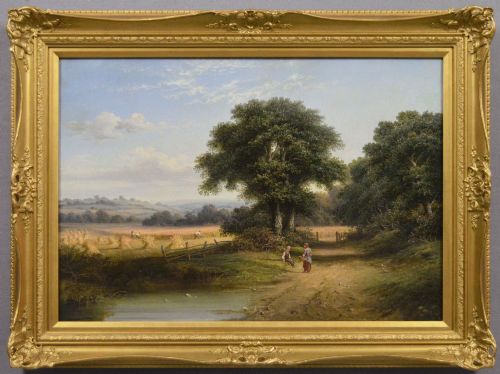
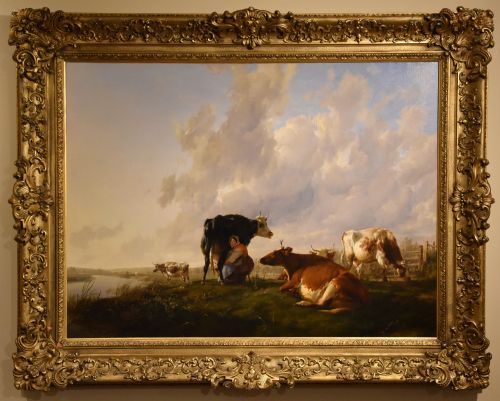
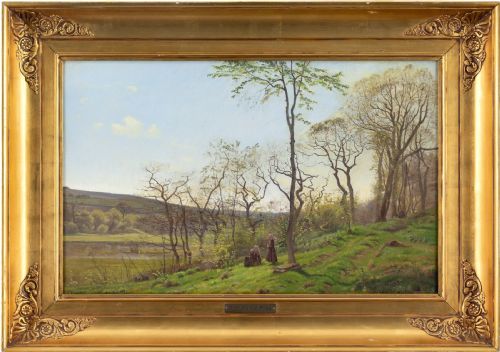
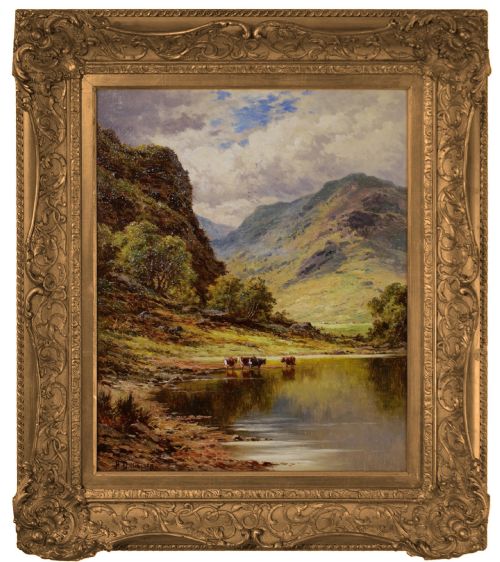
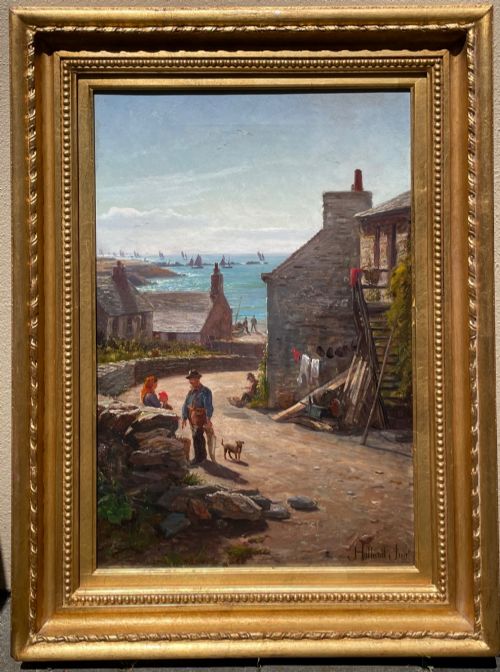
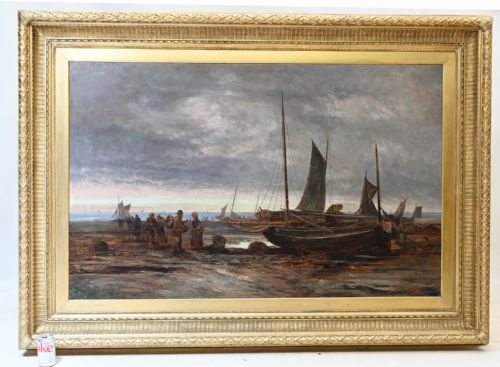


Giltwood Framed Landscape Painting
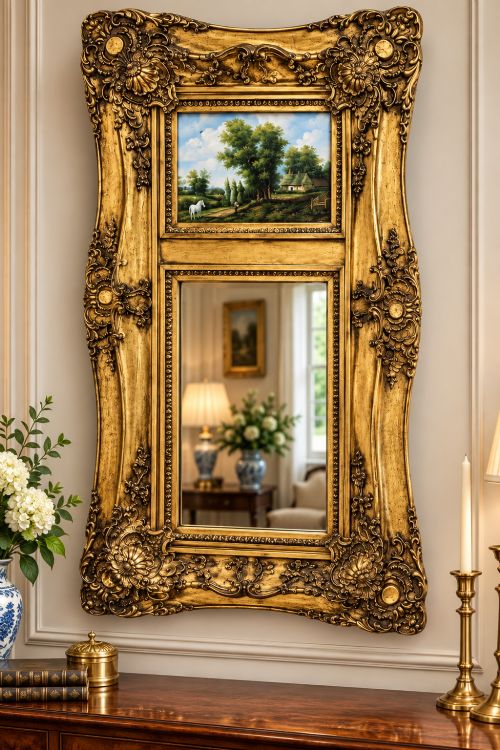
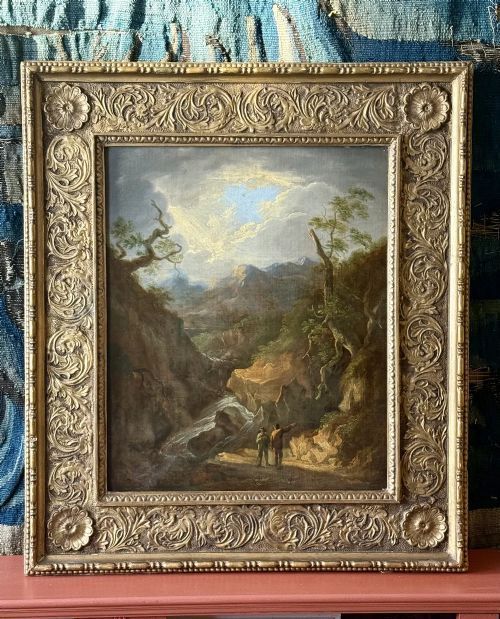
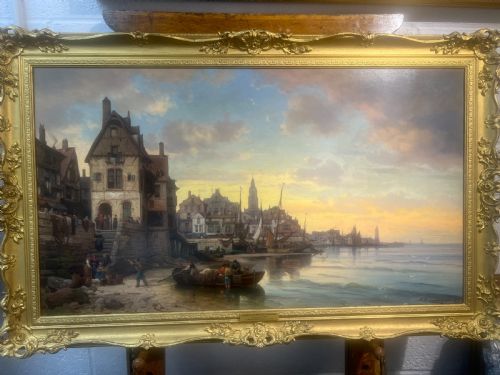
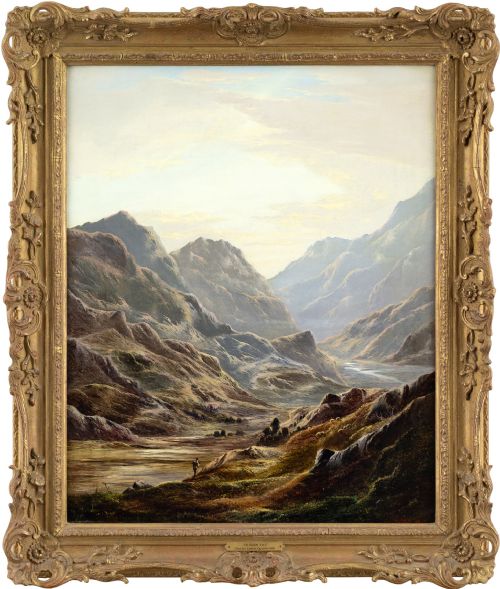
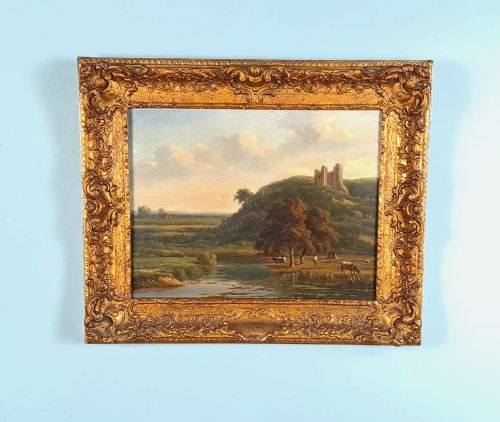
A giltwood framed landscape painting brings the weight of nineteenth-century pastoral scenery and classical vistas directly into a room.
Giltwood Framed Landscape Painting
A giltwood framed landscape painting combines oil pigments on canvas or board with ornate wooden surrounds covered in gold leaf or gesso. Buyers searching this phrase look for works capturing rural life, coastal views, and dramatic topography from the eighteenth, nineteenth, and early twentieth centuries.
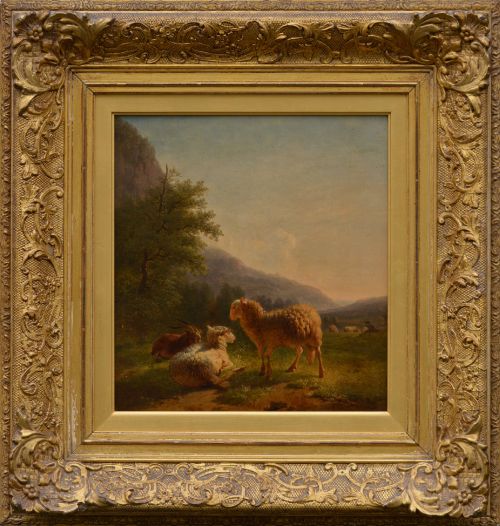
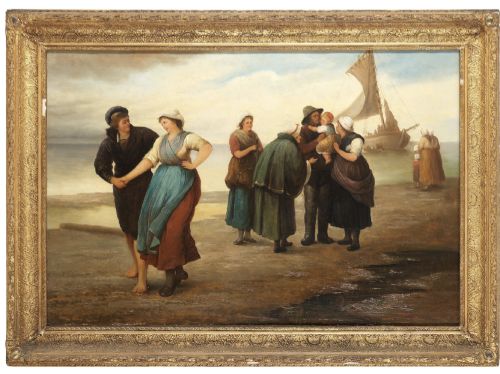
The versions most frequently met on this page belong to the Victorian era and the broader nineteenth century, spanning pastoral scenes with sheep and cattle, harvest fields, and coastal watercolours or oils.
Makers and painters represented range from named British and European artists of the nineteenth century to regional schools following classical Italianate or Dutch landscape traditions.
Materials and construction
These works rely on oil paint applied to woven canvas supports or wooden panels, framed by carved wood treated with layers of gesso and finished with gold leaf.
The frames themselves require skilled joinery and moulding, where plaster-like gesso is applied over wood to take crisp relief ornamentation before gilding.
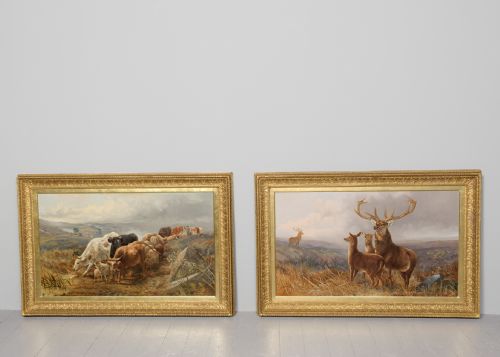
Sheep, cattle, and hardworking milkmaids populate these pastoral scenes, keeping watch over centuries of quiet British and European fields.
Judgments of quality
Quality rests upon the handling of light and atmospheric depth by the painter, alongside the depth and crispness of the carving on the surrounding frame.
Higher grade examples display confident brushwork in complex compositions of figures and terrain, paired with period frames retaining their original gilding rather than later restorations.
Eugène Verboeckhoven·Benjamin Barker of Bath·Walter Heath Williams·Thomas Sidney Cooper·Harald Foss·Henry H. Parker·Charles Euphraisie Kuasseg·Robert Cleminson·Charles Leslie·T C Hofland·John Holland·George Morland·Pieter Cornelis Dommersen·Philipp Peter Roos·James Mallard Bromley·John Hamilton Mortimer·Henry John Boddington·Cornelis Christian Dommersen·Johannes Philippus Galjaard·Frederick Waters Watts·Percival Glenfern·William Pitt·Roger de la Corbiere·Joseph Farquharson·Marc Aldine
The Giltwood Framed Landscape Painting Glossary
- Giltwood
- Wood carved and coated with gold leaf or gold paint. It provides the bright, reflective border characteristic of traditional picture frames.
- Gesso
- A plaster mixture applied to wood frames to create a smooth surface for carving or gilding. It allows for intricate relief details.
- Oil on Canvas
- Pigment mixed with drying oil applied to stretched fabric. This medium dominated European fine art production across centuries.
- Italianate
- A landscape style inspired by the light and topography of Italy. Artists incorporated classical ruins and warm skies into their compositions.
Giltwood Framed Landscape Painting: Frequently Asked Questions
What periods do these paintings cover?
The works span from the eighteenth century through the Victorian period and into the early twentieth century. This covers Georgian classicism, nineteenth-century romanticism, and various European regional schools.
Buyers encounter both British scenery and continental views, framed in styles contemporaneous with their painting dates.
Are the frames original to the paintings?
Many pieces retain their original period giltwood or gesso frames, which show matching wear and construction methods appropriate to the canvas age. Some frames reflect later nineteenth-century revival styles applied to earlier works.
Examining the rabbet and backboards helps determine whether a frame has housed the canvas for generations.
How do I care for giltwood frames?
Giltwood frames require dry dusting with a soft, clean brush to remove particles without disturbing delicate gesso relief. Avoid liquid cleaners, polishes, or damp cloths, which damage the thin gold leaf layers.
Keep the paintings away from direct sunlight and fluctuating humidity to protect both the canvas pigments and the wooden frame structure.
What subjects appear in these landscapes?
Common subjects include pastoral scenes with shepherds, cattle, and milkmaids, alongside harvest fields, coastal waterscapes, and Dutch canals. Mountainous topography and classical Italianate ruins also feature prominently.
These depictions reflect nineteenth-century tastes for picturesque nature and rural tranquillity.