

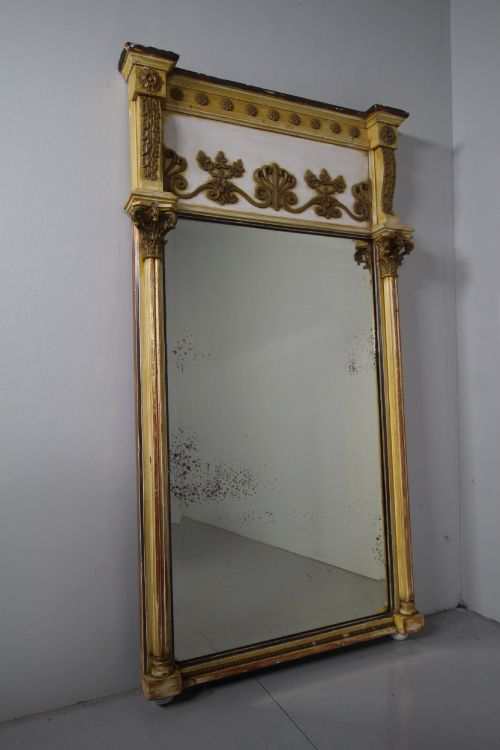
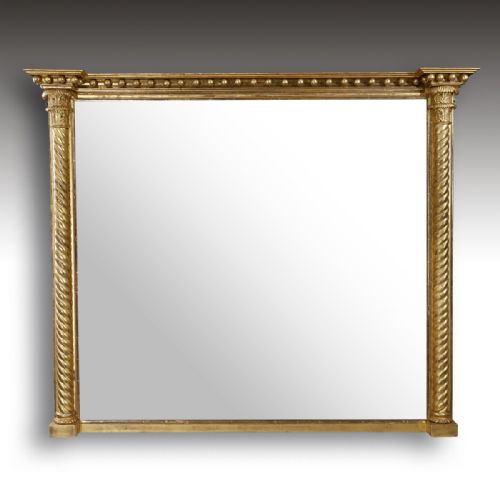
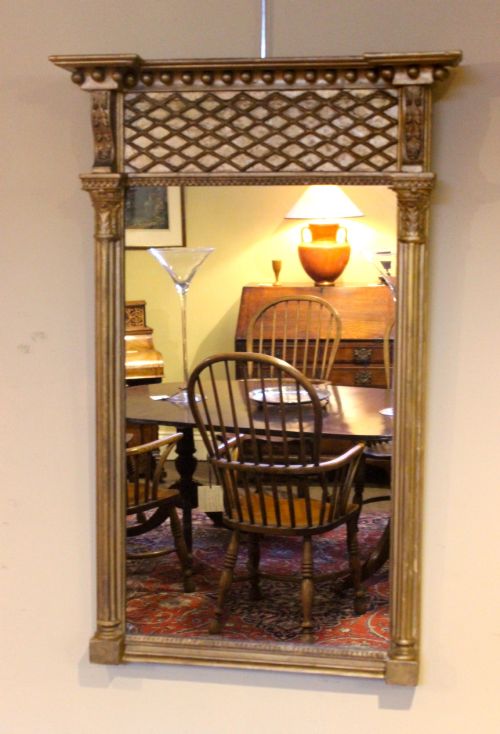
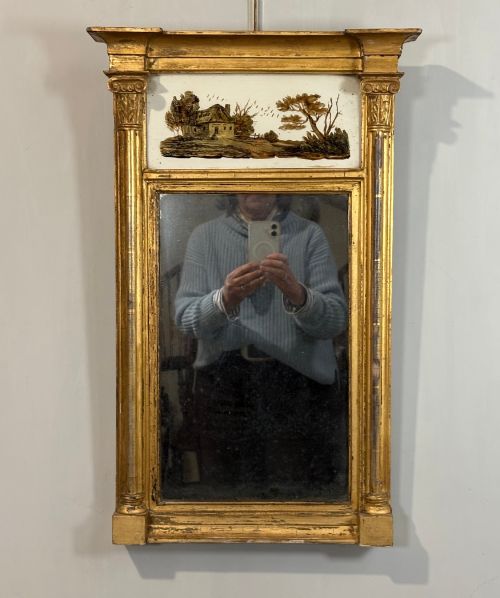
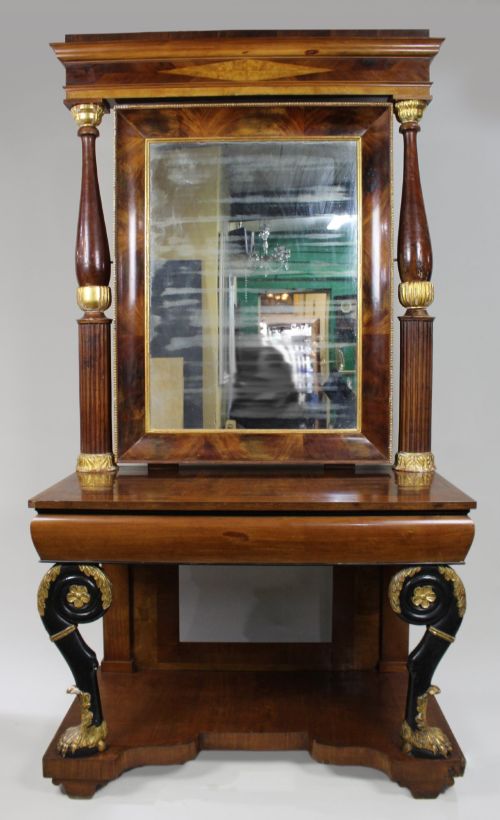
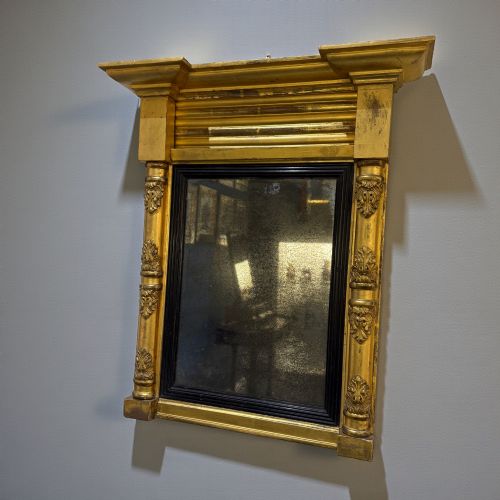
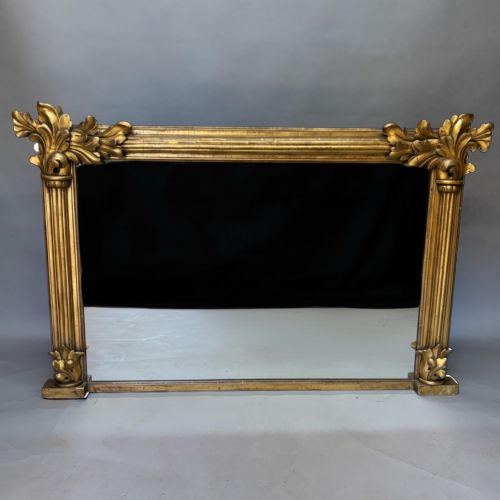
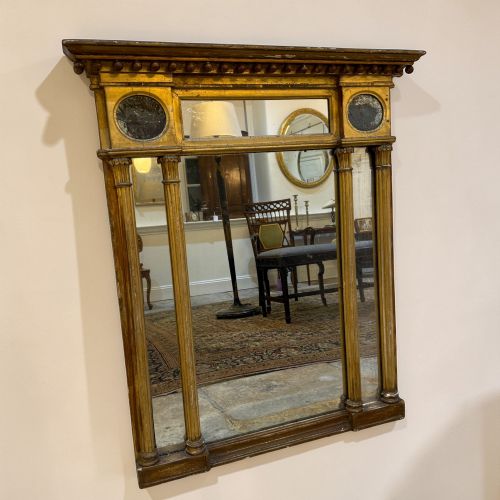



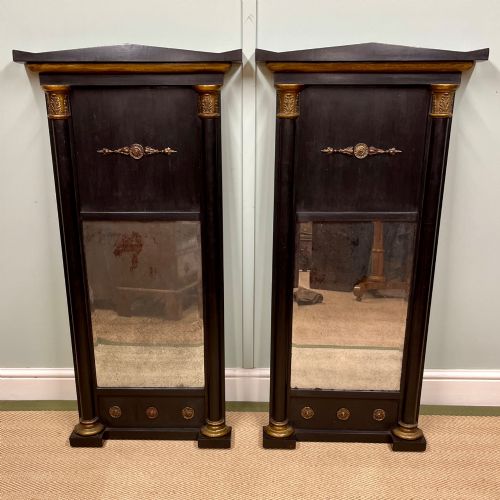
Giltwood Column Mirror
A giltwood column mirror brings classical weight and bright reflection to a room, framing space with fluted wood and gilded surfaces.
Giltwood Column Mirror
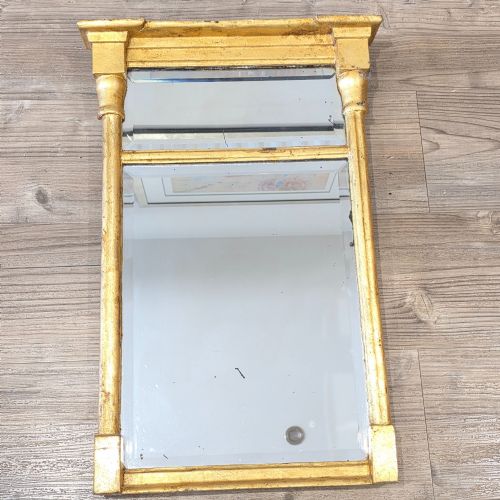
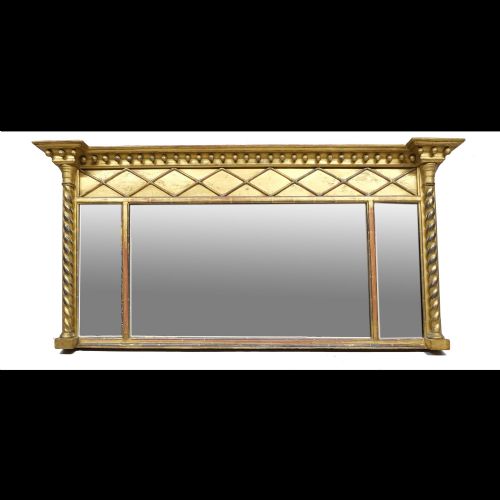
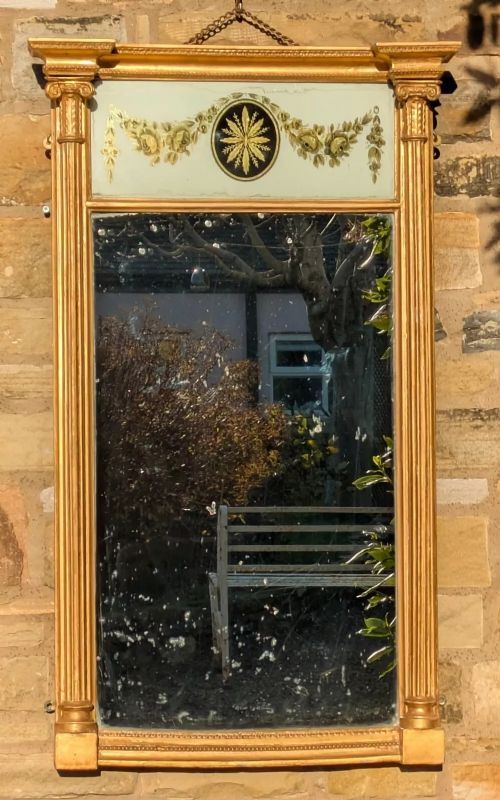
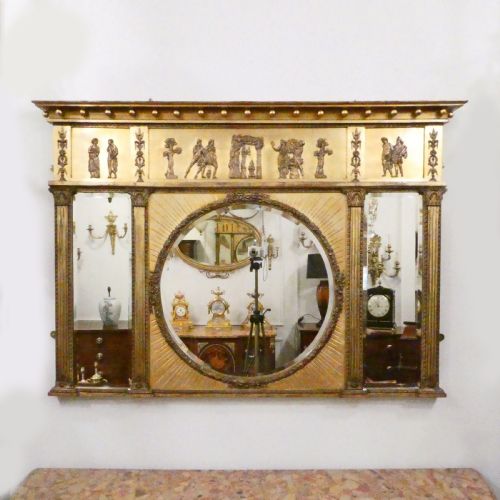
A giltwood column mirror typically takes the form of a pier mirror or an overmantel mirror, designed to hang between windows or above a fireplace. The pieces appearing here span the late eighteenth century through the nineteenth century, encompassing Georgian, Regency, and Victorian periods.
Regency and Regency Revival styles dominate the selection, often featuring architectural columns flanking the glass plate. Buyers frequently encounter triptych formats alongside single-plate landscape and wall mirrors created in England.
Formats range from neat-sized wall hangings to large architectural overmantels equipped with multiple glass sections. Many examples incorporate decorative panels above the main glass or classical motifs inspired by Empire and Egyptian Revival designs.
Distinctions in craftsmanship and preservation
The crispness of the carved wood and the depth of the gesso preparation dictate the visual impact of the frame. Sharp detailing on columns and acanthus foliage distinguishes finer examples from simpler moulded pieces.
The preservation of the original gold leaf and the condition of the mirror glass plates influence the character of each piece. Surface wear and oxidation interact differently with nineteenth-century glass compared to later replacements.
Giltwood Column Mirror Retail Price Guide 2026
Typical asking prices for giltwood column mirror among the pieces listed under this phrase on Sellingantiques today, from the lower quarter to the upper quarter. They describe what is for sale here now, not the wider market.
Some mirrors depict mythological chariots in their panels, letting ancient traffic race silently across your chimney breast.
The Giltwood Column Mirror Glossary
- Giltwood
- Wood that has been coated with gold leaf or a gold-coloured finish. This surface treatment provides the characteristic bright metallic sheen seen on classical frames.
- Gesso
- A plaster-like mixture applied to a wooden base to create a smooth surface for carving and gilding. It allows for crisp ornamental details.
- Pier mirror
- A tall mirror designed to hang on the wall space between two windows. These pieces often feature column supports and match the proportions of the pier.
- Overmantel mirror
- A wide mirror designed to sit directly above a fireplace mantelpiece. They frequently utilise landscape or triptych formats.
- Verre eglomise
- A cold decoration technique where design is painted and gilded on the reverse side of glass. It appears in decorative panels above mirror plates.
- Triptych
- A mirror divided into three distinct vertical sections or glass plates. This format spreads reflection across a wider architectural frame.
Giltwood Column Mirror: Frequently Asked Questions
Where should I hang a giltwood column mirror?
These mirrors suit spaces above a fireplace mantel or between windows where tall architectural lines create balance. They reflect light effectively into darker corners of a room.
Ensure the wall structure supports the weight of carved wood and gesso frames before mounting larger overmantel variants.
How do I identify a Regency column mirror?
Regency examples typically display classical architectural elements such as fluted columns, acanthus leaves, and ebonised details. The proportions lean towards balanced neoclassical symmetry.
Look for construction traits like timber backs and traditional gilding methods to help confirm the nineteenth-century origin.
How should I clean a giltwood frame?
Dust the gilded surface gently with a soft, dry brush to remove particles without disturbing the leaf. Avoid commercial liquid cleaners entirely.
Moisture can damage the underlying gesso and wood, so keep the environment stable and dry.