
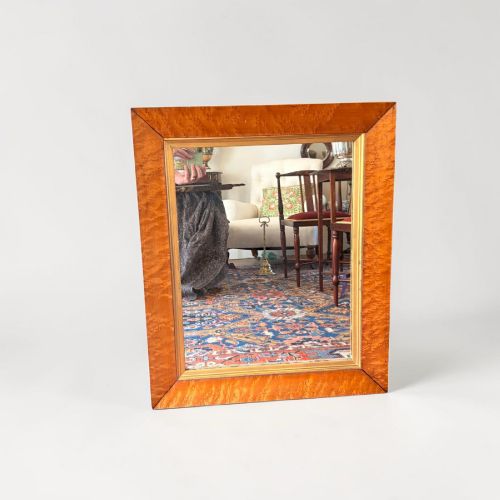
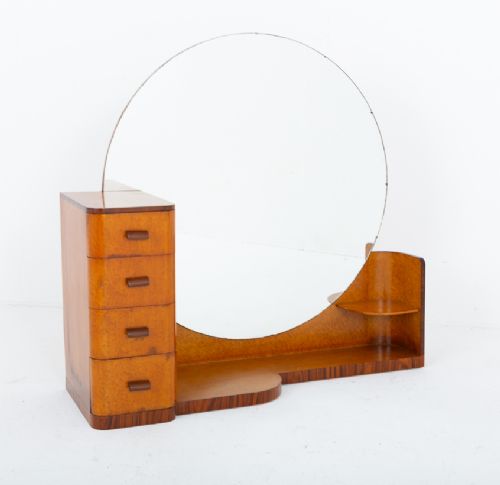
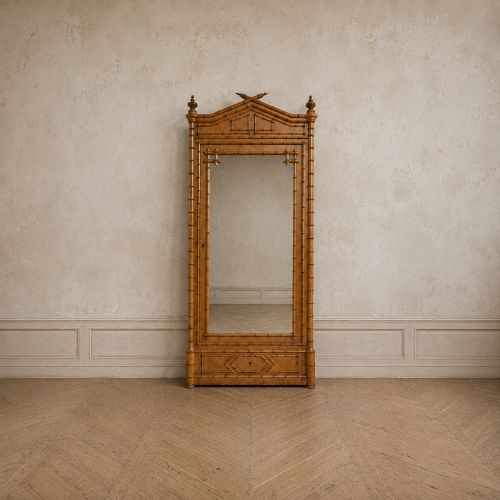
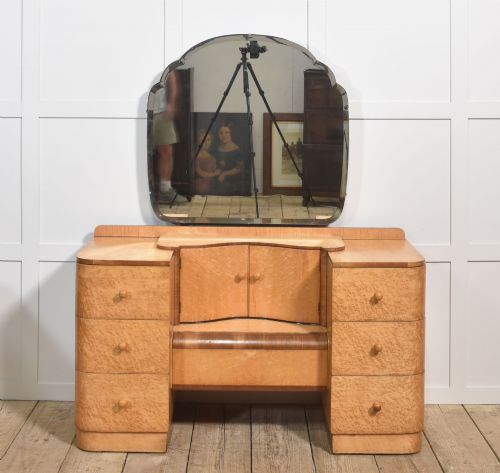
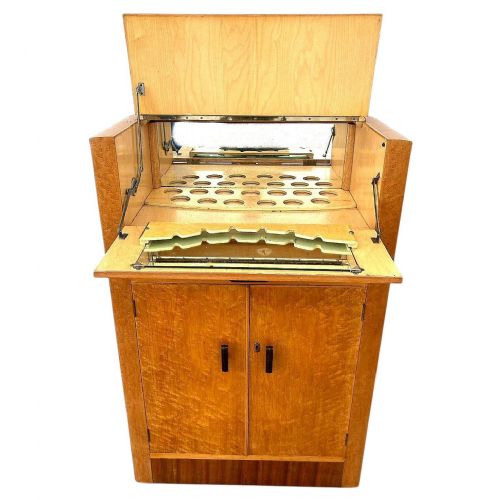


Bird Eye Maple Mirror
A bird eye maple mirror brings distinctive figured timber into a room, offering warm grain patterns across periods from the Regency era to Art Deco.
Bird Eye Maple Mirror
A bird eye maple mirror combines decorative wood figuring with functional glass, appearing across formats like overmantels, wall hangings, and cheval stands. The selection ranges from substantial Victorian and William IV overmantel frames to sleek 1920s and 1930s Art Deco pieces.
Makers and designers working in French Aesthetic, Regency, and Modernist styles utilised this distinctive timber for dressing tables, wardrobes, and standalone wall mirrors. Buyers encounter everything from compact early nineteenth-century cushion frames to large grand pieces intended for prominent spaces.
How they were made
Craftsmen built these frames using solid timber or veneers of birds-eye maple, often pairing the figured wood with giltwood slips, brass mounts, or parcel gilt accents. Glass elements include standard mirror plates, divided two-section plates, and integrated reverse glass prints.
Joinery techniques span traditional nineteenth-century framing methods to modernist construction found in pieces attributed to makers such as Maurice Adams or Harry and Lou Epstein. Faux bamboo turning also appears on specific French and Regency examples.
What varies in quality
The intensity and consistency of the dot-like figuring across the maple veneer dictate much of the visual appeal, alongside the depth of the surrounding timber frame. Superior examples display careful grain matching and integration with secondary materials like giltwood or brass.
Proportion and scale separate standard production pieces from grand overmantels or bespoke modernist dressing tables. The preservation of original mirror glass and gilding also influences the character of each piece.
Maurice Adams·Harry and Lou Epstein
The Bird Eye Maple Mirror Glossary
- Bird's-eye maple
- A figured variation of sugar maple timber showing small characteristic circular markings resembling bird eyes. This pattern results from local depressions in the growth rings.
- Overmantel mirror
- A large horizontal mirror designed to hang or rest directly above a fireplace mantelpiece. These often incorporate architectural mouldings and gilt accents.
- Cheval mirror
- A full-length dressing mirror suspended on a vertical swivelling frame between two upright posts. They gained popularity during the Regency and Art Deco periods.
- Giltwood
- Wood that has been coated with a thin layer of gold leaf or gilt paint. It frequently borders maple frames to provide tonal contrast.
- Cushion mirror
- A frame featuring a rounded, convex profile that slopes outward or inward towards the glass. This shape creates a distinct pillowed effect.
Bird Eye Maple Mirror: Frequently Asked Questions
How do I hang a heavy overmantel mirror?
Substantial overmantel frames require secure fixing directly into wall studs or masonry using heavy-duty brackets. Professional installation is recommended given the weight of nineteenth-century timber and glass.
Ensure the weight distribution relies on the structural integrity of the wall rather than decorative plaster or picture wire alone.
Where should I place a bird eye maple mirror?
Position these pieces where ambient light can catch the distinctive figured grain of the maple veneer. Placing them opposite a window enhances the reflection while highlighting the warm tones of the timber.
Avoid prolonged direct sunlight to protect the wood finish and any associated parcel gilt or brass elements from fading.
How do I tell a Regency mirror from a Victorian one?
Regency and William IV pieces often display classical proportions, parcel gilt slips, and clean architectural lines dating from the early nineteenth century. Victorian examples frequently incorporate heavier overmantel formats or combination furniture like wardrobes and sentry box cupboards.
Examining the construction methods, backing boards, and glass bevelling helps clarify the period of manufacture.
How do I clean and care for figured maple?
Dust the timber gently with a dry, soft cloth to prevent abrasive particles from scratching the surface. Avoid using chemical polishes, silicone sprays, or excess moisture on antique wood veneers.
Keep the mirrors away from damp environments such as unheated bathrooms to preserve the original glass and frame construction.