



Gilt Wooden Floor Lamp
These gilt wooden floor lamps bring warmth and height to a room, cast in styles from Venetian Baroque to Neoclassical Revival.
Gilt Wooden Floor Lamp
A gilt wooden floor lamp stands tall to illuminate a space, drawing on a lineage that includes standard lamps and torcheres. When you search for a gilt wooden floor lamp, you encounter tall lighting stands built from carved wood, giltwood, and gesso.
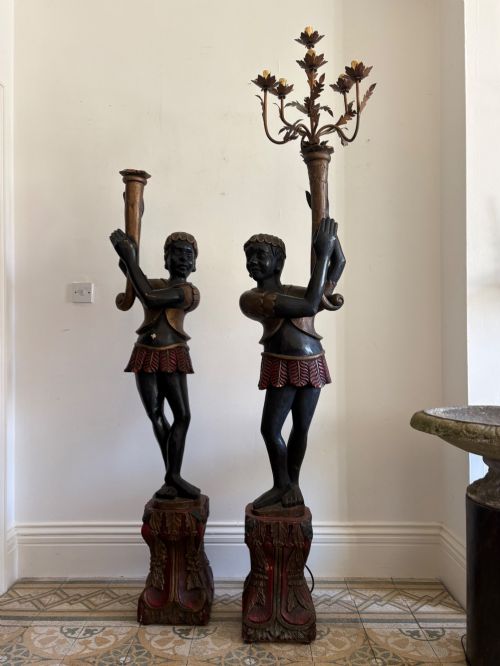
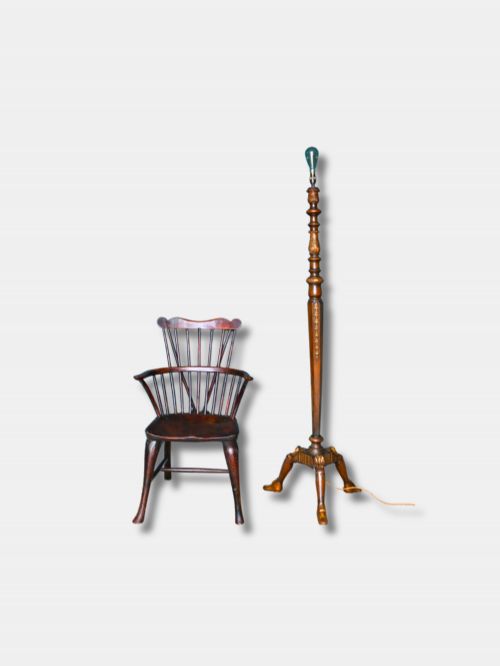
The selections range from Italian Florentine pieces and Venetian figures on stands to English walnut tripod bases and French boudoir designs. Examples stretch across the nineteenth century and into the 1920s and 1930s, offering varied decorative silhouettes.
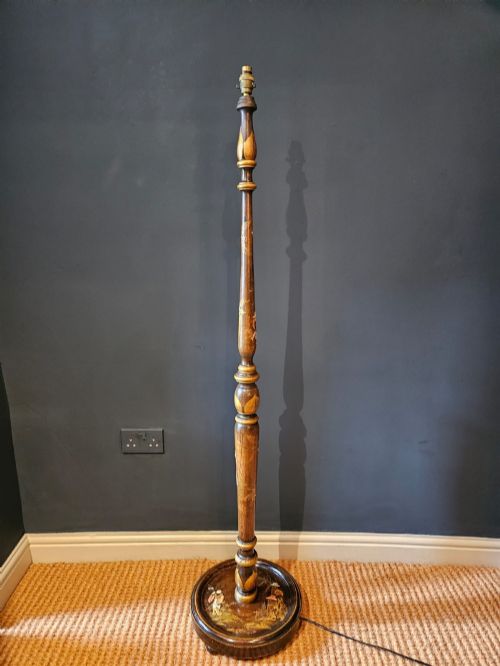
You meet painted standard lamps, parcel gilt versions, and Chinoiserie decorated standards alongside carved giltwood creations and marbleised pieces. Some pieces even show pole screen lamp conversions incorporating mahogany and gilt brass.
How they were made
Maker's hands shaped these pieces from wood, often applying gesso as a smooth base for gold leaf and gilding. Carvers worked detailed motifs into the timber before applying finishes that ranged from polychrome paint to parcel gilt highlights.
Structural elements incorporated brass components and sometimes marbleised effects, while tripod bases provided steady support for the tall columns. Fabric elements frequently completed the composition, crowning the standards to diffuse the light downwards.
Gilt Wooden Floor Lamp Retail Price Guide 2026
Typical asking prices for gilt wooden floor lamp among the pieces listed under this phrase on Sellingantiques today, from the lower quarter to the upper quarter. They describe what is for sale here now, not the wider market.
What varies in quality
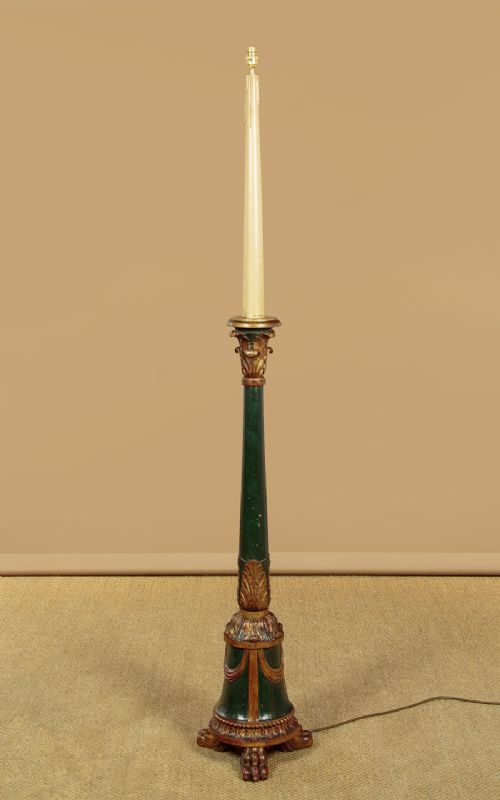
The depth and intricacy of the timber carving set standards apart, with crisp detail in the acanthus leaves or figural elements marking out superior work. The application of gold leaf and original polychrome finishes dictates the visual resonance of the piece.
Proportion and stability define the construction, seen in the balance of tripod bases and the integrity of the upright columns. Originality of the surface finish and surviving historic decorations separate the standard examples from the exceptional.
The Gilt Wooden Floor Lamp Glossary
- Giltwood
- Wood that has been coated with gold leaf or a gold-coloured metallic finish. This technique gives the appearance of solid gold while using a timber core.
- Gesso
- A plaster-like mixture applied to wood as a smooth preparation layer before gilding or painting. It allows carvers to achieve sharp, refined details.
- Torchere
- A tall ornamental stand originally designed to carry a torch or candle, later adapted for electric lighting. These form a distinct subset of floor lamps.
- Parcel Gilt
- A decorative treatment where only specific parts of an object are gilded, leaving other areas of wood, paint, or polish exposed.
- Standard Lamp
- A traditional British term for a floor lamp, describing a tall vertical post mounted on a stable base to hold a light fitting.
Gilt Wooden Floor Lamp: Frequently Asked Questions
How do I place a floor lamp?
Position these tall standards in corners or beside seating areas where their height can distribute ambient light effectively across the room. Ensure the base has a stable surface to rest upon.
Allow the carved details and gilded finishes to catch natural light during the day, complementing the room's overall scheme when unlit.
What styles are available?
The selection spans Venetian Baroque figures, Italian Florentine standards, Neoclassical revivals, and Chinoiserie decorated pieces. French boudoir designs and Georgian revival forms also appear.
Each style employs distinct carving patterns and surface treatments, ranging from full gilding to parcel gilt and polychrome paint.
Are these lamps electrified?
Many examples function with modern electrical setups, while some historical pieces originate from conversions, such as pole screen adaptations. Wiring styles vary according to the age of the piece.
Check the fittings to ensure they meet your requirements for domestic use and compatibility with contemporary shades.
How do I date these lamps?
Dating relies on stylistic markers from periods including the nineteenth century, the 1920s, and the 1930s. Details in the carving and the composition of the gesso offer clues.
Materials like mahogany, brass fittings, and specific revival styles help narrow down the era of manufacture.