


Gilt Wood Standard Lamp
A gilt wood standard lamp brings height, warmth and illumination to a room through carved surfaces and gilded finishes.
Gilt Wood Standard Lamp
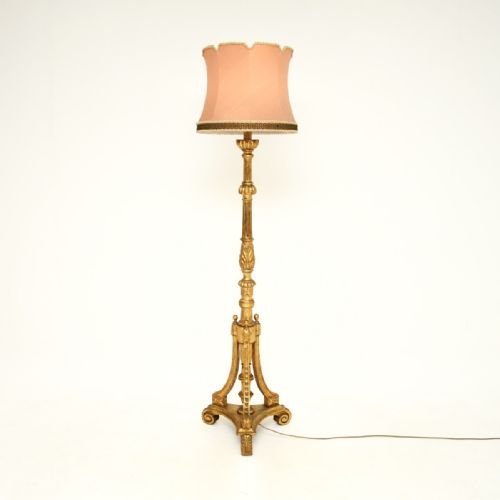
A gilt wood standard lamp is a tall floor-standing lighting fixture designed to elevate a light source above furniture level. The pieces available here span from the mid-nineteenth century through the Edwardian era and into the nineteen-thirties, reflecting a long tradition of decorative floor lighting.
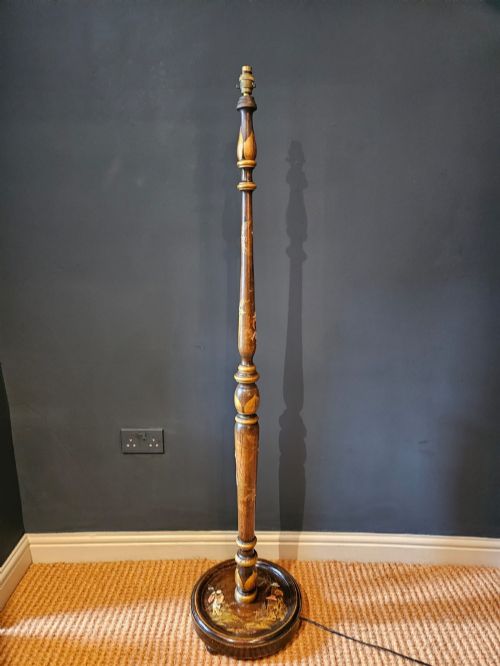
The most common examples on this page follow Italian Baroque, Florentine and Venetian revivals, alongside French Louis XVI and Chinoiserie interpretations. Makers applied giltwood, gesso and hand-carved wood to create slender columns, baluster shapes and figural standards.
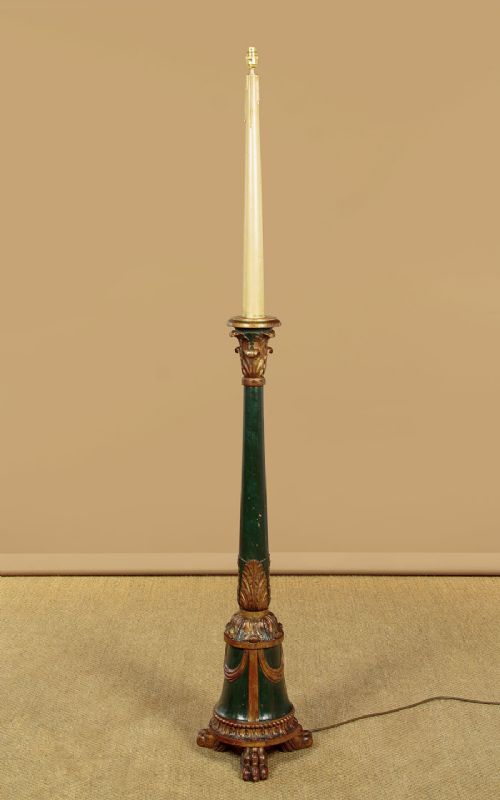
Beyond standard floor lamps, the selection includes torchieres and corner lamp designs, some retaining original painted or red lacquered surfaces. These objects function as primary vertical accents in period and eclectic interiors alike.
How they were made
Carved wood forms the structural core of these standards, shaped into fluted columns, scrolling foliage and figural motifs by hand. Artisans applied layers of gesso over the timber base to create a smooth, receptive surface for fine detailing and relief work.
Gold leaf or metallic gilt was then laid over the gesso, often combined with polychrome paint, red lacquer or parcel gilt finishes. This traditional water-gilding or oil-gilding technique produced the rich reflective qualities seen on Italian and French pieces.
Listings feature standard lamps spanning from the mid-nineteenth century through the Edwardian period and nineteen-thirties.
What varies in quality
The depth and crispness of the hand-carved ornament distinguish finer examples from simpler turned posts. Crisp acanthus leaves, deep undercut scrolls and refined figural carving indicate skilled workshop production rather than mass output.
The integrity of the underlying gesso and the warmth of the original gilding dictate the visual impact of the surface. Pieces retaining untouched gold leaf and subtle polychrome or lacquered layers hold greater decorative authority than heavily restored finishes.
The Gilt Wood Standard Lamp Glossary
- Giltwood
- Timber coated with gold leaf or metallic powder over a prepared gesso ground. This finish provides the characteristic metallic sheen on historic furniture and lighting.
- Gesso
- A plaster-like mixture applied to wood surfaces to create a smooth base for carving and gilding. It allows for sharp relief details that bare wood cannot hold.
- Torchiere
- A tall stand designed to hold a light pointing upwards. In historic interiors, these served to bounce illumination off the ceiling.
- Baluster
- A moulded column of square or circular profile with a swollen lower portion. This architectural shape frequently forms the central shaft of floor lamps.
- Parcel gilt
- A decoration method where only specific parts of an object are gilded while the rest is painted or left as exposed wood.
Gilt Wood Standard Lamp: Frequently Asked Questions
How do I style a gilt wood standard lamp?
Position the lamp beside a reading chair or in an empty corner where the vertical height can balance low furniture. Pair it with a simple fabric shade to let the carved and gilded base remain the visual focus.
Ensure the cord and wiring meet modern safety standards while retaining the original switch placement if historic. These lamps work well in traditional drawing rooms or as contrasting elements in contemporary spaces.
Are these lamps stable on carpets?
Most standard lamps use weighted bases hidden beneath the wood to maintain balance on various floor surfaces. Placing them on firm underlay or flat carpets prevents any tilt.
Heavier Italian Baroque and figural models generally offer a wider footprint for stability. Regular checks of the central joint ensure the pole remains rigid.
How do I clean a gilded surface?
Dust the carved wood gently with a soft, dry ostrich feather duster or microfiber cloth. Avoid applying water, commercial polishes or cleaning agents, which can lift fragile gold leaf.
Keep the lamp away from direct sunlight and excessive moisture to preserve the gesso and gilt layers. Professional conservation is recommended for any loose or flaking areas.
How can I tell a French style from an Italian one?
French Louis XVI revival lamps typically feature restrained neoclassical lines, fluted columns and muted parcel gilt finishes. They emphasise architectural symmetry and refined proportions.
Italian Baroque and Florentine models display bolder carving, twisted balusters, rich polychrome accents and figural elements. Their ornamentation is more exuberant and theatrical.