



Gilt Wood Sideboard
A gilt wood sideboard brings dramatic architectural presence and gilded warmth into a room, offering both surface display and deep storage.
Gilt Wood Sideboard
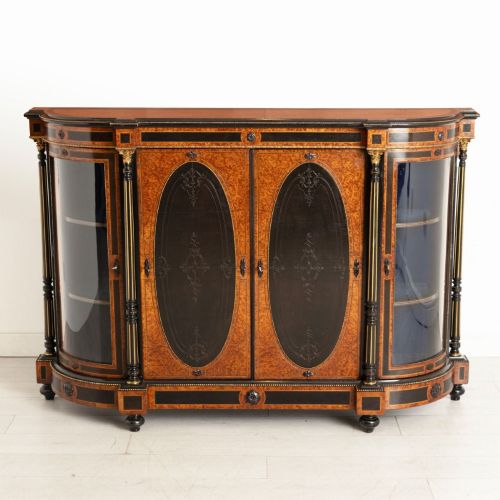
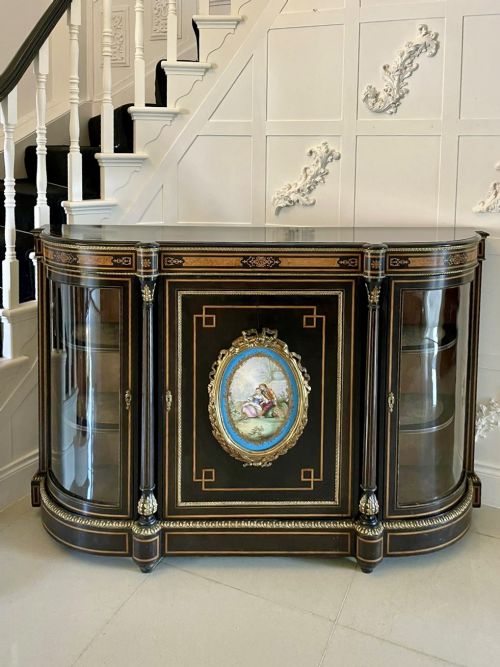
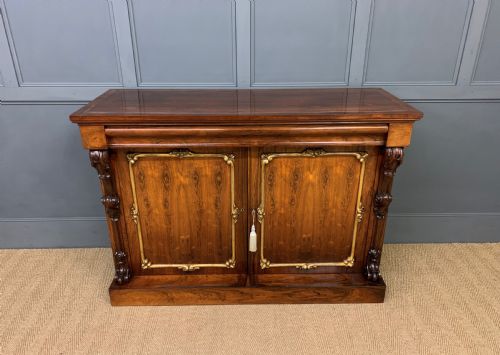
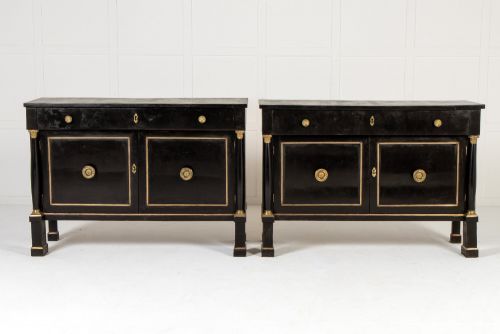
When searching for a gilt wood sideboard, collectors encounter a grand tradition of side cabinets, credenzas, and commodes spanning the eighteenth to the twentieth centuries. The pieces on this page lean heavily towards French and Italian continental influences alongside Regency and Victorian British craftsmanship. You will frequently find forms finished in ebonised wood, kingwood, or mahogany with gilt decoration, marble tops, and mirrored backs.
The objects serve as statement pieces for dining rooms and drawing rooms, evolving from eighteenth-century commodes and console tables into the elaborate credenzas of the Victorian era. They combine functional storage behind doors with substantial top surfaces suited for lamps, porcelain, or silver. Most variants incorporate decorative mounts or parcel gilt accents that catch the natural light of a room.
How they were made
Cabinet makers utilised dense hardwoods such as mahogany, rosewood, kingwood, and ebony as foundations for intricate marquetry and gilt treatments. Surfaces were frequently ebonised or finished with simulated grain before being enriched with applied ormolu, brass, and hand-carved giltwood mouldings. Heavy slabs of marble, cut and polished to fit exact dimensions, were regularly fitted to the tops of commodes and credenzas.
Joinery techniques involved precise carcass construction with fine dovetailing for drawers and mortise-and-tenon framing for doors. Marquetry panels combined contrasting veneers like amboyna and walnut, set into place by hand to create elaborate floral or geometric patterns. Gilt decoration was applied through traditional leaf gilding over prepared grounds to achieve a lasting metallic brilliance.
Gilt Wood Sideboard Retail Price Guide 2026
Typical asking prices for gilt wood sideboard among the pieces listed under this phrase on Sellingantiques today, from the lower quarter to the upper quarter. They describe what is for sale here now, not the wider market.
The listings feature pieces spanning the 18th, 19th, and 20th centuries, dominated by mahogany, ebonised wood, and rosewood.
What varies in quality
Quality rests upon the precision of the cabinet maker's joinery and the depth of the surface decoration. Superior examples display tightly fitted doors, crisp marquetry without visible gaps in the veneers, and substantial cast ormolu mounts rather than light stamped metal. The integration of the gilt wood elements with the primary timber shows a considered artistic hand.
The choice of materials also dictates the standing of a piece, with select items featuring solid marble slabs, figured amboyna, or burr yew panels. The crispness of the carving on giltwood components and the preservation of the original mercury gilding or gold leaf separate standard production from exceptional studio output.
Gillows·Edmond Poteau
The Gilt Wood Sideboard Glossary
- Ormolu
- Gilt bronze ornamentation applied to furniture mounts, feet, and key escutcheons. This technique was widely utilised by French cabinet makers to add metallic contrast to dark woods.
- Credenza
- A sideboard or side cabinet used for storage and display, often featuring central doors flanked by curved glass or open shelving. The form gained immense popularity during the Victorian period.
- Marquetry
- The art of applying small pieces of veneer to a structure to form decorative patterns or pictorial scenes. Makers employed contrasting timbers like mahogany and satinwood to achieve tonal depth.
- Commode
- A low chest of drawers or cabinet originating in France, frequently topped with marble. They served both decorative and practical functions in formal reception rooms.
- Ebonisation
- A chemical or pigment treatment applied to cheaper timbers to imitate solid ebony. This dark finish provided a dramatic high-contrast background for gilt decoration.
Gilt Wood Sideboard: Frequently Asked Questions
What is the difference between a credenza and a sideboard?
A credenza typically incorporates enclosed cupboards with lower profiles, often featuring glass panels and intricate marquetry designed for formal display.
Traditional sideboards lean more towards serving food and holding dining room accessories, though nineteenth-century makers frequently blurred these functional boundaries.
How do I identify a Victorian piece from a Regency one?
Regency items tend to favour clean architectural lines, classical motifs, and simulated rosewood finishes inspired by antiquity.
Victorian pieces embrace heavier proportions, elaborate floral marquetry, ebonised surfaces, and complex mirror-back constructions.
Are marble tops original to these cabinets?
Marble tops were standard specification for many French commodes and credenzas produced during the eighteenth and nineteenth centuries.
They provided a durable, cool surface for serving and display, fitted precisely to the rebate of the wooden carcass.
How should I care for gilt wood surfaces?
Gilt wood requires gentle dusting with a soft, dry brush to avoid disturbing the delicate gold leaf or gilt composition.
Keep these pieces away from direct sunlight and excessive humidity to protect both the gilding and the underlying hardwood.