



Gilt Wood Pendant
These gilt wood pendant light fittings bring warmth and historic character to any room.
Gilt Wood Pendant
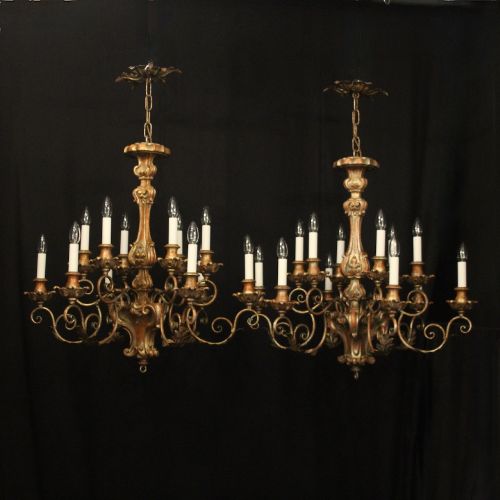
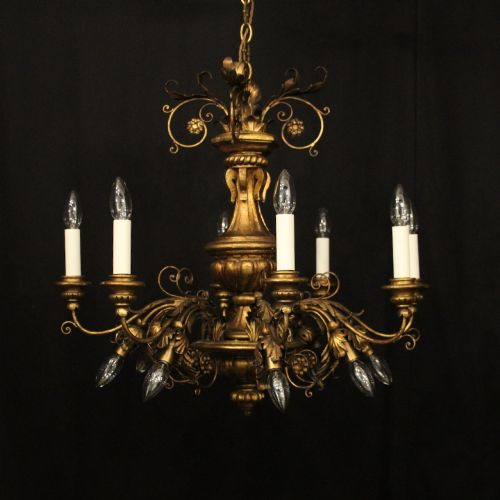
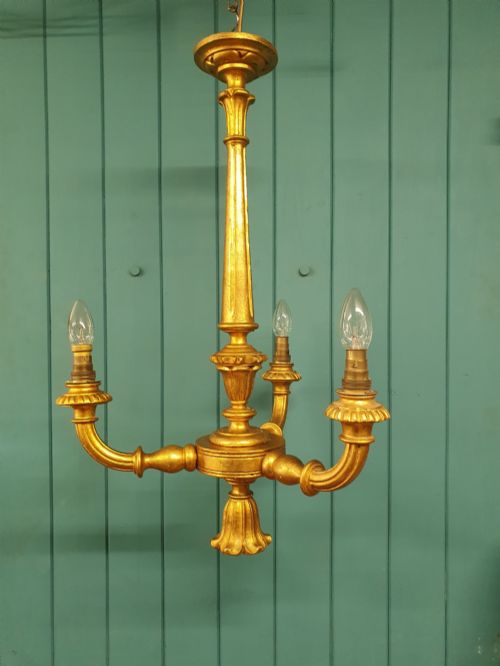
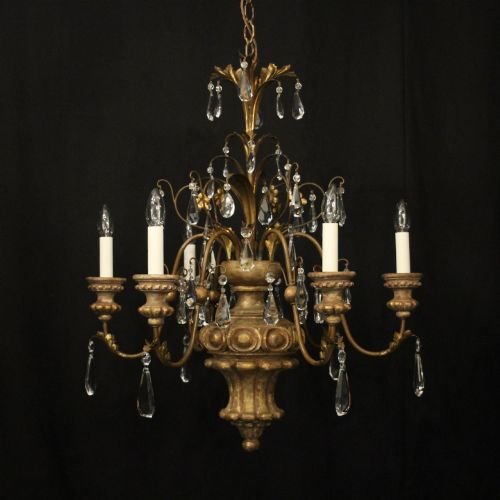
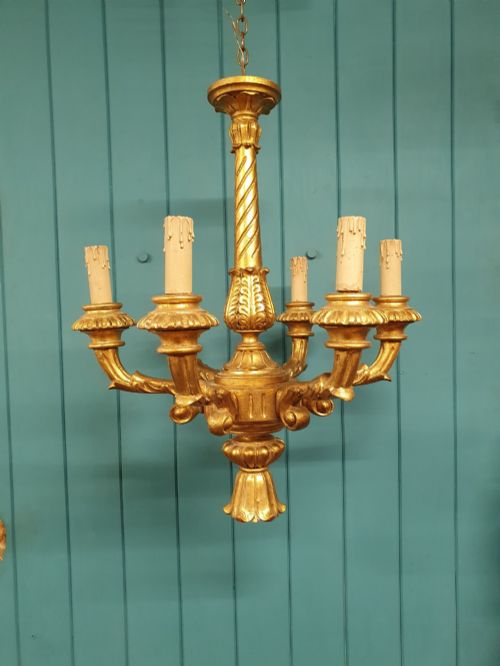
A gilt wood pendant encompasses large multi-light chandeliers and hanging lanterns created in varied historic styles. These hanging light fittings bring a focal point to high ceilings and grand rooms.
The selections available here range from Italian Florentine pieces to French chateau designs and Victorian creations. Buyers encounter pieces dating from the eighteenth century through to the early decades of the twentieth century.
Chandeliers form the most common variety on this page, often featuring multiple arms for candles or bulbs. Hanging lanterns also appear, offering enclosed illumination for halls and stairwells.
Materials and construction
Craftsmen shaped these fittings using carved wood as a core base for ornate decoration. Gesso was frequently applied over the wood to build up sculptural details and smooth surfaces before gilding.
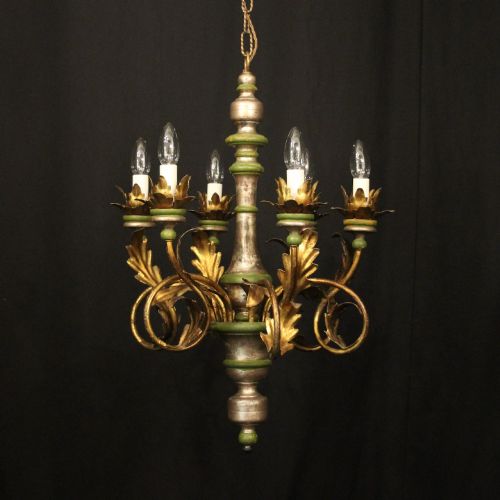
Gold leaf and painted polychrome finishes decorate the exterior surfaces to catch and reflect light. Metal components, wrought iron and glass elements appear alongside the primary wooden frames in several designs.
Gilt Wood Pendant Retail Price Guide 2026
Typical asking prices for gilt wood pendant among the pieces listed under this phrase on Sellingantiques today, from the lower quarter to the upper quarter. They describe what is for sale here now, not the wider market.
Listings span periods from the eighteenth century through the nineteenth century, Edwardian era, and into nineteen-thirty.
Judging quality
Quality rests in the depth and sharpness of the hand carving across the wooden structure. Finer pieces display crisp botanical motifs and scrollwork rather than soft, indistinct moulding.
The application of gold leaf and the preservation of the original gesso layer dictate the visual richness of the surface. Superior examples maintain their historic gilding integrity without heavy modern repainting.
The Gilt Wood Pendant Glossary
- Giltwood
- Timber coated with gold leaf or gold paint for a decorative metallic finish. This surface layer provides the characteristic reflective gleam seen on period lighting.
- Gesso
- A plaster mixture applied to wood surfaces to create a smooth base for carving or gilding. It allows craftsmen to model intricate relief details.
- Florentine
- A regional Italian style known for ornate carved foliage and rich surface decoration. Pieces from this tradition often incorporate elaborate scrolls and gilt finishes.
- Polychrome
- Decorated in multiple colours alongside the primary gilding. This technique adds painted depth to carved wooden details.
- Toleware
- Enamelled or lacquered metalware utilised for decorative accents on lighting fixtures. It often introduces contrasting tones to the carved wooden elements.
Gilt Wood Pendant: Frequently Asked Questions
How do I hang a heavy antique chandelier safely?
These substantial wooden and gilt fixtures require secure anchoring into ceiling joists rather than plaster alone. Professional installation ensures the weight is distributed properly.
Weight varies significantly depending on the scale and whether the piece incorporates iron or glass elements. Consult an electrician who has experience with historic lighting.
How should I clean a gilt wood pendant?
Dusting gently with a dry, soft brush prevents particle buildup without damaging the delicate gold leaf surface. Moisture and chemical cleaners strip historic finishes rapidly.
Keep these fixtures away from excessive humidity and direct heat sources to protect the underlying gesso and wood.
What is the difference between a chandelier and a lantern?
Chandeliers feature branching arms designed to hold multiple exposed candles or light bulbs. They project illumination outward across a space.
Lanterns enclose the light source within a structured frame, often glazed or styled for hallways and entryways. Both forms utilise carved giltwood construction.
How do I identify a Florentine style fitting?
Florentine pieces typically display elaborate carved foliage, scrollwork and openwork wooden frames. They draw on regional Italian design traditions from past centuries.
Surface treatments often combine bright gold leaf with subtle polychrome painted highlights to accentuate the carving.