

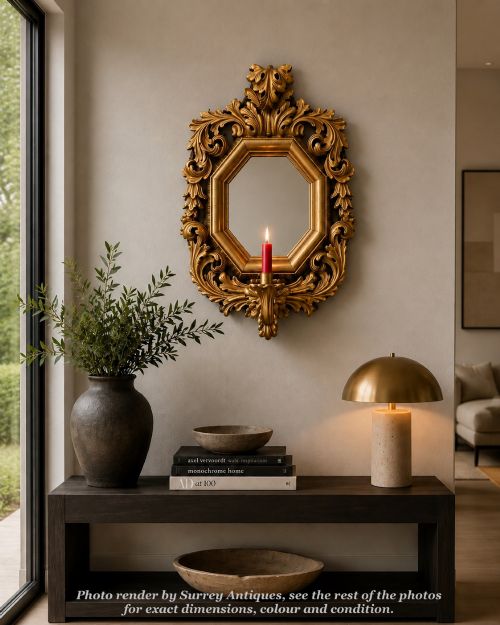
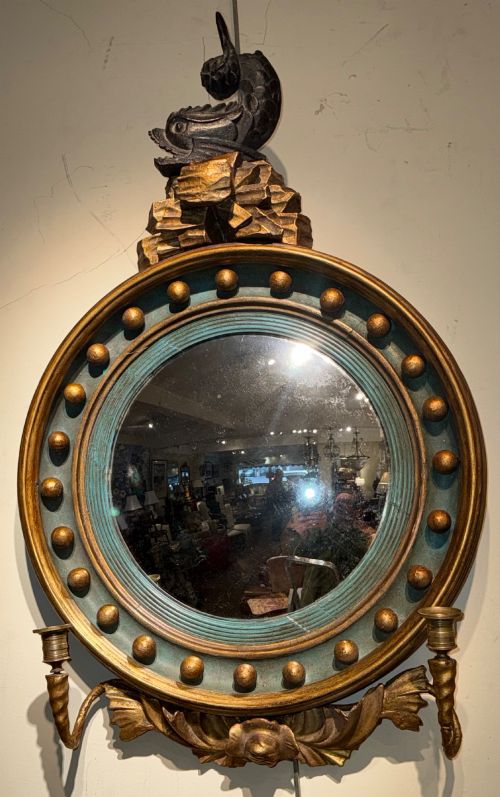
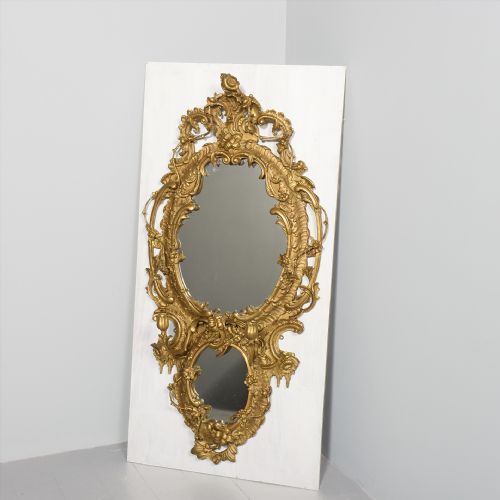


Gilt Wood Girandole
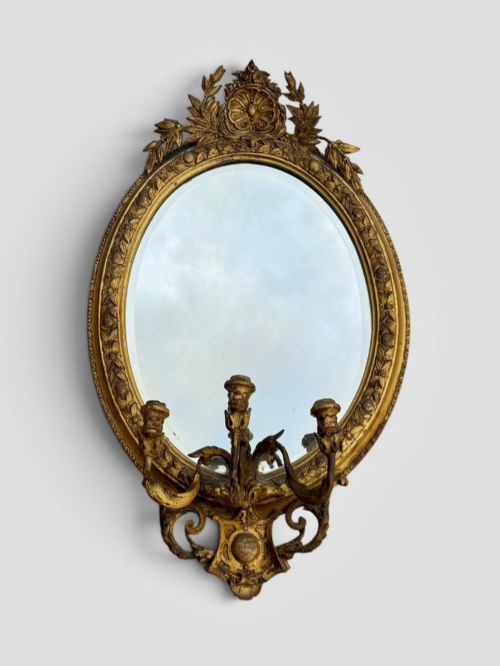
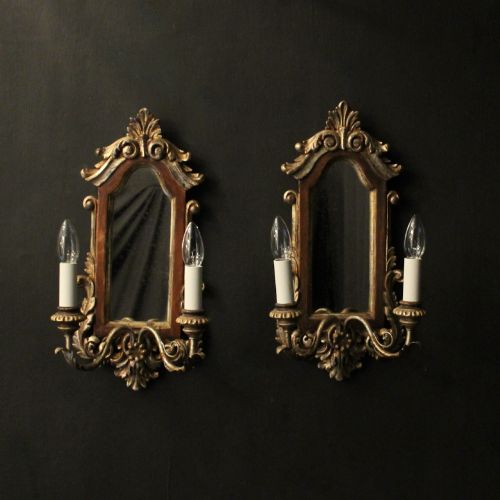
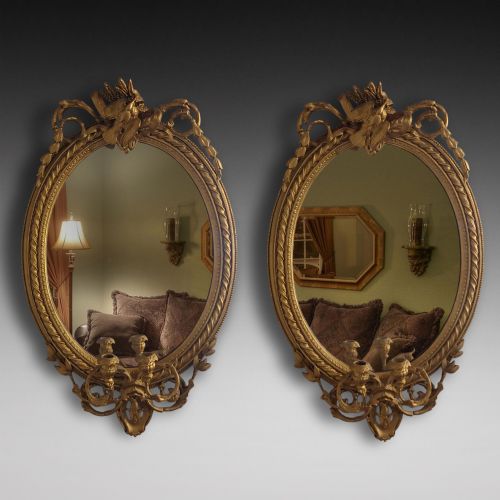
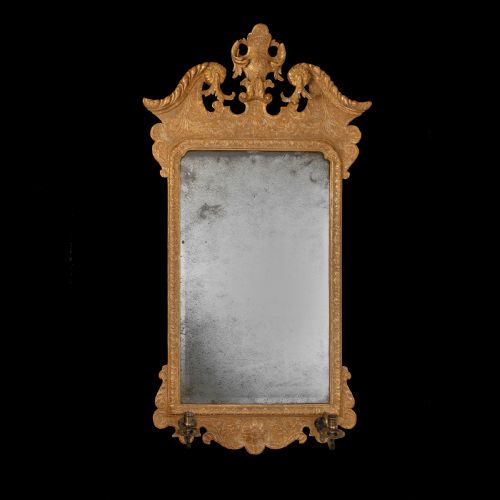
A gilt wood girandole brings flickering candle-light and deep reflection into a room through carved, gilded frames.
Gilt Wood Girandole
A gilt wood girandole is a wall mirror fitted with integrated candle sconces, designed to multiply the light of a room through its polished glass. When you search for a gilt wood girandole, you encounter pieces that span centuries, from grand eighteenth-century examples to later revival styles.
The selection on this page demonstrates forms ranging from convex circular plates to ornate Italian rococo pier mirrors and twin-arm wall sconces. Most pieces belong to the nineteenth and eighteenth centuries, alongside Regency and early twentieth-century interpretations.
Makers and workshops from Italy, France, and Britain shaped these objects using carved wood, gesso, and gold leaf. Buyers find single wall pieces as well as matching pairs designed to hang symmetrically.
How they were made
Makers constructed the core structure of a gilt wood girandole from timber, often applying layers of gesso to build up intricate relief ornament before carving. Artisans then laid fine gold leaf or gold paint over the prepared surface to achieve a brilliant metallic sheen.
Reflective surfaces utilised mirror glass, sometimes in convex formats that capture a wide-angle reflection of the interior. Metal arms and brass fittings were secured to the wooden frames to support the weight of candles safely.
Gilt Wood Girandole Retail Price Guide 2026
Typical asking prices for gilt wood girandole among the pieces listed under this phrase on Sellingantiques today, from the lower quarter to the upper quarter. They describe what is for sale here now, not the wider market.
Listings feature giltwood, glass, gesso, brass, and gold leaf across Victorian, Regency, and eighteenth-century periods.
What varies in quality
The depth and crispness of the hand-carved ornament separate standard decorative frames from exceptional sculptural works. Crisp gesso work retains sharp edges and detailed scrollwork, whereas worn or heavily restored surfaces lose definition.
The quality of the gilding and the preservation of the original mirror plate heavily influence the character of the piece. Older glass plates often show natural foxing and silvering changes that indicate genuine age.
Benjamin Goodison
The Gilt Wood Girandole Glossary
- Giltwood
- Wood that has been coated with thin leaves of gold or gold-coloured metal. This finish provides the bright reflective quality characteristic of these mirrors.
- Girandole
- A branched candleholder attached to a mirror or wall. The arms allow candles to project light directly in front of the reflective glass.
- Gesso
- A plaster-like mixture applied to wood frames to create a smooth base for carving and gilding. It allows for intricate relief details.
- Convex mirror
- A round mirror with a curving outward surface that reflects a wide panoramic view of the room. They appear frequently in Regency pieces.
- Pier mirror
- A large vertical mirror designed to hang on the wall between windows. These often incorporate girandole arms at the base.
Gilt Wood Girandole: Frequently Asked Questions
How do I hang a heavy girandole?
Secure the mirror directly into wall studs using heavy-duty fixings suited to the weight of the timber and gesso frame. Due to the projecting arms, ensure the placement avoids high-traffic areas where the sconces might be bumped.
Professional installation is recommended for larger eighteenth-century and nineteenth-century pieces to distribute the load safely across the wall.
Where should I place a girandole?
Hang the piece on a focal wall opposite a window or light source to maximise the reflection of natural daylight into the space. Placing them above a fireplace or console table follows traditional placement.
Ensure candles placed in the arms are kept away from curtains or hanging fabrics to maintain safety.
How do I clean giltwood safely?
Dust the carved surfaces gently with a soft, dry brush to remove particles without disturbing the delicate gold leaf layer. Avoid liquid cleaners, abrasive cloths, or chemical solvents entirely.
Moisture can damage old gesso and wood beneath the gilding, so keep the environment stable and dry.
How do I identify a Regency convex mirror?
Regency convex mirrors typically feature circular frames, often surmounted by carved eagles or topped with ball-bearing friezes. The glass curves outward to create a distinctive wide-angle reflection.
These pieces frequently date from the early nineteenth century and show distinct neoclassical or rope-twist motifs.