


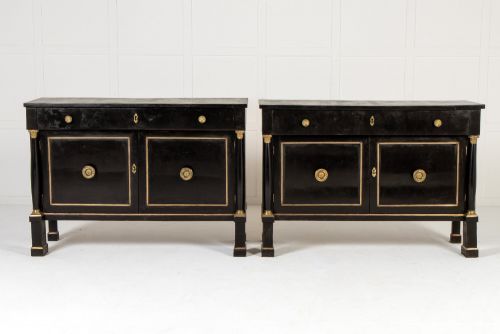


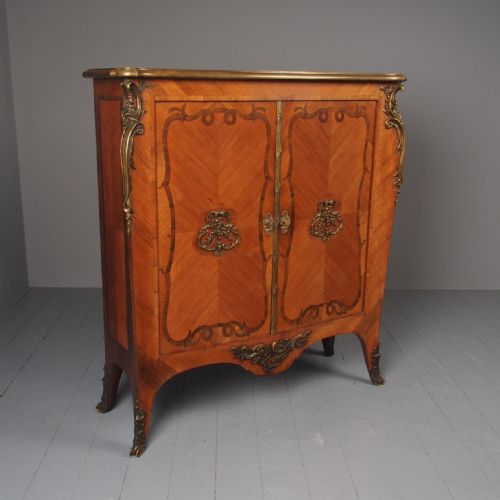


Gilt Wood Credenza
A gilt wood credenza brings commanding presence and gilded display to a room, uniting architectural proportion with rich surface detail.
Gilt Wood Credenza
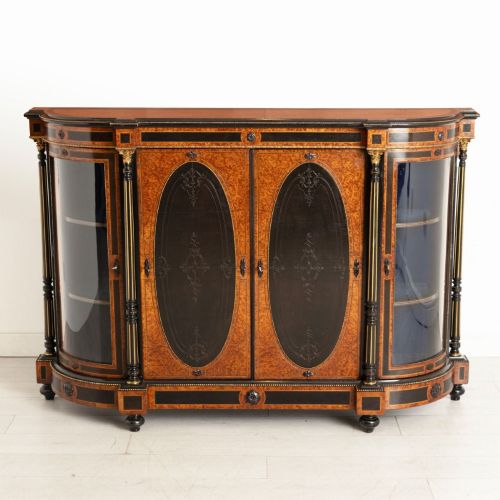
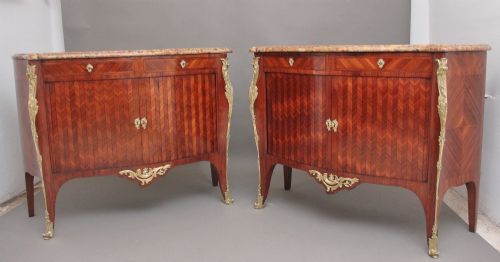
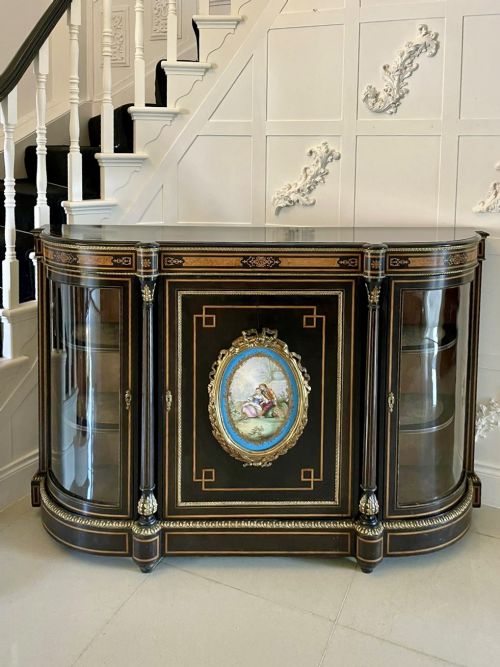
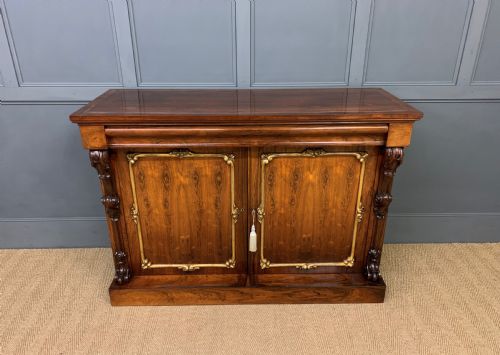
A gilt wood credenza sits at the intersection of architectural cabinetry and decorative display, serving as a focal point in formal rooms. The listings show forms ranging from compact pier cabinets to breakfront sideboards and commodes.
Most examples found here date from the nineteenth century, including Regency and Victorian interpretations alongside French Rococo Revival and Italian Neoclassical designs. These pieces often incorporate mirrored backs, glass doors, or marble tops to enhance their decorative impact.
How they were made
Cabinetmakers utilised dense timbers such as rosewood, kingwood, ebony, and amboyna as foundational carcases, often applying ebonised finishes or simulated grain effects. Marquetry in various exotic woods and intricate brass inlay provide detailed surface enrichment.
Gilding was applied to carved wooden elements to create luminous highlights, complemented by cast ormolu mounts and marble surfaces. The structural assembly combines traditional joinery with applied decorative veneers and metal ornamentation.
Gilt Wood Credenza Retail Price Guide 2026
Typical asking prices for gilt wood credenza among the pieces listed under this phrase on Sellingantiques today, from the lower quarter to the upper quarter. They describe what is for sale here now, not the wider market.
Several cabinets rely on simulated rosewood finishes, proving that nineteenth-century makers enjoyed a clever bit of decorative paintwork.
What varies in quality
The sophistication of the timber veneers and the precision of the marquetry dictate the baseline quality of each piece. Elaborate floral patterns or complex geometric inlay require advanced woodworking skill.
Louis Constantin Le Gaigneur·Edward Holmes Baldock·S Jamar·Edmond Poteau
The Gilt Wood Credenza Glossary
- Ormolu
- Gilded bronze mounts applied to furniture for decorative accent. This technique provides metallic contrast against dark woods and gilded frames.
- Marquetry
- Fitted patterns of wood veneer forming pictures or geometric designs on the carcase. Craftsmen cut contrasting timbers together to achieve tight joints.
- Breakfront
- A cabinet design where the central section projects forward from the flanking cupboards. This configuration adds architectural depth to large sideboards.
- Pier cabinet
- A narrow display cabinet designed to fit wall spaces between windows. These pieces typically feature glass doors and internal shelving.
- Kingwood
- A dense, heavily figured South American timber valued for rich brown and violet tones. It frequently appears in French and English cabinetwork.
Gilt Wood Credenza: Frequently Asked Questions
Where should I place a credenza?
These cabinets suit dining rooms, grand hallways, or principal reception spaces where their length and decorative fronts can be fully appreciated.
Position them against substantial wall surfaces, avoiding areas with direct sunlight to protect delicate wood veneers and gilded surfaces.
How do I identify a Regency piece?
Regency cabinets typically display restrained neoclassical lines, often incorporating simulated rosewood, brass inlay, and parcel gilt details.
Proportions remain architectural, drawing influence from classical antiquity rather than the heavier ornamentation seen in later Victorian furniture.
What is the difference between a credenza and a sideboard?
While both function as low storage and display furniture, credenzas traditionally feature enclosed cupboards without the raised back panel of standard sideboards.
Many examples on this page bridge these categories, incorporating glass doors and display shelving suited for porcelain and decorative objects.
How do I care for gilded wood?
Gilt wood surfaces require gentle dusting with a dry, soft brush to remove particulate matter without disturbing the thin metal leaf.
Keep these pieces away from moisture and extreme temperature fluctuations to prevent the wood underneath from expanding and cracking the finish.