



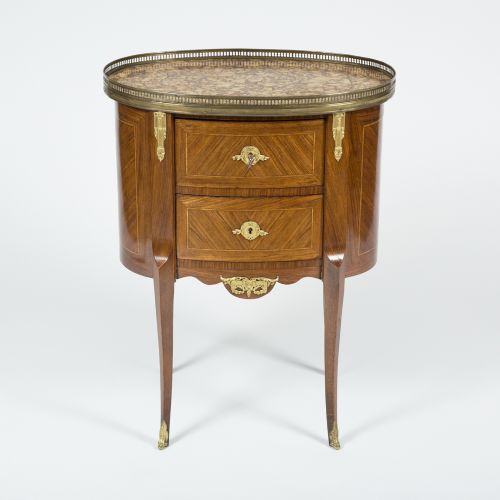


Gilt Wood Chest
When you handle a gilt wood chest, you meet centuries of carving, gilding, and surface craft across commodes, cabinets, and cassones.
Gilt Wood Chest
A gilt wood chest encompasses grand commodes, Italian side cupboards, and carved walnut cassones spanning from the seventeenth century through to the twentieth century. These pieces combine structural timber carcassing with applied gold leaf, paint, or metallic finishes, often paired with marble tops.
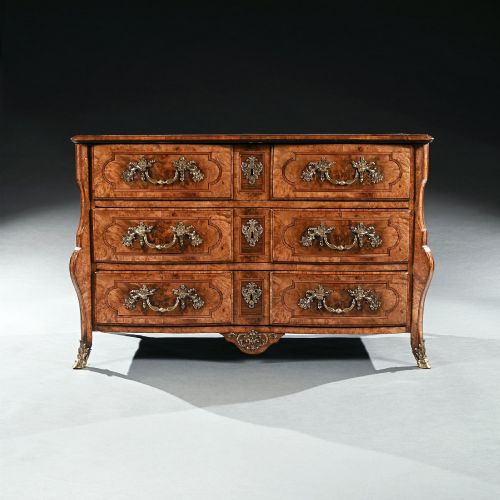
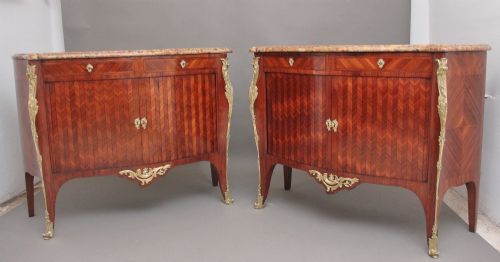
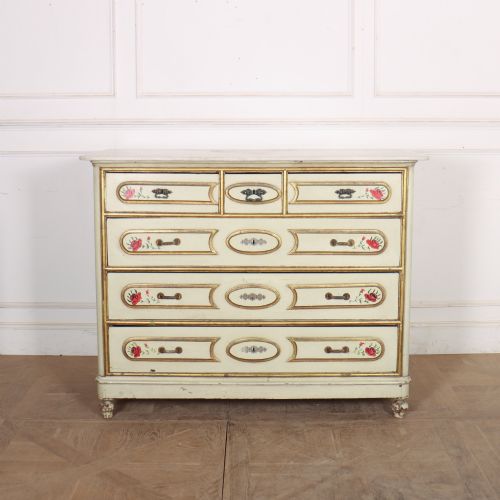
The version most commonly met on this page is the continental commode or chest of drawers, frequently finished in French or Italian revival styles such as Louis XV or Rococo. Alongside these large storage forms, the selection includes smaller cabinets, trunks, and decorative boxes treated with similar gilded or painted surfaces.
Materials and construction
Carpenters built the carcasses using native and exotic timbers including walnut, mahogany, and kingwood, often applying burr maple or marquetry veneers to the exterior faces. Structural stability was essential to support heavy stone surfaces like marble tops.
Surface decoration involved applying fine gold leaf or giltwood over carved wooden mouldings, sometimes supplemented by cast ormolu mounts, brass hardware, and hand-painted lacquer details.
Gilt Wood Chest Retail Price Guide 2026
Typical asking prices for gilt wood chest among the pieces listed under this phrase on Sellingantiques today, from the lower quarter to the upper quarter. They describe what is for sale here now, not the wider market.
The listings span eight distinct centuries, running from pre-sixteenth century Italian work through to the twentieth century.
Judging quality in gilded storage
Quality rests in the precision of the underlying wood carving and the integrity of the gilding application, where crisp detail separates workshop standards. Heavy, uniform cast mounts and well-fitted marble slabs indicate superior execution.
The refinement of internal drawer construction, dovetailing, and the preservation of original surface patination distinguish master-carved Italian and French examples from later revival pieces.
Thomas Hache of Grenoble
The Gilt Wood Chest Glossary
- Cassone
- A traditional Italian chest, often heavily carved and gilded, historically used for storing household valuables and wedding trousseaus.
- Commode
- A low chest of drawers or cabinet, originating in France during the seventeenth century and frequently fitted with a marble top.
- Giltwood
- Timber that has been coated with a thin layer of gold leaf or gold powder applied over a prepared gesso and bole ground.
- Ormolu
- Gilded bronze mounts and decorative fittings cast and chased by hand, commonly applied to eighteenth and nineteenth-century furniture.
- Marquetry
- The art of applying small pieces of veneer to a structural structure to form decorative patterns and pictorial designs.
Gilt Wood Chest: Frequently Asked Questions
What is a gilt wood chest?
A gilt wood chest is a piece of storage furniture - such as a commode, cassone, or cabinet - decorated with gold leaf, giltwood carvings, or metallic finishes.
These items range from early Italian cassones to later French revival commodes designed for formal rooms.
How were marble tops used?
Marble tops were fitted to commodes and cabinets to provide a durable, decorative surface that contrasted with the gilded woodwork below.
Heavier stones like breche d'alep required sturdy timber frames beneath to support the weight securely.
How do I date a piece?
Dating relies on combining the construction methods, timber choices, and stylistic revival periods visible in the carving and mounts.
Seventeenth-century cassones differ distinctly in joinery and proportion from nineteenth-century Louis XV revival commodes.
Where were these chests made?
These pieces originated primarily across European workshops, with strong representation from French, Italian, and Spanish makers.
Regional preferences influenced whether a maker favored carved walnut, lacquered panels, or intricate marquetry veneers.