



Gilt Wood Canape
These gilt wood canape pieces bring French salon style to a room, offering grand seating with carved gilded frames.
Gilt Wood Canape
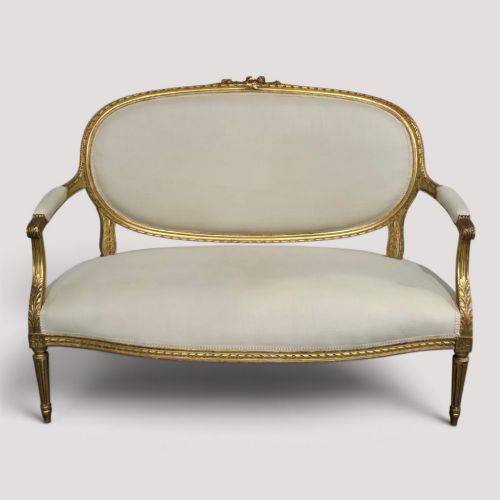
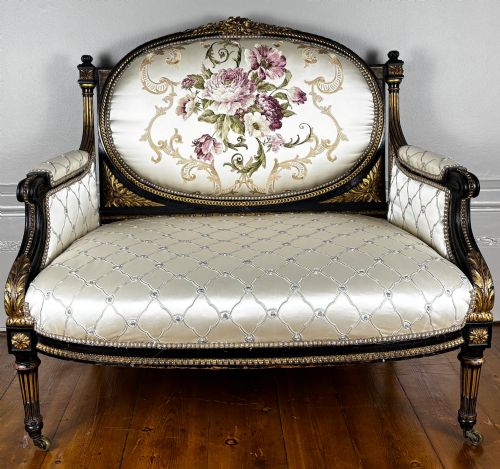
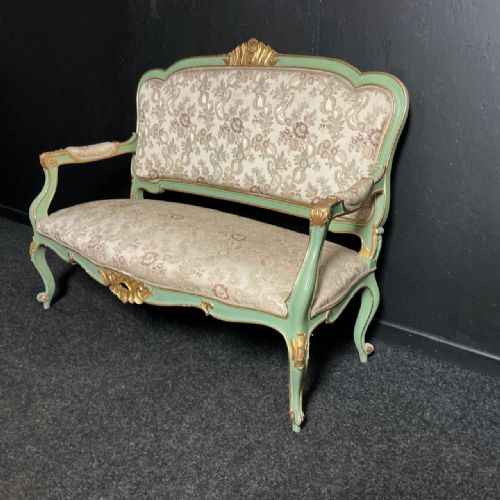
A gilt wood canape is a traditional upholstered settee or sofa featuring an ornamented wooden frame coated in gold leaf or paint. These seating forms served formal reception rooms and drawing rooms across European interiors.
Buyers browsing this selection encounter nineteenth-century pieces alongside revival designs and twentieth-century examples. Common configurations include two-seat and three-seat settees, often accompanied by matching salon suites.
The aesthetic draws heavily on classical French design vocabulary, particularly Louis XV and Louis XVI styles. Craftsmanship from these periods incorporates curved cabriole legs, exposed carved timber framing, and decorative textile upholstery.
How they were made
Frames rely on sturdy timbers such as wood and ebonised wood, shaped by hand to create elaborate structural curves and straight neoclassical lines. Artisans applied thin sheets of gold leaf or specialist paint over a prepared ground layer to achieve the characteristic metallic finish.
Upholstery techniques involve traditional stuffing secured over webbed frames, finished with textiles including damask and tapestry. Exposed woodwork frequently displays intricate carving work, highlighting floral motifs, ribbons, and classical moulding.
Gilt Wood Canape Retail Price Guide 2026
Typical asking prices for gilt wood canape among the pieces listed under this phrase on Sellingantiques today, from the lower quarter to the upper quarter. They describe what is for sale here now, not the wider market.
Some nineteenth-century makers hid secret joinery marks beneath the gilding to track workshop assembly.
What varies in quality
The distinction between tiers rests upon the crispness of the hand-carved ornamentation and the depth of the gilding. Superior examples display sharply defined wooden relief work and rich gold leaf application that ages with a natural warm patina.
Structural integrity of the timber frame and the quality of the textile covering dictate overall merit. Suites featuring original upholstery or harmonious period fabric command stronger visual coherence than later replacements.
The Gilt Wood Canape Glossary
- Canape
- An ornamental settee or sofa with an exposed wooden frame, typically featuring an upholstered back and seat. Originating in seventeenth-century France, it formed part of formal reception room layouts.
- Giltwood
- Timber treated with gold leaf or gold powder applied over a prepared base surface. This finish protects the underlying wood while providing a brilliant metallic appearance.
- Louis XVI Style
- A neoclassical design period characterised by straight lines, symmetrical proportions, and geometric ornamentation. Furniture from this movement often uses fluted columns and ribbon carvings.
- Damask
- A reversible figured fabric woven on a jacquard loom, traditionally utilising silk, wool, or linen. It frequently appears as the primary upholstery material on formal period seating.
- Ebonised Wood
- Timber treated with chemical stains or dark finishes to imitate ebony. This dark surface contrasts sharply with applied gilt details.
Gilt Wood Canape: Frequently Asked Questions
How do I place a canape in a room?
These settees work well as focal seating in living rooms, drawing rooms, or large bedrooms. Their decorative backs mean they can stand away from walls where the carved frame remains visible.
Pairing a canape with matching armchairs from a salon suite creates a cohesive seating arrangement. Keeping them away from direct sunlight protects the gilt surface and textile upholstery from fading.
How do I identify Louis XV and Louis XVI styles?
Louis XV style pieces feature asymmetrical curves, scrolling motifs, and cabriole legs. The overall aesthetic feels organic, flowing, and ornate.
Louis XVI style shifts toward neoclassical symmetry with straight tapered legs, fluted columns, and geometric carvings. Recognising these structural lines helps date the piece correctly.
What maintenance do giltwood frames require?
Giltwood surfaces require gentle dusting with a dry, soft cloth to prevent dust accumulation. Moisture and chemical cleaners damage the delicate gold leaf finish over time.
Maintaining stable indoor humidity protects the underlying timber from warping. Professional conservation ensures the gilded surface remains intact for future generations.