

Gilt Wall Lighting
These gilt wall lighting pieces bring warmth and reflection to a room through gilded metal and carved wood.
Gilt Wall Lighting
Gilt wall lighting encompasses wall lights, sconces, girandoles, and wall lanterns designed to illuminate interior spaces while adding decorative brilliance. These fixtures emerge predominantly from French and Italian workshops across the nineteenth and early twentieth centuries.
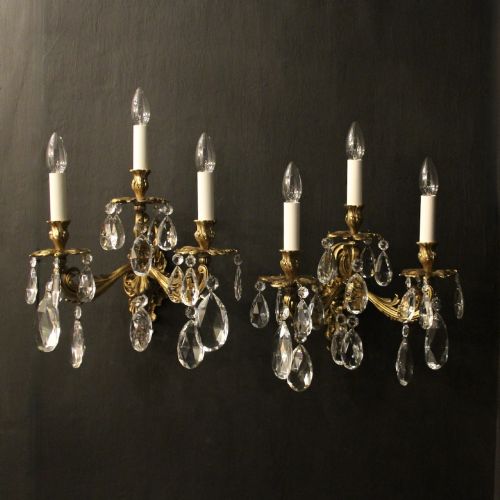
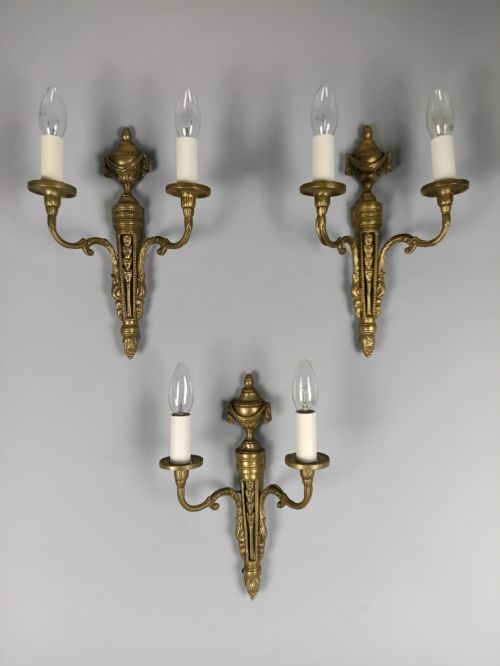
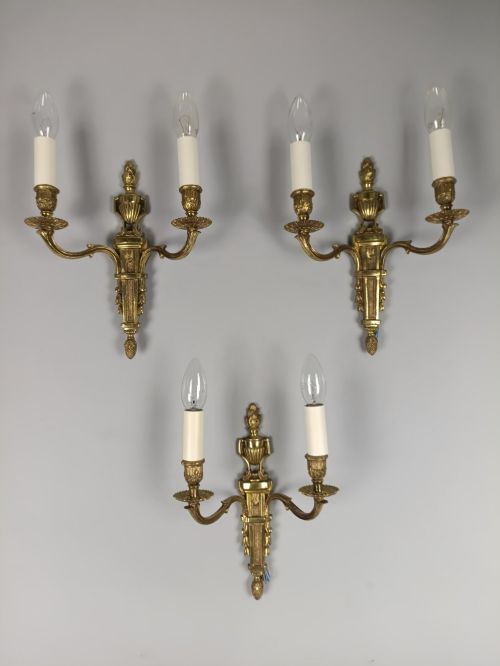
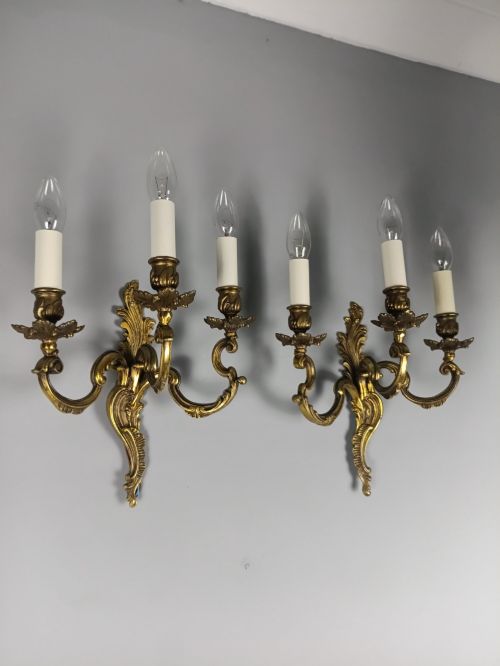
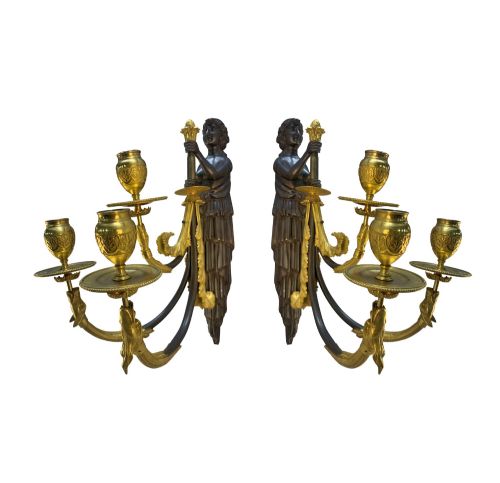
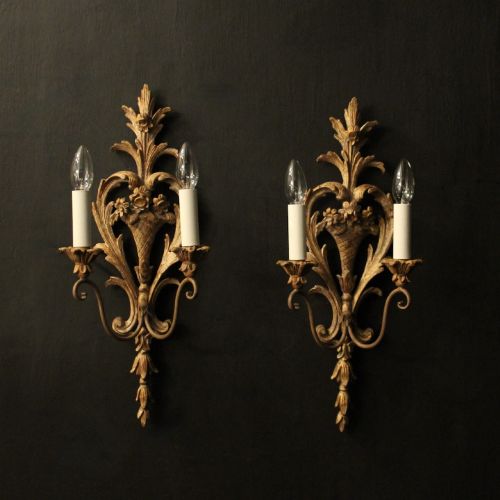
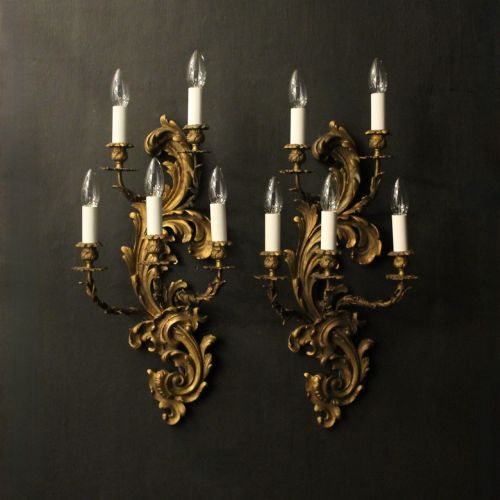
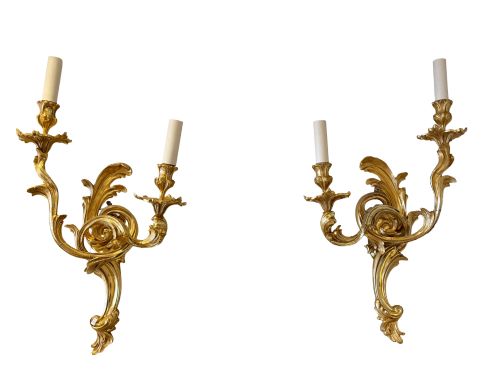
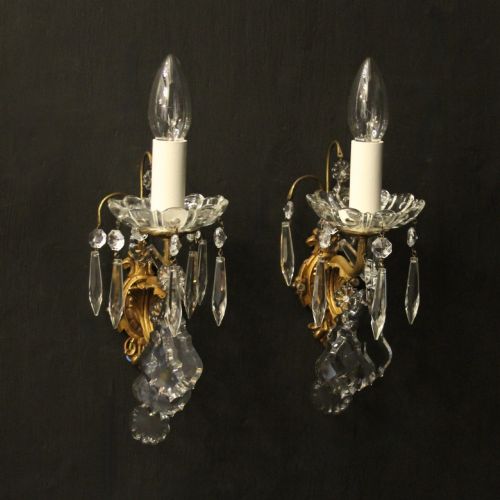
The most common examples on this page are pairs and sets of French twin-arm or multi-arm wall lights rendered in gilt brass, gilt bronze, and ormolu. Buyers frequently encounter pieces associated with Rococo, Neoclassical, and Empire revival styles.
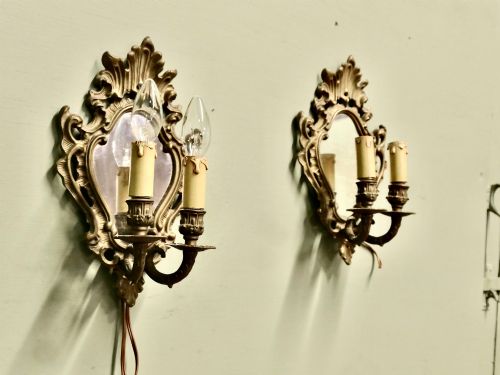
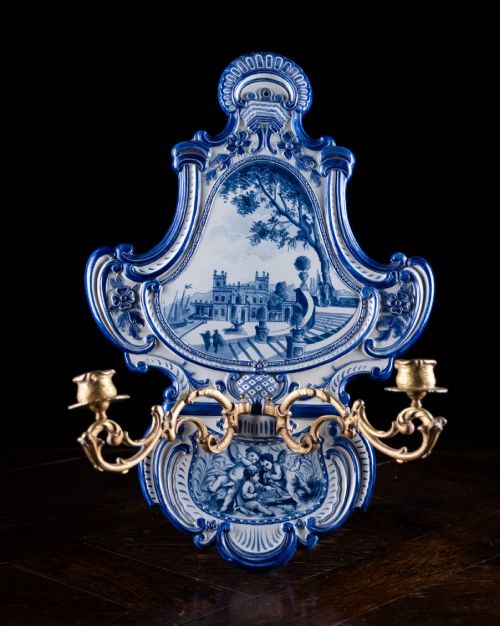
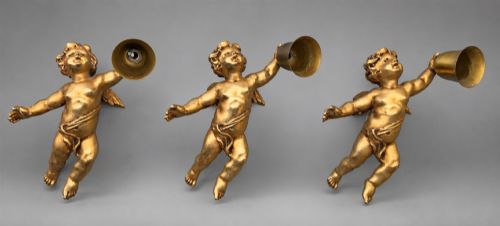
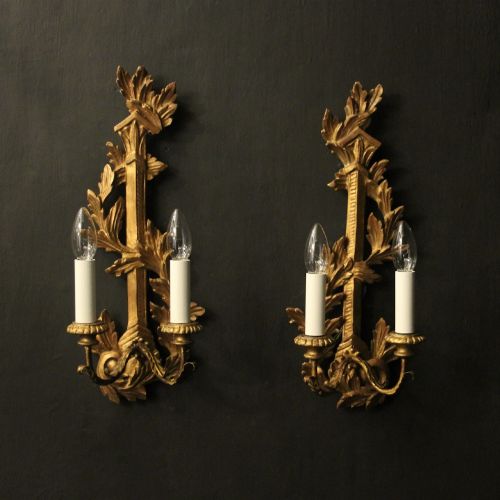
Alongside metal fixtures, the selection includes carved giltwood girandole mirrors and Florentine wall lights that utilise organic motifs like ribbons, cherubs, and foliage. Each form serves to project candlelight or electric light against panelled or papered walls.
Materials and Construction
Foundry-cast metals form the structural core of many pieces, utilising bronze, brass, and ormolu that receive a layer of gold leaf or mercury gilding. Artisans chased these metal surfaces by hand to sharpen the leaf-scrolls, putti, and neoclassical urns before assembly.
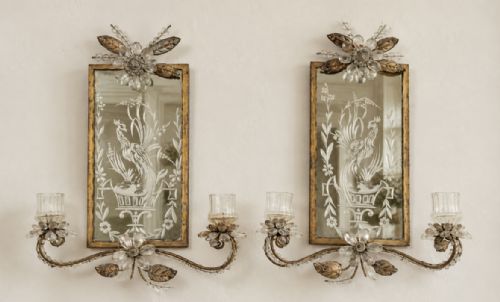
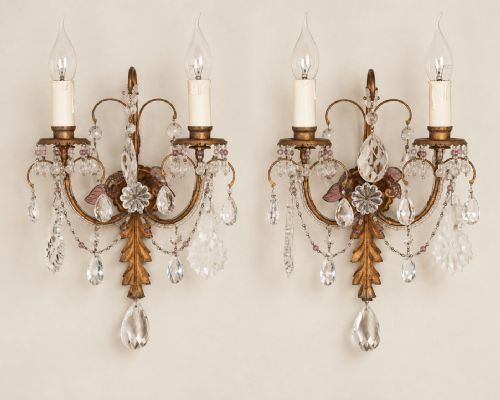
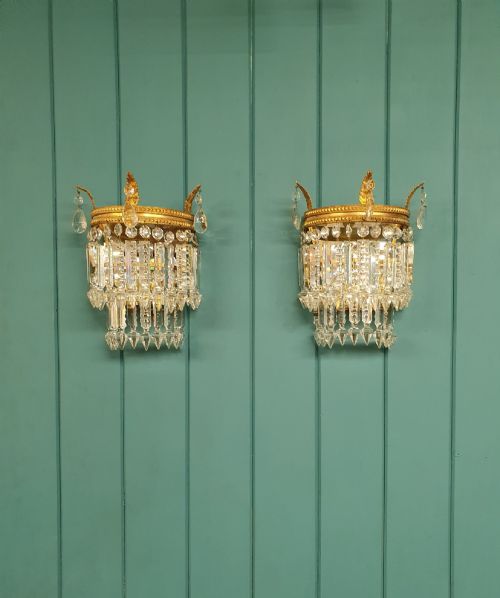
Wooden alternatives rely on carved giltwood and gesso, particularly in Florentine and English pieces where craftsmen shaped timber bases before applying gold leaf over bole. Glass elements such as cut crystals and convex mirrors integrate into the frames to multiply the ambient glow.
Complex pieces incorporate articulated joints, Tole peinte components, and hand-painted polychrome details to achieve contrast against the polished or matte gilt surfaces.
Gilt Wall Lighting Retail Price Guide 2026
Typical asking prices for gilt wall lighting among the pieces listed under this phrase on Sellingantiques today, from the lower quarter to the upper quarter. They describe what is for sale here now, not the wider market.
The listings span from the Regency period through the 1930s, featuring materials such as gilt bronze, ormolu, and carved giltwood.
Distinctions in Quality
Construction methods reveal the maker's intent, seen in heavy gauge brass, securely pinned branches, and original hand-cut crystal drops rather than moulded glass substitutes. Carved giltwood quality depends on the depth of the undercut and the finesse of the gesso preparation beneath the gold leaf.
Maison Baguès·Casier
The Gilt Wall Lighting Glossary
- Ormolu
- Gilded bronze produced by applying a mercury and gold amalgam to a bronze object and heating it to drive off the mercury. This technique creates a durable, rich golden surface seen on finer French wall lights.
- Girandole
- A decorative wall-mounted bracket holding candles, frequently featuring an attached mirror to reflect and amplify the light. They appear in giltwood and metal frames.
- Appliqué
- A French term used interchangeably with wall sconce or wall light, denoting a fixture designed to attach directly to a vertical surface. They often feature multiple branching arms.
- Gesso
- A plaster-like mixture applied to a wooden base to provide a smooth surface for gilding. It allows craftsmen to carve fine details before laying gold leaf.
- Tole Peinte
- Painted sheet metal used in the construction of decorative lanterns and shades. It introduces colourful contrast to parcel-gilt assemblies.
Gilt Wall Lighting: Frequently Asked Questions
How do I wire antique wall lights?
Most antique metal and wooden wall lights arrive with hollow arms or backplates suitable for modern electrical wiring by a qualified technician.
Original sockets are rarely present or safe for use, so contemporary candle tubes and hidden internal leads are typically integrated during installation.
Can these sconces burn real candles?
Many older wall lights and girandoles were constructed for wax candles before the arrival of domestic electricity.
Using real candles requires caution around delicate giltwood and dried crystal drops, as soot and dripping wax can damage the antique surfaces.
How do I clean gilded surfaces safely?
Dust gilt bronze and carved giltwood gently using a soft, dry brush without applying abrasive polishes.
Harsh commercial cleaners strip away the thin layer of gold leaf or ormolu, permanently revealing the base metal underneath.
How do I date a gilt wall light?
Stylistic cues such as Neoclassical urns, Empire motifs, or Rococo asymmetry offer the first indication of a piece's era.
Examining the backplate fixings, casting seams, and the composition of the metal or wood provides further confirmation of nineteenth or early twentieth-century origin.