






Gilt Spine Leather Books
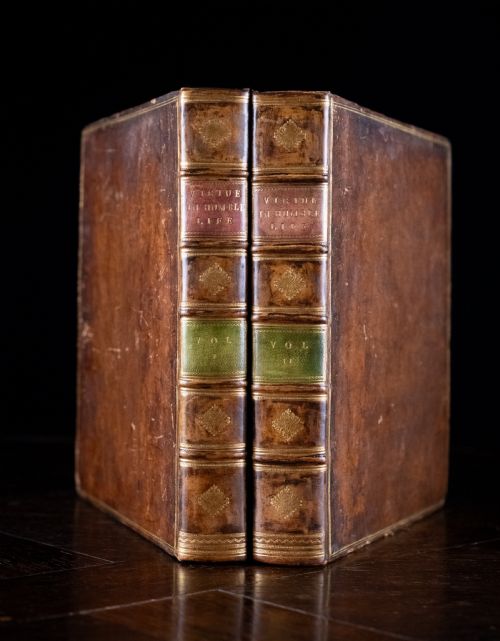
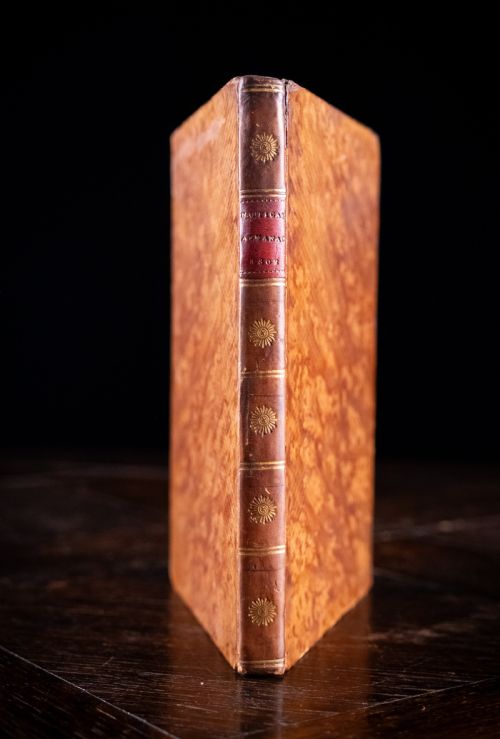
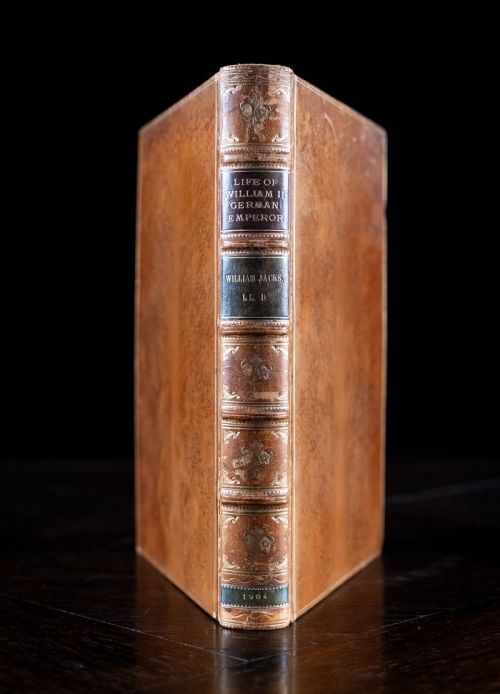
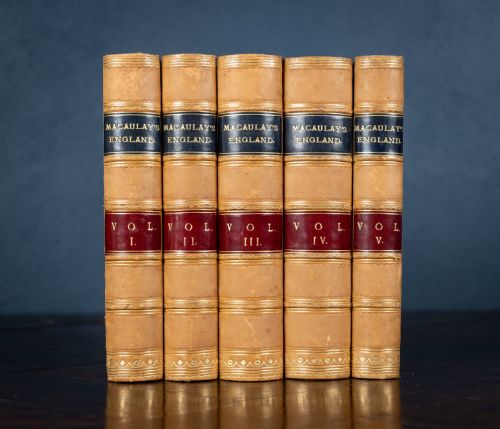
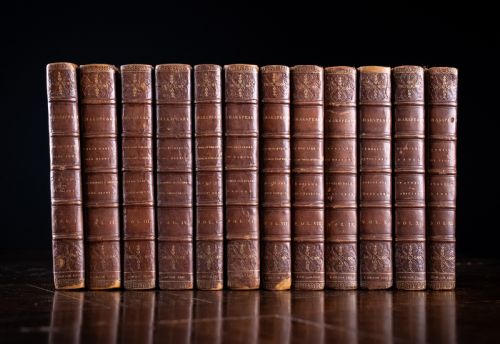
Gilt spine leather books bring tactile history and rich bindings into a room, offering classic literature, plays, and historical sets.
Gilt Spine Leather Books
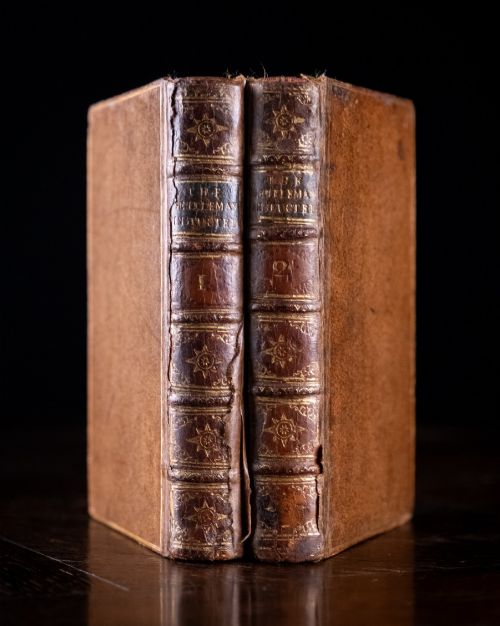
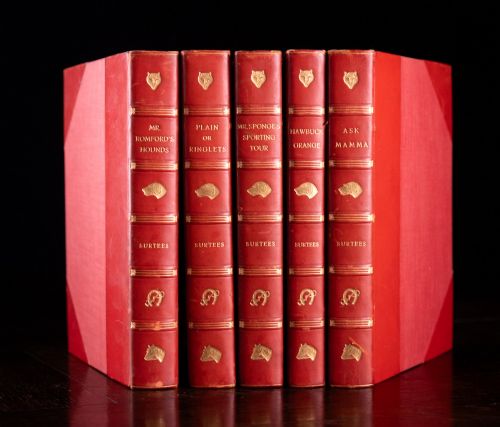
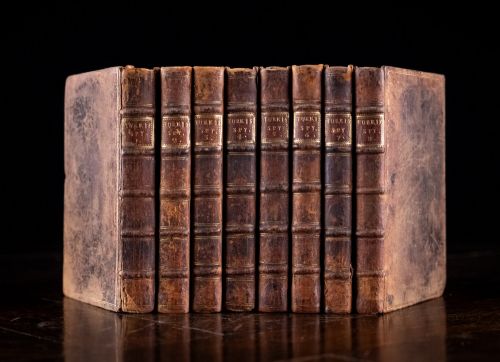
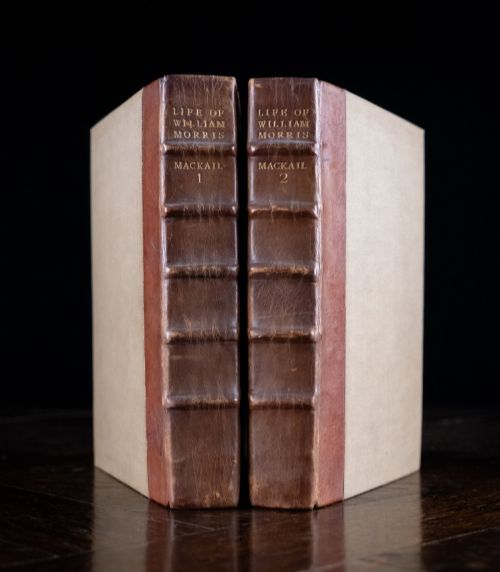
When you search for gilt spine leather books, you encounter antique volumes, multi-volume sets, and collected works spanning the eighteenth, nineteenth, and early twentieth centuries. These range from historical accounts and Shakespearean plays to sporting novels and theological treatises.
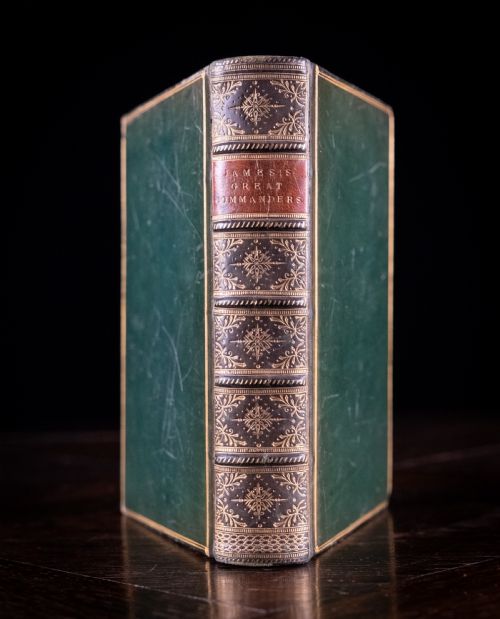
You are most likely to meet nineteenth-century sets and individual leather or vellum-covered editions on this page. These bindings often display decorative tooling and lettering along the spine in gold leaf.
The selection also includes cartography atlases, memoirs, and decorative items such as table lamps and dummy book side cabinets incorporating leather elements.
Materials and construction
Binders utilised natural materials including calfskin leather, vellum, and marbled paper over sturdy boards. Text blocks consist of traditional paper.
Tooling and lettering on the spine were applied using gold leaf, creating the characteristic metallic shine that endures on antique volumes.
Several items disguise their true purpose, including side cabinets fitted with leather dummy books and functioning lamps made from antique bindings.
Judging the quality
Quality rests upon the uniformity of the binding across multi-volume sets and the crispness of the gold leaf tooling along the spine. Contemporary uniform bindings matched to the contents elevate a collection.
The condition of the leather or vellum, the legibility of the printed text, and the completeness of multi-volume sets determine the standing of each piece within the range.
Henry Young And Son
The Gilt Spine Leather Books Glossary
- Calfskin
- A smooth, soft leather derived from calf hide, frequently used for durable and refined book bindings. It accepts detailed gold tooling particularly well.
- Vellum
- A fine parchment material prepared from calf or other skin, used historically for binding books. It provides a pale, smooth surface distinct from standard leather.
- Gold leaf
- Gold beaten into an extremely thin sheet, utilised for lettering and decorative stamping on book spines and covers. This material resists tarnishing over centuries.
- Marbled paper
- Paper decorated with a colourful patterned surface resembling marble, commonly used for endpapers inside antique books. Artisans create these patterns by floating pigments on water or size.
- First edition
- The earliest printed appearance of a work issued from the original setting of type. Collectors prize these initial printings for their textual authenticity.
Gilt Spine Leather Books: Frequently Asked Questions
How should I care for leather bound books?
Keep the volumes away from direct sunlight and excessive humidity to prevent the leather from drying out or cracking. Handle them gently by supporting the spine when removing them from a shelf.
Dust them regularly with a soft, dry cloth. Avoid applying modern chemical cleaning products directly to the leather or the gold leaf.
Are these book sets complete?
Many listings specify complete sets, such as multi-volume historical works, plays, or novels published together. Each listing details the exact number of volumes included in that specific set.
Some collections comprise uniformly bound independent works rather than original single-edition multi-volume publications. Checking the individual description clarifies the exact composition of each set.
What is the difference between leather and vellum?
Leather is produced through the tanning of animal hides, resulting in a flexible and textured material. Vellum is an untanned or lightly prepared parchment, typically smoother and paler.
Both materials were utilised for durable bindings, but vellum offers a stiffer, distinctive creamy finish often seen on classical sets.
Can I read these antique books?
Most of these volumes remain legible and structurally sound for careful reading. However, very early or delicate bindings require gentle handling to preserve the spine and paper blocks.
Using a bookmark and supporting the open pages prevents stress on the historical binding structure.