
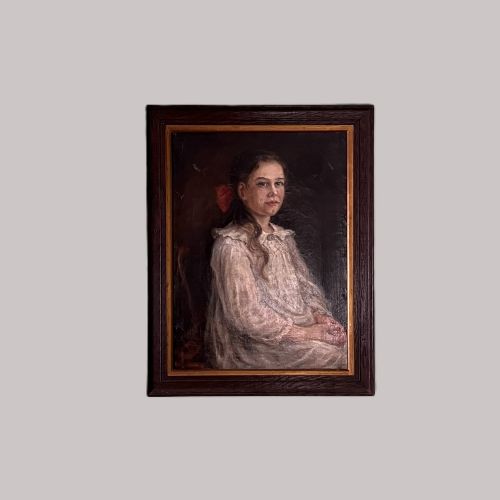


Gilt Slip Portrait Painting
These gilt slip portrait painting works bring intimate faces and period character into a room.
Gilt Slip Portrait Painting
When you search for gilt slip portrait painting, you encounter framed likenesses spanning the eighteenth century through to the Edwardian era. The pieces listed on this page include oil on canvas portraits, miniatures, watercolours, and silhouettes housed within timber frames.
You are most likely to meet nineteenth-century works and Edwardian examples on this page. These take the form of small oil paintings of gentlemen and ladies, alongside delicate watercolours and painted silhouettes of children.
The selection ranges from Dutch Golden Age style tavern scenes and sporting art to Georgian silhouettes set in rosewood frames. Each object captures a specific historical persona, rendered through different media whilst maintaining a focus on individual likeness.
How they were made
Makers utilised oil on canvas, paper, and watercolour, mounting the finished artwork behind glass within timber surrounds such as rosewood and ebonised wood. Gold leaf and gilt wood provide the distinctive slip or inner border that frames the subject.
The site's listings feature works on paper, glass, and canvas, utilising gold leaf and gilt wood across Georgian, Victorian, and Edwardian periods.
What varies in quality
The standard of execution in the brushwork and the precision of the facial likeness dictate the visual success of the piece. Works by named hands demonstrate superior handling of light and shadow compared to anonymous studio output.
The preservation of the original framing materials, including the rosewood, ebonised wood, and gold leaf slip, influences the overall integrity. Unaltered mountings retain the character intended by the period framer.
The Gilt Slip Portrait Painting Glossary
- Gilt slip
- A narrow inner frame or border coated in gold leaf or gilt paint, placed between the artwork and the main outer frame. This creates a visual transition that draws the eye towards the portrait.
- Miniature painting
- A small-scale portrait executed with fine detail on materials such as paper, card, or vellum. These portable items were designed to be held in the hand or displayed in domestic interiors.
- Silhouette
- A portrait profile filled in with a solid dark colour, typically black, against a lighter background. Artists painted or cut these likenesses from paper before framing them.
- Ebonised frame
- A wooden frame treated with a dark finish to imitate expensive ebony wood. This dark border provides a stark contrast to the gilt slip and the lighter tones of the portrait.
Gilt Slip Portrait Painting: Frequently Asked Questions
What periods do these portraits cover?
The pieces span from the eighteenth century through the Georgian and Regency eras into the Victorian and Edwardian periods. You will also find works referencing the Dutch Golden Age style.
Dates range from the early 1800s up to the early twentieth century, reflecting shifting tastes in domestic portraiture over two hundred years.
How should I display them?
These smaller framed works suit intimate spaces, studies, or grouped arrangements on a gallery wall alongside other period pictures. Keep them away from direct sunlight to protect the paper, watercolours, and gold leaf.
Ensure they hang on stable interior walls where moisture and temperature fluctuations remain minimal.
Are all the frames original?
Many retain their period housings, such as rosewood frames, ebonised wood surrounds, and original gilt slips. Individual listings note the specific framing materials associated with each artwork.
Inspect the joinery and finish of the surround to understand its age relative to the painting inside.
What subjects appear in the paintings?
Subjects include individual gentlemen, ladies, children, and sporting scenes featuring horses and grooms in stables. Some pieces depict historical figures or characters painted in specific stylistic traditions.
Each portrait offers a direct glimpse into the clothing, hairstyles, and social presentation of its era.