

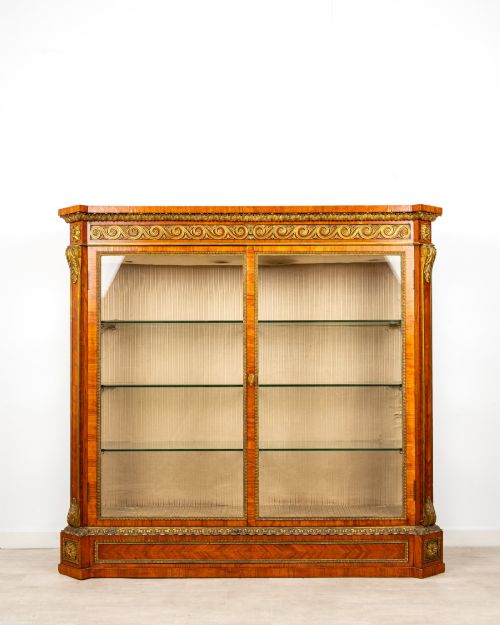
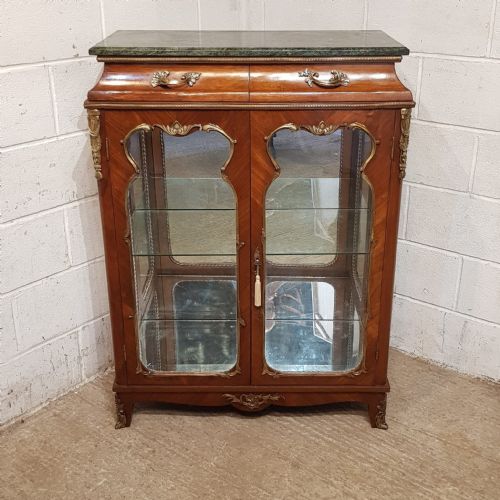
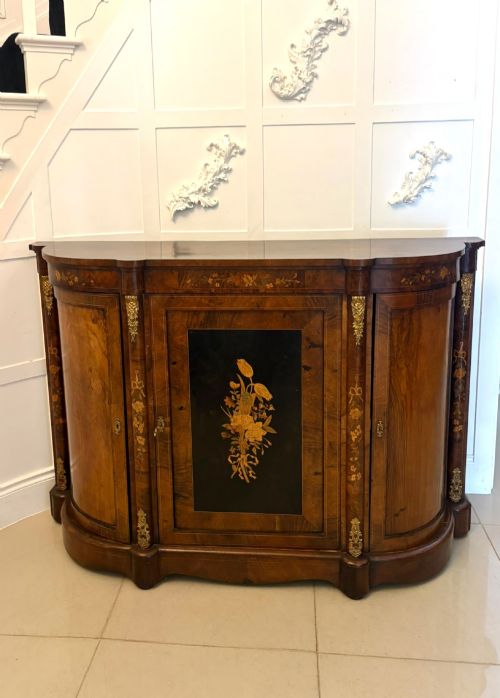
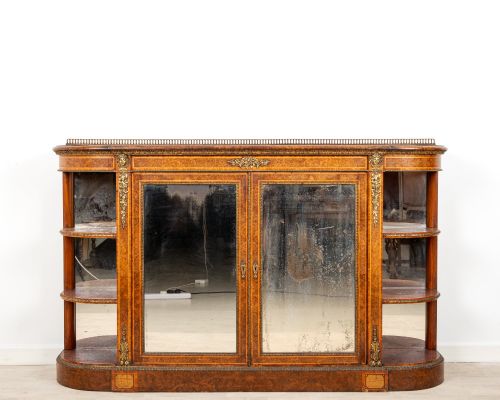
Gilt Mounted Display Cabinet
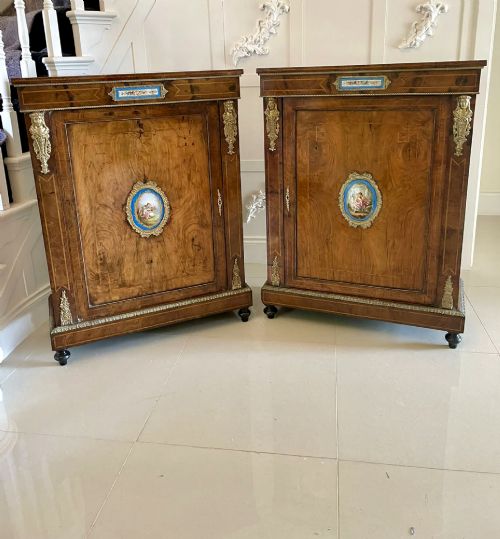
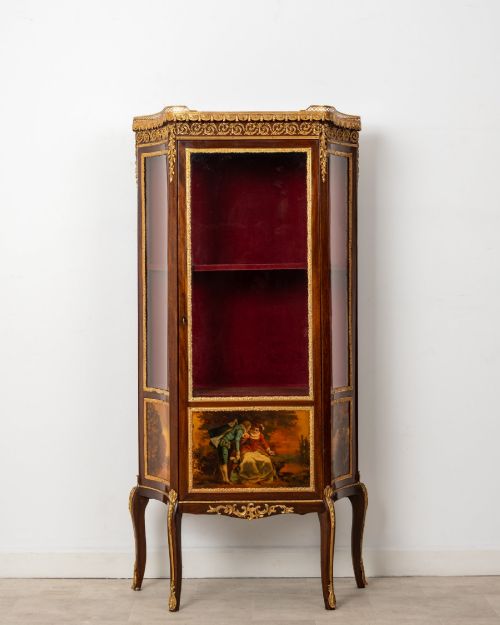
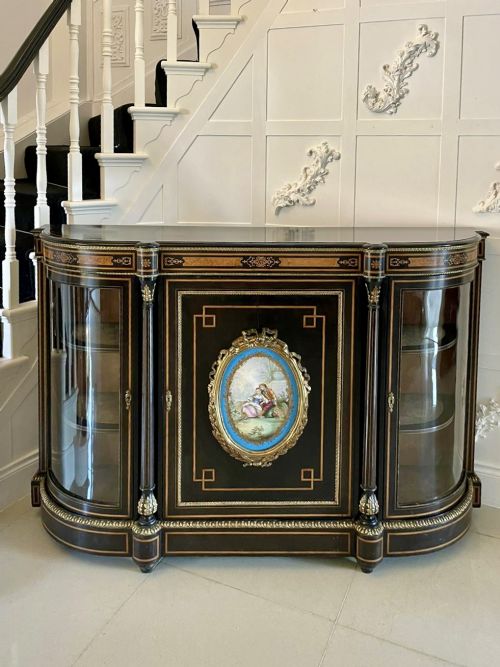
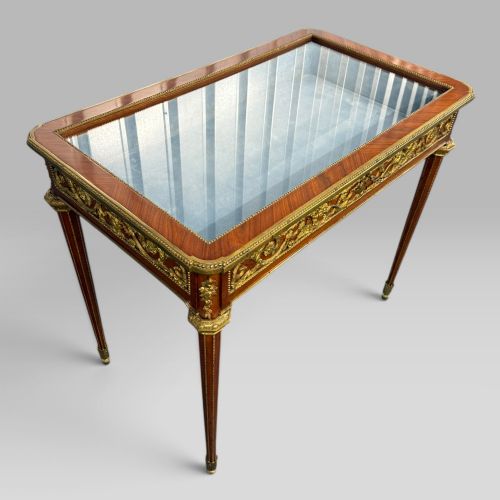
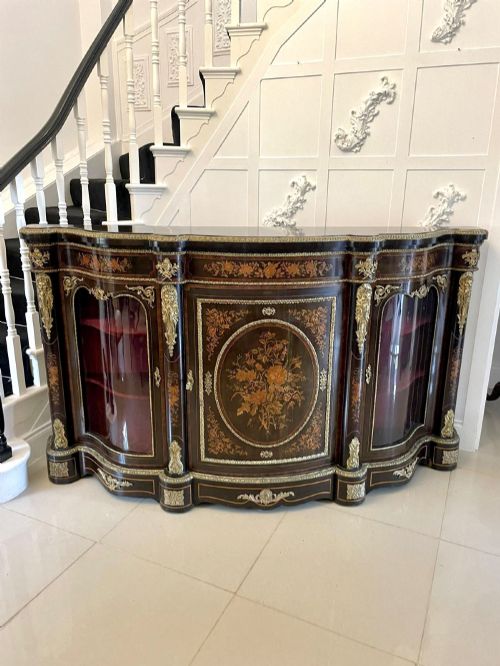
A gilt mounted display cabinet brings together figured timbers and cast metal mounts to showcase precious objects.
Gilt Mounted Display Cabinet
A gilt mounted display cabinet is a refined piece of furniture designed to exhibit ceramics, glass and small treasures behind glazed doors. These pieces emerge predominantly from the nineteenth and early twentieth centuries, spanning Victorian English workshops and French revivalist salons.
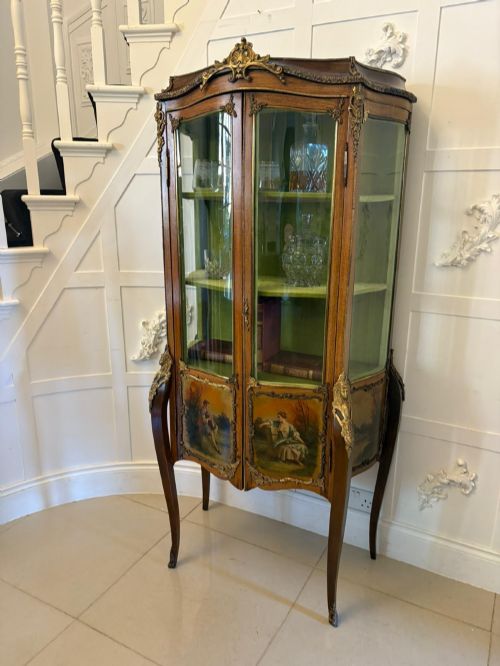
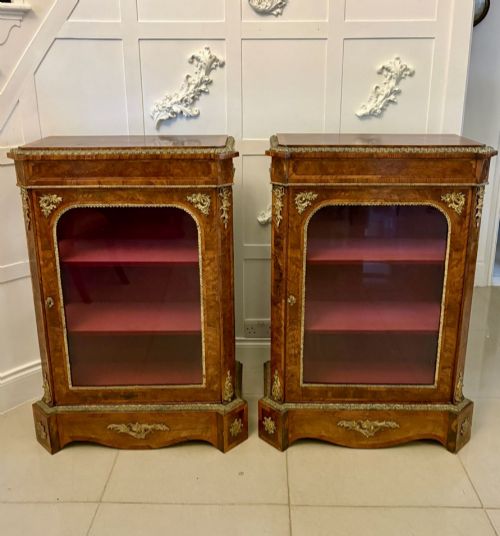
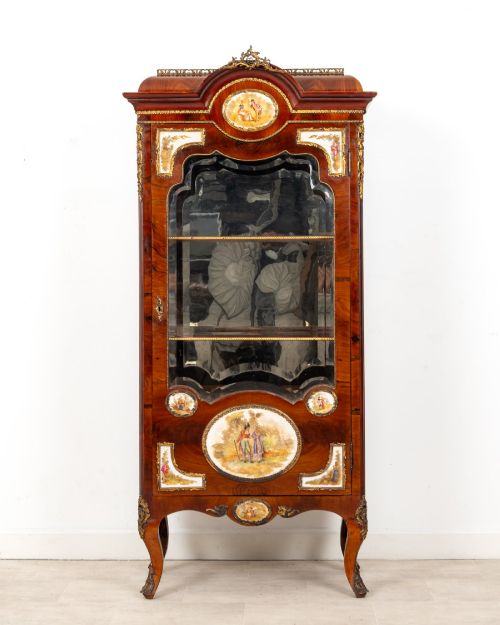
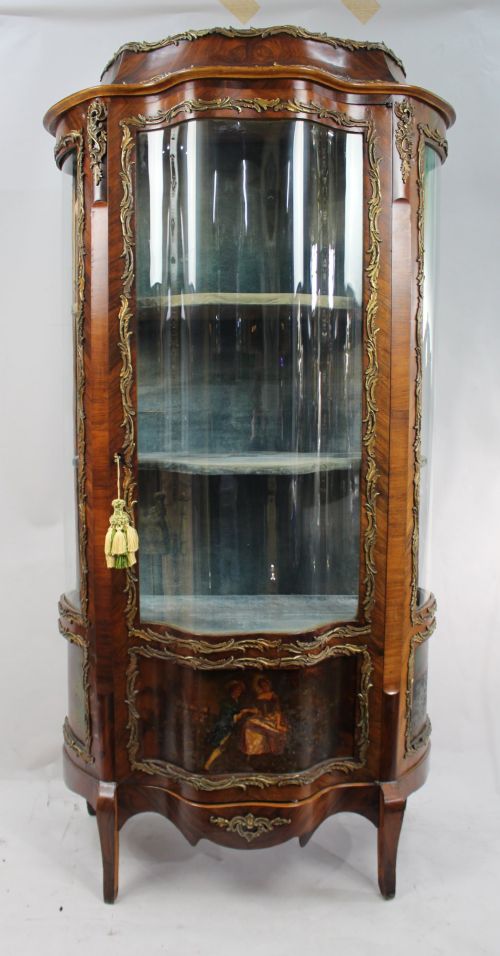
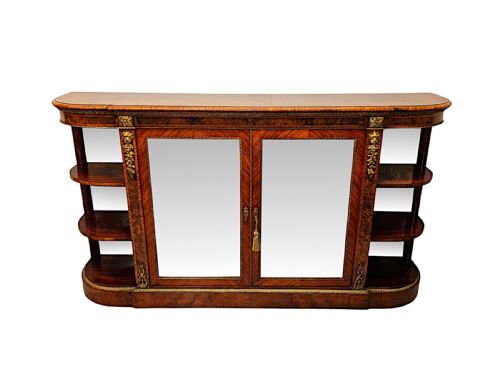
The most common formats on this page include walnut pier cabinets, kingwood vitrines and serpentine credenzas. Many pieces draw heavily on Louis XV and Louis XVI design vocabulary, featuring curved glass panels and mirrored backs.
Makers working within these styles utilise rich veneers like burr walnut, amboyna and mahogany. The overarching aim remains the display of possessions under candlelight or daylight within a formally decorated interior.
Materials and construction
Cabinet makers constructed carcass frames from solid pine or oak before applying prized decorative veneers such as kingwood, satinwood and burr walnut. Marquetry panels incorporate floral and geometric inlays utilising contrasting timbers.
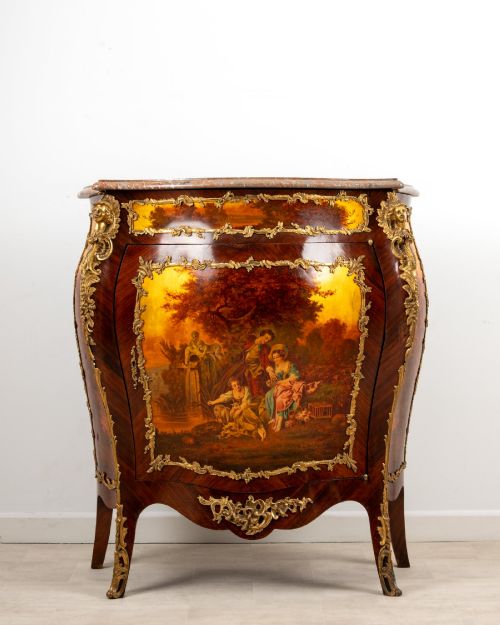
Ormolu mounts, cast in bronze and gilded, are pinned or screwed to corners, cornices and door surrounds to accentuate the architectural lines. Marble slabs frequently top credenzas and cabinets, providing a heavy, cool counterpoint to the timber frames.
Glass panels are set into framed doors, sometimes curved by heat to form bombé profiles on French vitrines. Hand-painted Vernis Martin panels often decorate the lower sections of cabinets in imitation of Japanese lacquer.
Some diminutive cabinets were built solely to hold delicate pocket watches and rings rather than tea sets.
Variations in quality
Quality reveals itself in the crispness of the ormolu chasing and the depth of the timber grain. Superior pieces employ heavy, finely detailed gilt-bronze mounts rather than thin, pressed gilt-metal alternatives.
The precision of the marquetry and the book-matching of burr walnut veneers demonstrate the joiner's skill. Finer cabinets also exhibit solid mahogany or oak interiors rather than secondary softwood linings.
Gillows·Maison Gagneau·H. J. Hatfield & Sons·Paul Sormani·François Linke
The Gilt Mounted Display Cabinet Glossary
- Ormolu
- Gilded bronze mounts applied to furniture. This technique involves coating cast bronze with a mercury-gold amalgam and heating it.
- Vitrine
- A glass-fronted display cabinet. These pieces allow porcelain and curiosities to be viewed from multiple angles.
- Credenza
- A low cabinet, often with cupboards and mirrored doors. Victorian examples frequently incorporate side display sections.
- Vernis Martin
- A simulated lacquer technique developed in eighteenth-century France. Artisans applied multiple layers of varnish to painted decorative panels.
- Marquetry
- Inlaid wood patterns forming pictures or floral designs. Craftsmen cut contrasting veneers to fit flush within a ground timber.
Gilt Mounted Display Cabinet: Frequently Asked Questions
What is a gilt mounted display cabinet?
A gilt mounted display cabinet is a glazed piece of furniture embellished with gilded bronze or metal mounts. These cabinets were built to showcase porcelain, glass and small collectables.
Craftsmen combined figured veneers with decorative mounts to suit formal nineteenth-century drawing rooms and salons.
How do I care for marble top cabinets?
Marble surfaces require gentle cleaning with a damp cloth and mild soap to avoid etching the stone. Acidic liquids like wine or citrus juice can permanently dull the polish if left unattended.
Keep the timber sections dusted and occasionally treated with appropriate wax to maintain the finish without building up residue.
Where were these cabinets placed originally?
Owners positioned these cabinets in principal reception rooms, drawing rooms and parlours where guests gathered. Pier cabinets specifically occupied the narrow wall space between windows.
Their reflective glass and mirrored backs helped bounce natural daylight around dimly lit Victorian interiors.
What distinguishes French vitrines from English cabinets?
French vitrines often embrace extravagant serpentine or bombé shapes with extensive Vernis Martin painted panels. English equivalents tend towards architectural walnut or mahogany structures with more restrained marquetry.
Both traditions rely heavily on gilt metal mounts, though French pieces frequently use true ormolu.